With fewer than six months remaining before the 2026 Dakar Youth Olympic Games, the Senegalese capital is buzzing with preparations. Originally scheduled for 2022 but postponed due to the Covid-19 pandemic, these fourth edition of the Summer Youth Olympic Games (YOG) will mark a historic milestone as the first Olympic event ever held on African soil. The games are set to take place from October 31 to November 13, 2026.
The Senegalese government, led by Minister of State Ahmadou al-Aminou Lo—« Minister of State to the President of the Republic, in charge of monitoring and evaluating the Senegal 2050 National Transformation Agenda »—is spearheading a vigilance committee that meets bi-monthly. This committee brings together all state, local, and institutional stakeholders to ensure that preparations stay on track and that all risks are mitigated.
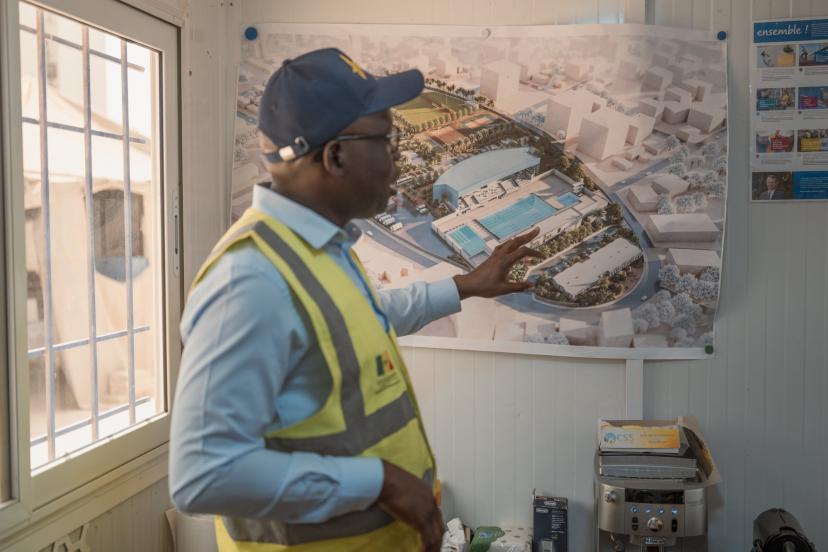
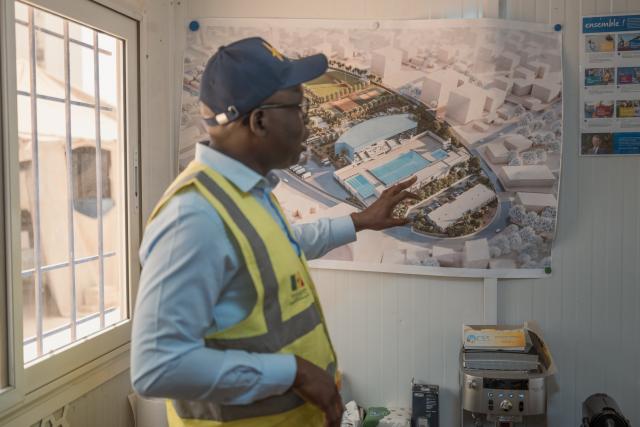
Babacar Senghor, coordinator of the Dakar 2026 Youth Olympic Games project, reviewing pool blueprints.
a vision of pride and responsibility
Minister Lo emphasized the dual pressure and responsibility facing Senegal, stating, « Our role is to help eliminate all risks associated with delivering the YOG. The goal is to ensure that Senegalese structures are agile and ready on time. I serve as the quality assurance for these preparations. With these YOG, Senegal’s and Africa’s image is at stake—we have an obligation to prove we can organize world-class sporting events. »
The games will feature 2,700 young international athletes aged 17 or younger, competing across 25 sports (including 10 demonstration sports) and a total of 153 events—73 men’s, 73 women’s, and 7 mixed events. Infrastructure development is a key focus, with projects like the new Olympic swimming pool and training facilities progressing under the oversight of over 450 workers.
Minister Lo also highlighted the broader ambition: « We want the YOG to be a catalyst for sustainable development, particularly for our youth. This includes building sports excellence centers, promoting high-level competition, and doubling the contribution of the sports industry to Senegal’s GDP from €15 million to €30 million. » He pointed to the MICE industry (meetings, incentives, conferences, and exhibitions) as a critical driver for achieving this goal.
sustainable infrastructure and global partnerships
Senegal’s partnership with France plays a pivotal role in the preparations. The Alliance Dioko, a convention signed in 2019, fosters collaboration between the French and Senegalese organizing committees. This partnership covers areas such as volunteer recruitment, event security, and best practices sharing. Notably, 30 experts from the Paris 2024 organizing committee have been integrated into the Dakar 2026 team, and 419 young Senegalese have been trained through the Learning Academy program, supported by a €1 million fund from the French embassy.
The French embassy’s contributions extend beyond training, with a €233,000 grant over two years supporting the Lamine Gueye judo academy in Dakar. This aid has enabled renovations to the academy’s dormitory and dojo, alongside medical and sports support for young judokas preparing for the games.
Infrastructure projects, such as the renovation of the Stade Iba-Mar-Diop and the Tour de l’Œuf complex—home to the new Olympic swimming pool—have received a sovereign loan of €80 million from the French Development Agency (AFD). These facilities will not only host the YOG but also serve the local community post-event, supporting sports like football, basketball, handball, and tennis.
a legacy beyond the games
The Tour de l’Œuf complex is a cornerstone of Senegal’s legacy plans. Following the YOG, the venue will transition into a multi-sport facility, reflecting the country’s long-term vision for youth and community engagement. With technological advancements like water and energy conservation systems, the complex is designed to be both sustainable and adaptable.
The Senegal 2050 agenda underscores the importance of the YOG as a transformative event. By leveraging the games to boost the sports economy and promote youth development, Senegal aims to create lasting benefits for its population. As Minister Lo remarked, « Our first medal will be cleanliness. » The country has launched a comprehensive plan to enhance waste management and sanitation, inspired by the achievements of Kigali, Rwanda, which topped Jeune Afrique’s 2025 ranking of Africa’s cleanest cities.
As the world turns its eyes toward Dakar, the preparations for the 2026 Youth Olympic Games reflect not just a sporting ambition but a commitment to sustainable growth, international cooperation, and the empowerment of Africa’s youth.