Strengthening defenses against regional instability
The Senegal government is quietly stepping up its border security measures as the Mali crisis continues to escalate, with over 400 kilometers of shared border demanding heightened vigilance. While Dakar avoids publicizing its counterterrorism strategy, officials confirm close monitoring of the situation, particularly regarding Senegalese transporters stranded in Mali after recent attacks.
A foreign ministry representative stated, «We’re closely tracking developments, especially concerning transporters. So far, no repatriation requests have been received, but we remain vigilant.»
Military reinforcements along key border zones
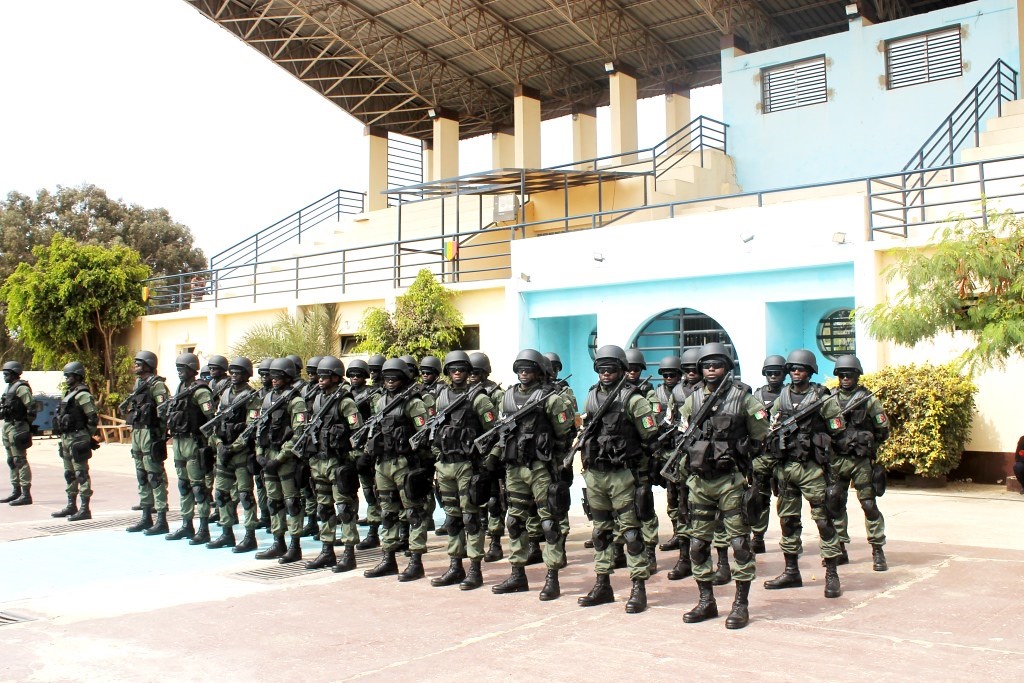
In recent years, Senegal has invested significantly in border security infrastructure, particularly in Tambacounda and Kédougou regions. On April 8-9, 2026, three new support bases were inaugurated for the Groupe d’action et d’intervention rapide (GARSI 2) of Saraya, funded by the European Union. These bases serve as forward operational posts, designed to reduce response times and enhance capabilities in countering transnational threats.
According to military authorities, these bases represent the «advance eye» of Senegal’s counterterrorism and organized crime prevention system. GARSI 2 operates two units—one in Kidira and another in Saraya—which conduct combined patrols to monitor border activities.
An army high-ranking officer explained, «With 420 km of border with Mali, deploying troops at every kilometer is impossible. We focus on critical crossing points, and these bases enable rapid response when needed. GARSI 2 is a highly effective, operational tool, well-equipped to handle such threats.»
Coordinated response through CICO
Beyond military measures, Senegal has established the Cadre d’intervention et de coordination interministériel (CICO) for anti-terrorism operations. This framework coordinates state responses to potential cross-border attacks, ensuring seamless collaboration between emergency services, security forces, and military units.
Recent months have seen further enhancements, including the establishment of a legion headquarters in Kédougou, research sections, and technical infrastructure. Notably, Senegal ranks among Africa’s top defense spenders, allocating substantial resources to modernize its military capabilities.
Between 2020 and 2025, the country ranked second in sub-Saharan Africa for arms imports, according to the Stockholm International Peace Research Institute (SIPRI). Key acquisitions include South African-made Puma M36 armored vehicles, designed to withstand improvised explosive devices—a lesson drawn from Sahel conflicts. Additional defense contracts were signed with Turkey in 2025.
Cultural cohesion as a shield against extremism
Experts highlight that Senegal’s resilience against jihadist infiltration stems not only from military efforts but also from strong social cohesion. Professor Bakary Sambe of the Timbuktu Institute notes that ethnic and religious communities in Senegal maintain harmonious relations, creating a cultural barrier against division tactics employed by groups like JNIM.
In the Kédougou region—a strategic border area—this cohesion is reinforced by interethnic marriages and mutual respect among groups such as the Bassari, Bédik, and Peul. Sambe describes this as a «cultural shield» that prevents extremist groups from gaining ground.
Religious leaders play a pivotal role in this framework. Despite the limited influence of Sufi brotherhoods in eastern border regions, their collaboration with government authorities strengthens resilience against radicalization. High-ranking officials acknowledge that no system can fully counter the threat due to porous borders and the interconnected nature of regional communities.
Regional solidarity and future strategies
President Bassirou Diomaye Faye recently underscored the need for continental and regional collaboration in addressing terrorism and insecurity. «This threat spares no nation—not even Nigeria, the largest ECOWAS country, nor the United States, which faced once-unimaginable attacks. Synergies and intelligence-sharing are essential,» he stated.
Senegal continues to advocate for cohesive action among regional organizations, despite the withdrawal of Sahel states from ECOWAS. President Faye emphasized the shared history and destiny between Senegal and Mali, reaffirming the country’s solidarity with the Malian people.
«The Malian people can always count on the active solidarity of the Senegalese government and people. We are ready to work toward restoring peace in Mali through dialogue, though not all measures can be disclosed publicly,» he concluded, while confirming ongoing border patrols and intelligence exchanges between the two nations.