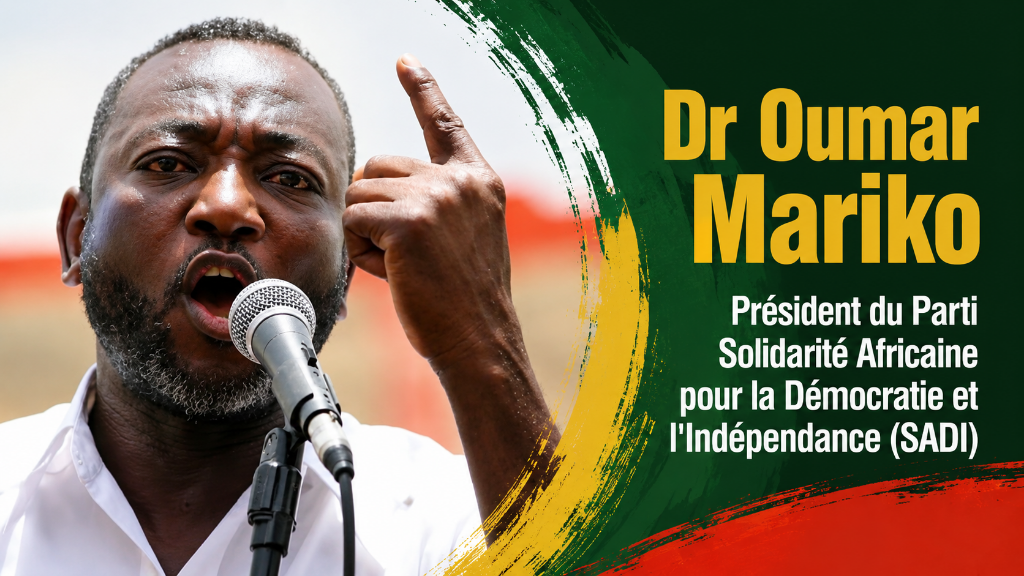
In a disturbing escalation of political tensions, the Bamako residence of exiled Malian opposition leader Dr. Oumar Mariko was subjected to a thorough search by armed, masked individuals on May 30. The three-hour operation concluded with the confiscation of numerous documents, amplifying concerns about the junta’s tightening grip on dissent.
a night of fear in Bamako’s opposition stronghold
The tranquility of the upscale neighborhood where the leader of the Solidarité Africaine pour la Démocratie et l’Indépendance (SADI) resides was shattered late Saturday evening. A heavily armed commando, their faces concealed, forcibly entered the property. While no physical harm was reported, the raid was executed with intimidating precision—doors were broken down, locked rooms breached, and every corner meticulously searched before the assailants departed with stacks of sensitive documents.
Family members and political allies describe the operation as a calculated attempt to instill fear and fabricate evidence against a persistent critic of the current regime, now living abroad. The message is clear: silence dissent, or face consequences.
military setbacks fuel authoritarian overreach
This brazen intrusion into a prominent democrat’s home is not an isolated incident but a symptom of a deeper crisis gripping Mali’s transitional authorities. The May 25 offensive by the Forces Libérées de l’Azawad (FLA) and the Jama’at Nusrat al-Islam wal Muslimin (JNIM) marked a catastrophic turning point. Government forces, alongside international partners, were forced into a humiliating retreat, ceding control of key villages and the symbolic city of Kidal.
The military debacle exposed the fragility of Bamako’s security narrative, leaving the junta scrambling for scapegoats. As territorial losses mount, so too does the regime’s paranoia, with every criticism now framed as a potential conspiracy.
the rise of systematic repression against dissent
Facing mounting public discontent and a collapsing security posture, the transitional government has embraced repression as a tool of survival. What human rights advocates and opposition figures now describe as a witch hunt has intensified, targeting politicians, activists, and journalists alike.
Methods include abductions, arbitrary detentions, and enforced disappearances—often carried out by plainclothes agents. The raid on Dr. Mariko’s home exemplifies this strategy: neutralize perceived threats, real or imagined, to maintain control in the face of crumbling legitimacy.
Mali at a crossroads: fear vs. national unity
The escalation against opposition figures, particularly those abroad, signals a dangerous shift toward authoritarianism. By prioritizing the suppression of critics over addressing the root causes of instability, Bamako risks deepening the crisis rather than resolving it.
With food shortages, soaring inflation, and a population increasingly disillusioned, the regime’s reliance on coercion is a gamble that may soon backfire. The real threat to Mali’s future is not the voices of its critics—but the failure of its leaders to unite the nation against the existential dangers it faces.