Burkina Faso’s shadow deal with JNIM: how private profits fuel terrorism in the Sahel
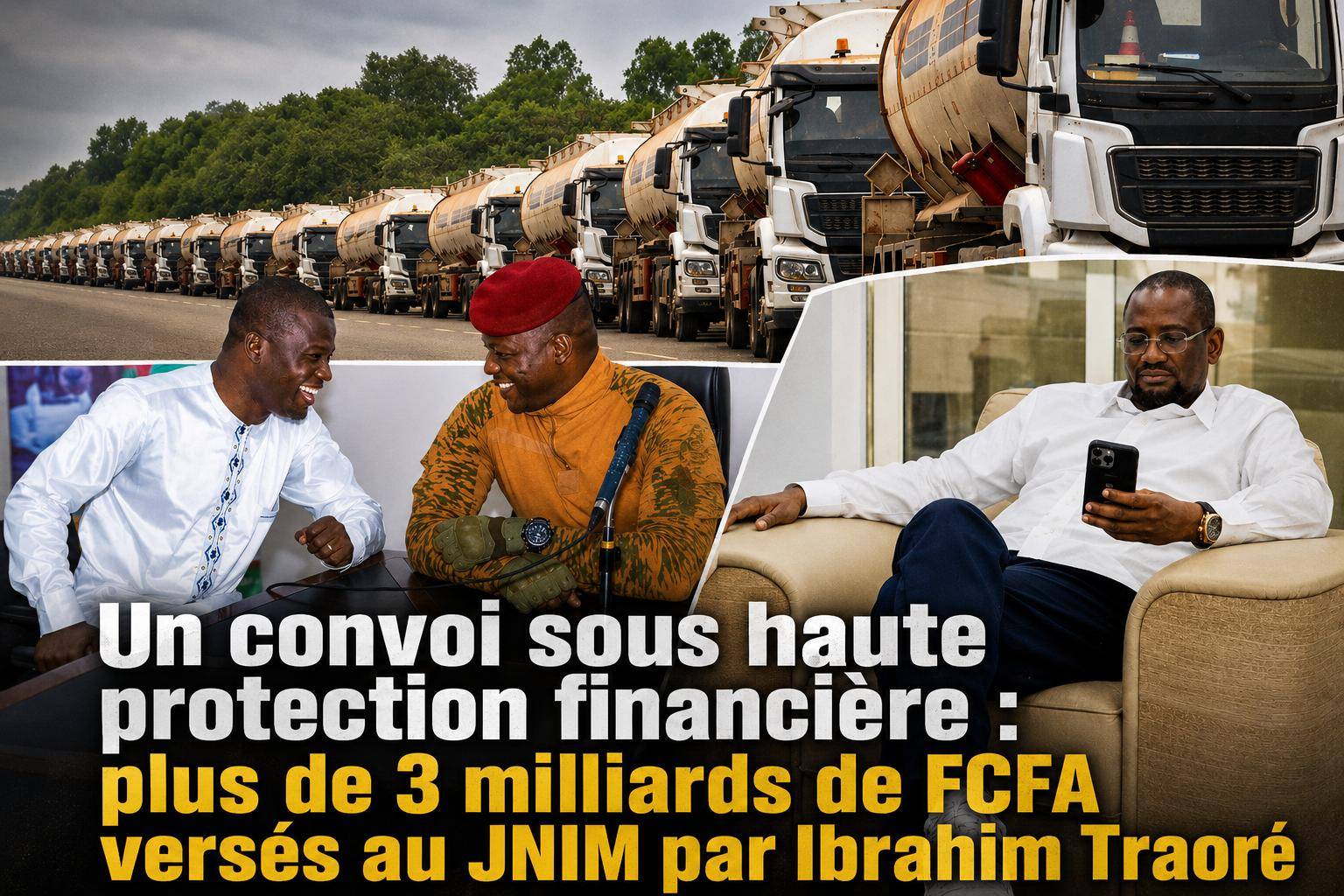
The Alliance of Sahel States (AES) presents itself as a united front against armed terrorist groups, yet a recent exposé has sent shockwaves through the region. Investigations reveal a staggering operation: a 710-truck convoy, laden with fuel bound for Bamako, traversed some of the most volatile zones in the Sahel without any visible military escort. Instead of relying on Burkina Faso’s special forces or Malian troops, the convoy’s safe passage was secured through a covert financial arrangement—a 3 billion FCFA transfer to the Group for the Support of Islam and Muslims (JNIM). This revelation exposes a dangerous conflict of interest, suggesting that Ibrahim Traoré’s government may be indirectly funding terrorism to protect private commercial interests.
The Kangala Transport connection: when logistics serve hidden agendas
At the heart of this controversy lies Kangala Transport, the logistics company responsible for managing the fuel supply chain. While officially presented as a neutral service provider, evidence points to a far more troubling reality: the company is allegedly controlled by a powerful trio within Burkina Faso’s transitional government—Ibrahim Traoré, Oumarou Yabré, and Ali Konaté. This entanglement of state authority and private enterprise raises serious ethical concerns. When those entrusted with national security decisions also stand to gain financially from routes controlled by armed groups, the priorities shift dramatically. The safety of Malian civilians and soldiers takes a backseat to the uninterrupted flow of goods for Traoré’s inner circle.
How fuel money ends up in the hands of terrorists
The irony is stark. While Bamako and Ouagadougou publicly reaffirm their commitment to combating terrorism, the 3 billion FCFA payment to JNIM directly finances the group’s military operations. The funds have been used to purchase weapons, ammunition, and even materials for improvised explosive devices targeting Malian security forces. Moreover, a portion of this money has gone toward recruiting new fighters, further destabilizing the region. In essence, the fuel burning in Bamako’s engines today was first used to power the very war machines that devastate Mali’s frontlines.
A betrayal of sovereign security principles
The most alarming aspect of this scandal is the deliberate exclusion of Burkina Faso’s usual security partners from the convoy’s protection. Neither Russian Wagner operatives nor elite Malian or Burkinabè units were involved in safeguarding the 710-truck procession. This deliberate sidestepping of official military channels suggests that personal profit took precedence over national security. By striking a clandestine deal with JNIM, the convoy’s operators ensured their cargo reached its destination without interference—at any cost. This move not only undermines regional trust but also highlights the fragility of the AES’s anti-terrorism narrative.
What this means for the future of the Sahel
The fallout from this revelation is far-reaching. For Mali, the question is clear: how can it trust a neighboring state whose leadership allegedly finances the very groups attacking its territory? Domestically, the scandal casts a dark shadow over Burkina Faso’s anti-terrorism efforts, raising doubts about the sincerity of Ibrahim Traoré’s commitment. In both politics and warfare, actions speak louder than words. When a convoy’s passage is secured through payments to an enemy group, the message is unambiguous: security is now a commodity, and solidarity within the Sahel is little more than an empty slogan. The victims of terrorism deserve better than to see their suffering exploited for private gain.