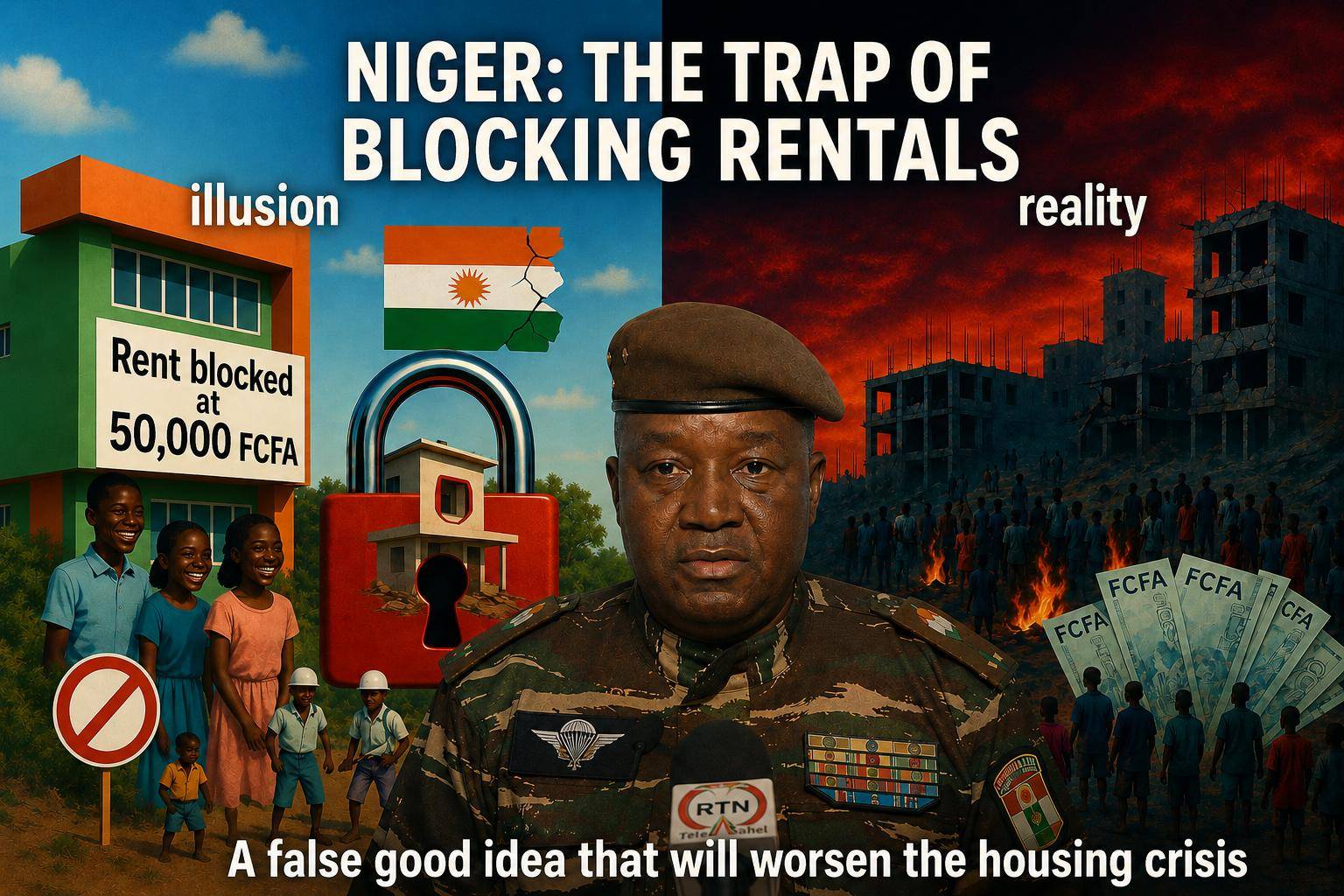
In a move aimed at placating urban residents amid political transition, Niger’s military-led administration has enacted a sweeping decree capping residential rents across the nation. In the capital, Niamey, monthly rates have been frozen between 15,000 and 80,000 West African CFA francs, with authorities framing the regulation as protection for low-income households against exploitative landlords.
Economic principles ignored in pursuit of political favor
The government’s intervention, while popular in certain quarters, disregards fundamental economic laws. History demonstrates repeatedly that administrative price controls fail to solve structural shortages. By artificially suppressing rental values, policymakers risk exacerbating the very crisis they claim to address.
How price controls deepen housing shortages
The new policy directly contradicts the principle of supply and demand. When housing availability fails to meet population growth, market forces naturally drive prices upward. Rather than addressing the root cause through construction initiatives, the decree attempts to mask symptoms through price manipulation.
Three immediate consequences of the policy
- Investment freeze: With maximum allowable rents capped at 80,000 FCFA for social housing in Niamey, profit margins vanish for developers. Rational investors will redirect capital to more lucrative sectors, halting new construction projects.
- Deteriorating housing stock: Reduced rental income eliminates owners’ capacity and motivation for maintenance. Existing properties will rapidly deteriorate without regular upkeep of roofs, plumbing and electrical systems.
- Parallel market emergence: When legitimate channels fail to meet demand, informal arrangements flourish. Prospective tenants may resort to under-the-table payments to secure housing, creating opportunities for corruption and exploitation.
State’s limitations compound private sector withdrawal
The decree’s success hinges on massive public investment in social housing to offset private sector retreat. However, the transitional government faces severe financial constraints due to political uncertainty and reduced international assistance. The state lacks the resources to construct sufficient housing units to meet demand.
Financial institutions will also respond cautiously to the policy. Reduced real estate activity translates to fewer mortgage applications and construction loans, slowing economic momentum across related industries from cement suppliers to local artisans.
A populist measure with long-term repercussions
This emergency decree prioritizes short-term political gains over sustainable economic solutions. By attempting to artificially reduce living costs without addressing underlying supply issues, the military administration may transform a cost-of-living challenge into a full-blown housing crisis. Finding adequate accommodation in Niamey could soon become an even more daunting prospect for ordinary citizens.