(Nairobi) – One year following the military coup, authorities in Niger have intensified their crackdown on opposition, media, and peaceful dissent, as reported by Amnesty International, Human Rights Watch, and the International Federation for Human Rights (FIDH). This has led to a significant deterioration of Niger’s human rights landscape.
Key figures, including former President Mohamed Bazoum, at least 30 officials from the ousted government, and individuals associated with the deposed leader, alongside several journalists, have faced arbitrary arrest. Despite pledges to combat corruption, the military administration has rejected scrutiny of its military expenditures. These organizations urge Nigerien authorities to immediately release all political detainees, uphold fundamental freedoms like expression, opinion, and association, and publicly commit to transparency and accountability in managing military spending.
“A year into the military takeover, instead of progressing towards respect for human rights and the rule of law, Niger’s military authorities are tightening their grip on opposition, civil society, and independent media,” stated Samira Daoud, Amnesty International’s Regional Director for West and Central Africa. “They must free Mohamed Bazoum and all those held for political reasons, ensuring their rights to due process.”
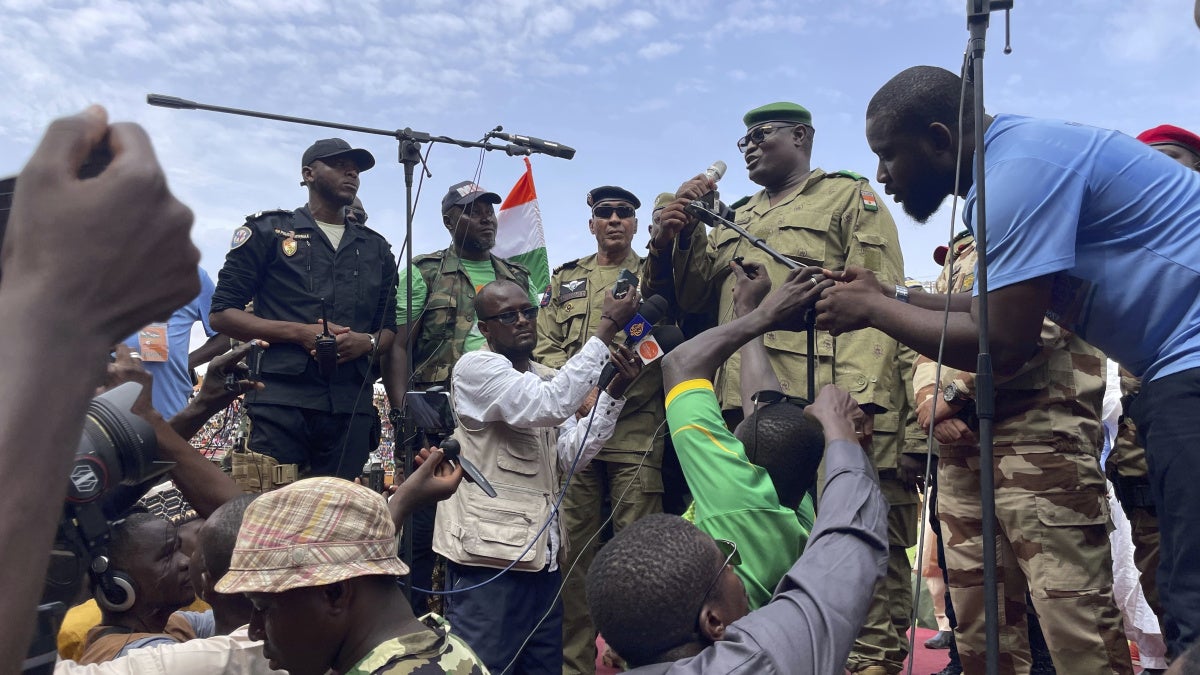
On July 26, 2023, General Abdourahamane Tiani and other Nigerien army officers, forming the National Council for the Safeguard of the Homeland (CNSP), overthrew Mohamed Bazoum, who was democratically elected president in 2021. Bazoum, his family, and several cabinet members were arbitrarily detained. In response, on July 30, 2023, the Economic Community of West African States (ECOWAS) imposed sanctions, including economic measures, travel bans, and asset freezes on coup leaders and the nation. The African Union suspended Niger from its activities on August 22, 2023. Subsequently, on January 28, 2024, Niger, Burkina Faso, and Mali announced their withdrawal from ECOWAS, which then lifted sanctions against Niger on February 24.
Since the coup, Mohamed Bazoum and his wife have been held at the presidential palace in Niamey. Human rights organizations have repeatedly voiced concerns about their well-being. In August 2023, authorities announced plans to prosecute Mohamed Bazoum for “high treason” and undermining national security, though he has yet to appear before a judge. In September 2023, he filed a lawsuit with the ECOWAS Court of Justice in Abuja, alleging human rights violations during his family’s detention. The ECOWAS Court ruled in December 2023 that his detention was arbitrary and called for his release. In April, authorities initiated legal proceedings to lift his presidential immunity to try him for alleged crimes committed after his 2021 election. On June 14, 2024, Niger’s State Court lifted the immunity following a process that failed to meet essential due process standards and international fair trial norms, including the right to defense.
Military authorities also arbitrarily detained at least 30 former government officials, including ministers, presidential cabinet members, and associates of the former president. These individuals were denied due process and fair trial rights. Lawyers for those arrested reported secret detention by intelligence services before transfer to high-security prisons on unsubstantiated charges. While at least four were released on bail in April, the others were accused of “undermining state security” and other offenses by a military tribunal, despite being civilians.
Since the 2023 coup, media freedom in Niger has been severely curtailed. Journalists face threats, harassment, and arbitrary arrests, leading many to self-censor out of fear of retaliation.
On September 30, individuals identifying as security forces arrested Samira Sabou, a blogger and journalist, at her mother’s home in Niamey. Her whereabouts remained unknown for seven days, with Niamey’s judicial police initially denying her arrest. On October 7, she was transferred to the Niamey police criminal investigation unit, where her lawyer and husband visited her. She was charged on October 11 with “producing and disseminating data likely to disturb public order” and released pending trial, for which no date has been set.
On January 29, the Interior Minister issued a decree suspending the activities of Maison de la Presse, an independent media organization, and announcing a new media management committee led by the ministry’s secretary-general.
On April 13, security forces arrested Ousmane Toudou, a journalist and former communications advisor to the ousted president. Toudou had criticized the military takeover on social media shortly after the July 2023 coup. In May 2024, he was charged with “conspiracy against state security” and placed in provisional detention.
On April 24, security forces arrested Soumana Maiga, editor of L’Enquêteur, after his newspaper republished an article from a French newspaper about the alleged installation of listening devices by Russian agents on official state buildings. He appeared before a judge in May, was detained for undermining national defense, and released on July 9 pending his trial.
Tchima Illa Issoufou, a BBC Hausa correspondent in Niger, reported receiving threats from security forces, who accused her of attempting to “destabilize Niger” due to her reporting on the security situation in the Tillabéri region, where armed Islamist groups attack civilians and security forces. “I was attacked by junta supporters on social media,” she told Amnesty International in May after fleeing Niger. “They accused me of working under foreign influence.” On April 26, security forces arrested Ali Tera, a civil society activist whom Tchima Illa Issoufou had interviewed.
On May 29, the Minister of Justice and Human Rights issued a circular suspending all visits by human rights organizations to Nigerien prisons “until further notice.” This action violates both national and international human rights law, including the Convention Against Torture and Other Cruel, Inhuman or Degrading Treatment or Punishment, which Niger ratified in 1988.
On June 12, the Minister of Justice and Human Rights announced amendments to a 2019 cybercrime law. This law, which criminalized “the dissemination, production, and making available of data likely to disturb public order or harm human dignity through an information system,” was previously used to suppress human rights, particularly online freedom of expression, in 2020. In 2022, Mohamed Bazoum’s government, following civil society advocacy, amended the law, replacing prison sentences with fines for defamation-related offenses. However, the June 12 amendments reinstate prison sentences.
“The extensive list of attacks against journalists over the past year demonstrates the authorities’ determination to restrict press freedom and the right to information,” explained Drissa Traoré, FIDH Secretary General. “The changes to the 2019 cybercrime law represent a dangerous regression and could be used to silence any perceived dissenting voices, and certainly to further target human rights defenders, activists, and journalists. Nigerien authorities must reverse this decision and guarantee freedom of expression.”
The African Charter on Human and Peoples’ Rights and the International Covenant on Civil and Political Rights, both ratified by Niger in 1986, guarantee the rights to freedom of opinion and expression.
On February 23, Abdourahamane Tiani, who vowed to fight corruption after seizing power, signed an order revoking all oversight of military spending. The order states that “expenditures for the acquisition of equipment or material or any other supply, the execution of works or services intended for the defense and security forces […] are excluded from the scope of public procurement and public accounting legislation” and are also tax-exempt. Transparency in military budgets and expenditures is crucial for combating corruption and mismanagement. It also contributes to respecting human rights, the rule of law, proper management of military spending, and government accountability, the organizations noted.
“Public scrutiny of the military’s economic activities is not only vital for restoring democratic civilian rule and holding military authorities accountable for abuses, but also for preventing the loss of public resources due to corruption and mismanagement,” concluded Ilaria Allegrozzi, Senior Sahel Researcher at Human Rights Watch. “Nigerien authorities should commit to transparency and accountability by immediately disclosing verifiable financial information on military spending.”