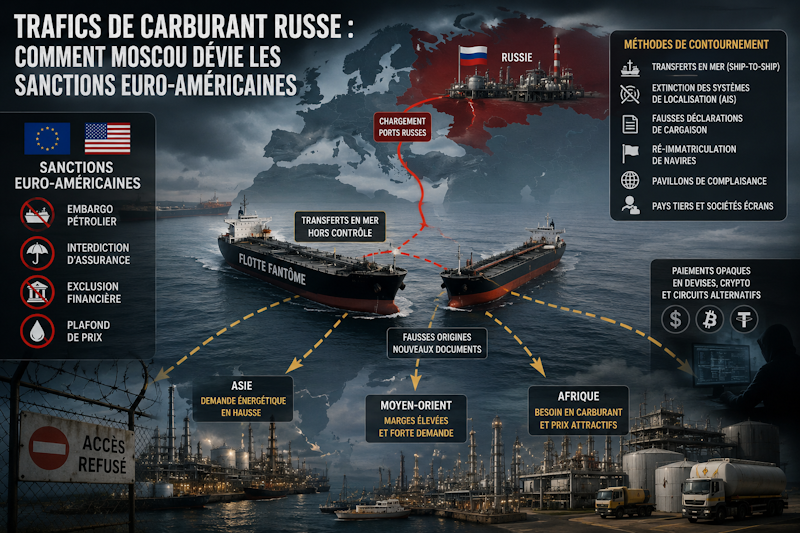
Investigative reports now reveal a sophisticated network funneling Russian petroleum products to markets that have barred them due to Western sanctions imposed after the Ukraine conflict. At the center of this operation lies an unlikely African hub: Morocco.
Geneva-based trader orchestrating the covert fuel flow
A Geneva-based trading firm, Alvari SA, has emerged as the linchpin in this clandestine supply chain. According to detailed findings, the company facilitated multi-million dollar shipments of Russian oil derivatives into northern Africa throughout 2025, with Morocco serving as the primary destination. Three vessels—Tranquil Sea, Duke II, and Eldia—were instrumental in transporting these cargoes from Russian Baltic terminals to Moroccan ports like Jorf Lasfar and Mohammedia.
The journey of the Tranquil Sea exemplifies the elaborate tactics used to obscure the operation’s true nature. British sanctions lists flagged the tanker as early as October 2025 while it was en route to Morocco. Subsequent bans from the European Union and Switzerland followed. Ukrainian defense authorities have gone further, alleging the vessel was previously used to gather intelligence on NATO military and aerial operations, while Finnish authorities detained it on suspicion of damaging an underwater cable. When confronted by investigators, Alvari SA denied any direct or indirect role in chartering or operating these vessels through its legal representatives.
Fake origins: Turkmenistan labels hide Russian fuel
To mask the actual source of the fuel, investigators uncovered a falsified paper trail. Cypriot commercial authorities issued a certificate of origin attributing a diesel shipment to Turkmenistan. The cargo underwent an “Off Port Limits” (OPL) transshipment near Gibraltar—a procedure typically reserved for minor logistical tasks, not high-risk fuel transfers. The operation exploited loopholes in maritime regulations to obscure the cargo’s true origin.
Financial records reveal a complex transaction chain. Payments were processed in US dollars between Attijariwafa Bank—controlled by the royal holding Al Mada—on the buyer’s side and the offshore branch of the Banque Centrale Populaire as the supplier. Moroccan distributors reportedly secured a discount of approximately seven dollars per metric ton compared to European benchmarks, while non-Russian fuel was trading 15 dollars above these indices. In total, this amounted to savings of around 22 dollars per ton that were not passed on to consumers at the pump.
The diplomatic timing of these shipments raised eyebrows. As the Tranquil Sea approached Morocco, Foreign Minister Nasser Bourita traveled to Moscow to meet with Sergey Lavrov. Days later, Morocco abstained from a critical United Nations Security Council vote on the Western Sahara issue—a decision viewed as favorable to Rabat’s interests.
Spain detects suspicious diesel imports via Morocco
Spanish authorities have also taken notice of an unusual surge in diesel imports from Morocco. Local oil industry sources suspect these shipments are part of a triangular trade allowing Russia to circumvent sanctions by rerouting fuel through a non-refining nation before entering the European Union. Morocco lacks domestic refining capacity, making it an ideal transit point for blending and redirection.
Official trade data confirms the trend. In 2025, Morocco imported 645,000 tons of Russian diesel, a figure that climbed to 489,000 tons in early 2026—representing 45% of the country’s total fuel imports. Notably, Morocco did not export any diesel to Spain before the Ukraine war and the 2022 European sanctions.
The timing of the reemergence of these flows coincides with escalating tensions in the Middle East. After the United States and Israel launched strikes against Iran, data from Spain’s Strategic Petroleum Reserves Corporation shows 76,000 tons of diesel from Morocco arrived in Spanish ports between March and April 2026. This followed nearly a year of negligible shipments. Cargoes were documented at Tarragona, Barcelona, and Bilbao between April and June 2026.
Spanish refiners have expressed alarm over potential unfair competition. A spokesperson for the Spanish Association of Fuel Industries emphasized the need to combat fraud in hydrocarbon imports, warning that illicitly sourced fuel could distort market competition.
Two investigations, one unsettling conclusion
When pieced together, findings from separate probes paint a concerning picture: Russian fuel subject to sanctions, relabeled en route, transiting through Morocco, and—based on documented suspicions—potentially re-entering the European Union. While neither investigation claims to possess definitive proof confirming every shipment follows this exact path, both rely on strong circumstantial evidence. This includes maritime tracking data from Kpler, customs documentation, and testimonies from industry professionals. However, the inherent complexity of tracing refined products once they enter global commercial networks makes absolute verification nearly impossible.