From guardian to bystander: Russia’s muted response to Venezuela’s crisis
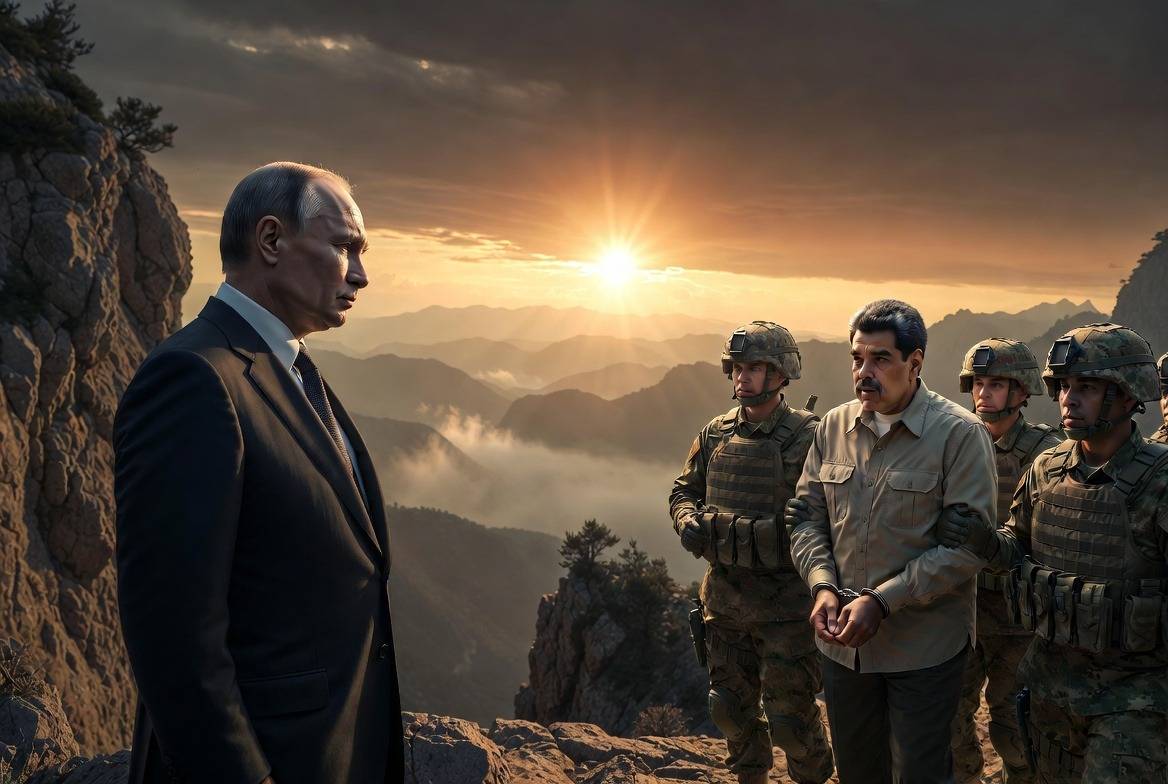
In the realm of international politics, silence can speak volumes—often louder than words. When a seismic shift unfolded in Caracas earlier this year—marked by a sweeping U.S. military intervention and the dramatic capture of Nicolás Maduro—the Russian Federation’s reaction bordered on the perplexing. For a nation that once positioned itself as Venezuela’s staunchest defender against alleged U.S. imperialism, Moscow’s retreat into mere diplomatic statements amounted to a stunning admission of strategic paralysis.
Where did Russia’s once-formidable geopolitical posture vanish to? What became of the high-profile alliance treaties, paraded before the world with great fanfare?
A shield of empty words
While the Russian Ministry of Foreign Affairs did issue a formal condemnation of the “armed aggression” and called for Maduro’s release, such declarations offered little more than symbolic resistance. Beyond the recycled rhetoric, what tangible action did the Kremlin take? A belated naval maneuver involving a submarine escorting a sanctioned oil tanker—and a hollow appeal for Washington to “uphold international law.” This was no deterrence; it was surrender in broad daylight.
By failing to mount a robust diplomatic counteroffensive in the U.N. Security Council or deploy any meaningful leverage, Russia abandoned Venezuela to its fate. Its intelligence apparatus, typically quick to anticipate Western moves, remained conspicuously silent, leaving Caracas defenseless against what amounted to a reassertion of the Monroe Doctrine under a new guise. The stark truth is undeniable: the 2025 strategic partnership treaty between Moscow and Caracas proved to be a paper tiger. At the first real test of resolve, the Russian shield shattered, laying bare the severe limitations of Moscow’s global power projection.
The weight of strategic exhaustion
Russia’s silence was not a calculated tactic—it was the inevitable consequence of exhaustion. Entangled in a protracted conflict and strangled by an “economy of death” that drains financial and human resources, the Kremlin simply lacks the capacity to sustain its global ambitions. Venezuela, once a cornerstone of Moscow’s influence in Latin America, became an inadvertent bargaining chip—or worse, a casualty of Russia’s own isolation.
By confining its response to perfunctory diplomatic protests, Russia sent a chilling message to allies worldwide: its protective mantle extends only as far as its own strategic stamina allows. The message was clear: Moscow’s reach is contracting, and its commitments come with diminishing conviction.
A geopolitical betrayal with lasting consequences
In standing idle as Venezuela’s transitional governance fell under U.S. pressure, Russia did more than relinquish an ally—it forfeited its credibility as a counterbalance to Western dominance. The Russian Federation’s inaction effectively ratified Washington’s fait accompli, consigning Venezuela to a new era of external tutelage without offering a single credible alternative.
This was no diplomatic restraint; it was the unmistakable mark of a strategic failure. By retreating into hollow posturing, Russia sacrificed not only a key ally and access to Venezuela’s vast oil reserves but also its standing as a global power broker. In Caracas, the curtain fell—and the self-proclaimed protector was nowhere to be found.