Since the 2020 and 2021 military takeovers, Mali has undergone a major shift in its foreign policy, prioritizing sovereignty and distancing itself from traditional Western partners. While this realignment has reshaped Bamako’s diplomatic and security relationships—particularly with Russia and the UAE—it has not delivered the stability promised by Assimi Goïta’s government. Persistent insecurity, weak governance, and economic stagnation continue to challenge Mali’s trajectory.
a move toward sovereigntist diplomacy
Under Assimi Goïta, Mali has presented itself as a defender of national sovereignty, rejecting external interference and adjusting its alliances accordingly. This stance has resonated with many Malians frustrated by prolonged instability, perceived foreign dominance, and the failure of earlier partnerships to restore security and basic services.
However, the regime’s transactional sovereigntist post-alignment—a strategy of leveraging diverse external actors to maximize short-term gains—has not translated into long-term stability. Despite diversifying partnerships, insecurity persists across the country, and armed groups continue to exploit local grievances. Corruption remains entrenched, and economic disparities between urban and rural areas deepen.
security partnerships in flux
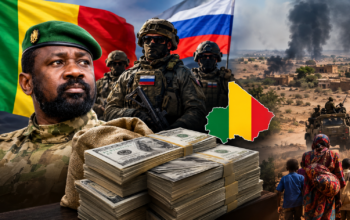
Mali’s withdrawal from MINUSMA and its pivot toward Russian security support marked a turning point in its post-coup security architecture. The Wagner Group’s involvement brought tactical gains, such as the recapture of Kidal in 2023, but was also accompanied by serious allegations of human rights abuses. In mid-2025, Wagner was succeeded by the Africa Corps, a Russian Defense Ministry–affiliated force, signaling a deeper, more formalized Russian presence in Mali’s security sector.
Despite this realignment, attacks by armed groups—including Jama’at Nusrat al-Islam wal-Muslimin (JNIM) and ISIS-Sahel—continue unabated. These groups have adapted to new technologies, enhancing coordination and recruitment. The persistent security vacuum underscores the limits of external military support in addressing Mali’s root causes of instability.
economic challenges and governance deficits
Mali ranks among the lowest on the United Nations Human Development Index, placing 188th out of 193 countries. Economic growth remains concentrated in urban centers like Bamako, while rural and border regions suffer from underdevelopment, limited infrastructure, and scarce economic opportunities. The urban-rural income gap exceeds 5%, far surpassing disparities in countries like India.
Corruption continues to undermine governance and public trust. Although the transitional government pledged reforms, tangible improvements have been limited, and signs of elite enrichment have fueled perceptions of systemic failure. Meanwhile, the postponement of elections—with the proposed presidential term extended until 2030—has raised concerns about democratic backsliding. In May 2025, the government dissolved all political parties, citing public order as justification.
global entanglements and external pressures
Mali’s evolving partnerships have drawn it deeper into global rivalries. Russia’s military presence, while consolidating influence in Bamako, does not equate to exclusive alignment. The United States has reportedly engaged in pragmatic discussions with Mali to resume intelligence-gathering flights, illustrating the regime’s flexibility beneath its sovereigntist rhetoric.
The involvement of other external actors—such as the United Arab Emirates (UAE) and Ukraine—reflects how Mali has become a secondary theater in broader geopolitical competition. Ukrainian-linked support for rebel groups in northern Mali in 2024 led to a diplomatic rupture with Kyiv. Meanwhile, the UAE’s quiet engagement in Mali and Niger highlights a gap between its public condemnation of coups and its strategic interests in the Sahel.
The spillover effects of global conflicts—such as the war in Ukraine and tensions in the Middle East—further complicate Mali’s prospects. Rising fuel and food prices, driven by global volatility, disproportionately impact Mali’s import-dependent economy, exacerbating socioeconomic grievances and fueling recruitment for militant groups. As global powers prioritize short-term influence over long-term stabilization, Mali risks becoming a pawn in wider rivalries rather than a partner in sustainable recovery.
a precarious path forward
Mali’s post-alignment strategy offers short-term resilience but deepens long-term risks. While transactional partnerships may sustain the regime temporarily, they fragment governance structures and increase vulnerability to external shocks. Without meaningful reforms—addressing corruption, restoring democratic processes, and investing in rural development—Mali’s crisis is likely to persist and spill into neighboring countries, particularly along the Gulf of Guinea.
Durable stability will require more than shifting alliances. It demands a comprehensive transformation: rebuilding trust between the state and its citizens, strengthening institutions, and mitigating exposure to global geopolitical and economic fluctuations. Until then, Mali remains trapped in a cycle of instability, where sovereignty is asserted but not secured.