Mali is currently navigating one of the most critical periods in its modern history. General Assimi Goïta, who seized power through a coup in 2020 and solidified his rule with a second one in 2021, had pledged to restore national security and sovereignty. However, six years on, his administration appears more vulnerable than ever, a key piece of Sahel politics today.
Insurgent Offensive Reveals Regime Vulnerabilities
The limits of populism and misplaced pride are becoming starkly evident in Mali. The ground reality has finally caught up with a regime seemingly blinded by its own assurances. On April 25, a series of coordinated assaults, attributed to the Group for the Support of Islam and Muslims (JNIM), an Al-Qaïda affiliate, and the Azawad Liberation Front (FLA), targeted numerous military installations, including those surrounding the capital, Bamako. Tragically, Defense Minister Sadio Camara lost his life in these engagements. Furthermore, strategic northern areas like Kidal, along with other key locations, have reportedly slipped from the Malian army’s grasp, signaling a critical moment in Sahel breaking news.
This recent surge in hostilities has glaringly exposed the inherent fragility of a government that had primarily based its legitimacy on promises of territorial reclamation and enhanced security for the nation. It highlights the ongoing Mali military challenges.
Sovereignty Claims Undermined by Worsening Insecurity
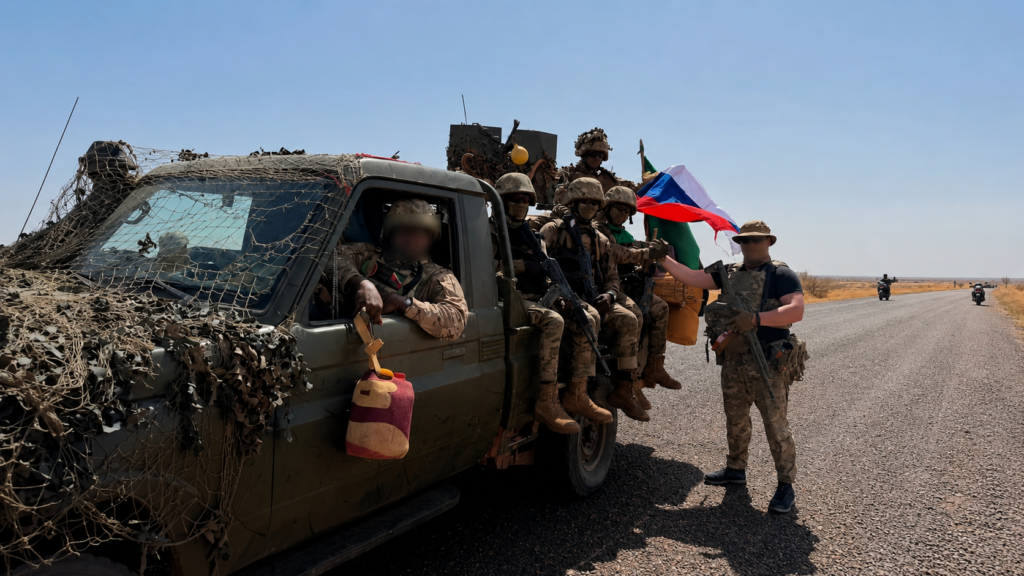
The military junta’s narrative of a Mali finally taking control of its destiny was built upon its severance of ties with France, the expulsion of MINUSMA forces, and the deployment of Russian mercenaries from Africa Corps. Yet, the harsh reality paints a different picture: jihadist armed groups and Tuareg rebels from the Azawad Liberation Front continue to expand their influence, Bamako remains on edge, and civilian populations bear the brunt of the escalating violence. This situation is frequently highlighted in West Africa Sahel updates.
The fervent rhetoric of national sovereignty has largely served as a smokescreen for the regime’s authoritarian consolidation of power. Political parties have been silenced, journalists face intimidation, and any dissenting voice is swiftly branded as an act of betrayal against the state.
A Regime Besieged from Within and Without
Mali now finds itself caught in a tightening vice, having reached critical military and political junctures. Externally, jihadist factions continue to demonstrate undiminished operational capabilities, posing a constant threat. Internally, the erosion of governmental authority and ongoing military rivalries fuel widespread uncertainty, contributing to the complex Mali Niger Burkina news English narratives.
General Goïta’s initial promise of national salvation has devolved into a critical impasse. While he aspired to be remembered as the leader who restored state integrity and Malian pride, he now risks being chronicled as the figure who presided over its gradual disintegration, a significant development in Sahel Express news.