
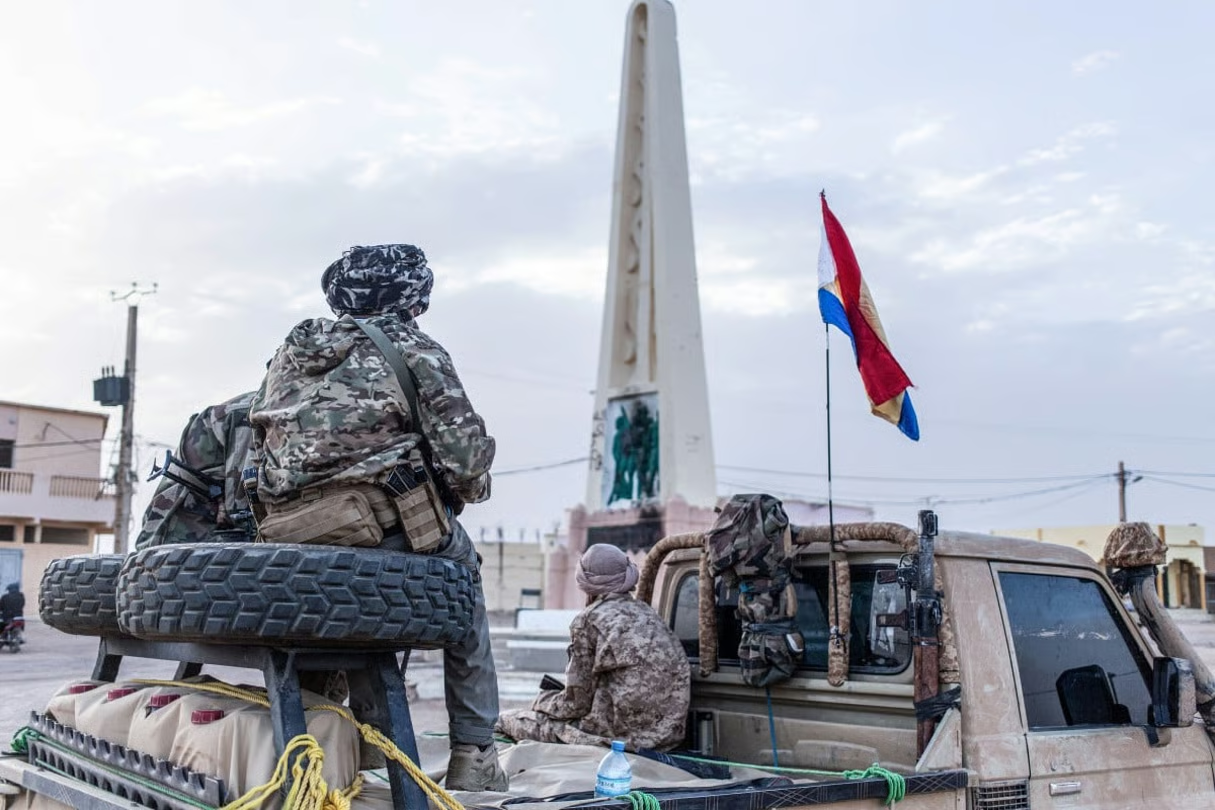
The Malian military conducted at least four aerial strikes overnight from Wednesday to Thursday, causing significant material damage in Kidal, according to a local witness who requested anonymity. One strike demolished a residential building near a former marketplace, while another left a deep crater in the expansive courtyard of Kidal’s governorate headquarters—a facility retaken by the Front de Libération de l’Azawad (FLA) in late April. The FLA, aligned with the Jama’at Nusrat al-Islam wal Muslimin (JNIM), al-Qaeda’s Sahelian branch led by Iyad Ag Ghaly, now controls the city.
«We are targeting specific objectives. Our strategy is clear. The intensity of the strikes will increase in the coming days,» stated a military officer at the official command post in Mopti, central Mali.
A tense atmosphere in Kidal
Kidal, a key northern city, remained eerily quiet on Thursday morning. Traffic was nearly nonexistent, the witness reported, noting that numerous vehicles had fled the area during the night.
The nation faces mounting security challenges following unprecedented coordinated attacks by JNIM jihadists and the FLA rebellion against strategic positions held by the ruling junta in Bamako.
The FLA’s expanding territorial ambitions
During this offensive, the rebel alliance seized control of Kidal, the largest city in northern Mali, after intense clashes. The FLA, a predominantly Tuareg separatist group also including Arab communities, claims sovereignty over the Azawad region—a vast territory encompassing the administrative areas of Kidal, Gao, Ménaka, and Tombouctou.
The group has vowed to extend its control over major northern cities. The Tuareg have waged armed struggles for decades, citing long-standing marginalization, particularly in and around Kidal, a pivotal urban center.