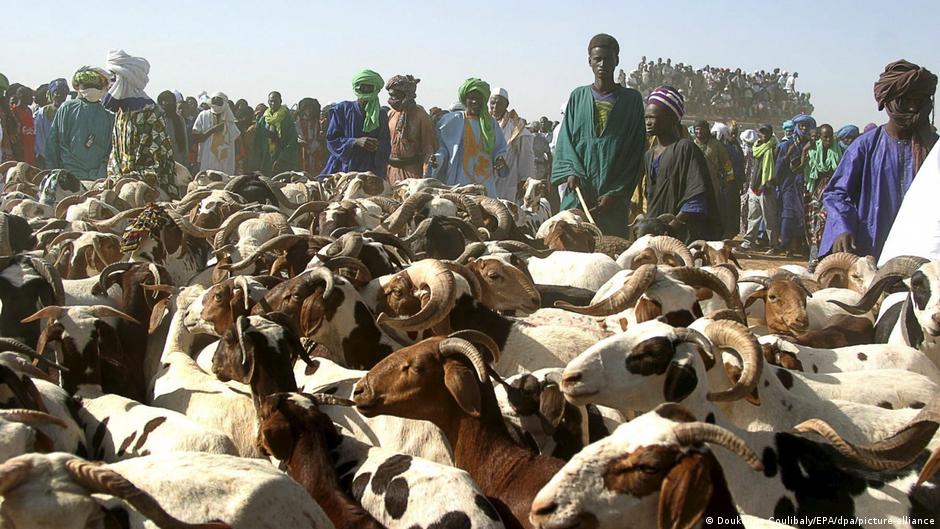
As Tabaski approaches, the Malian capital of Bamako is experiencing a surge in sheep supply, with flocks now visible along major boulevards and open fields across the city. This follows months of disrupted livestock transport due to targeted attacks by armed groups operating in central Mali.
Vehicles carrying livestock have been under constant threat, forcing merchants to seek military protection for their convoys. Despite these measures, reports indicate that unescorted trucks have been burned by unidentified assailants, pushing sheep prices to unprecedented levels in local markets.
military escorts counter terrorist roadblocks
The 200-kilometer stretch between Ségou and Bamako has become particularly hazardous. Known as National Road 6, this vital corridor has seen repeated ambushes by armed factions affiliated with Al Qaeda, who enforce what they describe as a “siege on Bamako.” These attacks involve setting fire to both commercial and personal vehicles, creating severe supply chain disruptions ahead of the religious festival.
coordinated security operations secure livestock routes
In response, the Malian Armed Forces have intensified aerial surveillance and ground patrols along key transit routes. Military convoys now regularly accompany livestock transports to ensure safe passage into the capital. However, challenges persist, as evidenced by the recent ordeal of a livestock trader traveling from Ségou:
« As we approached Zambougou, armed men launched incendiary projectiles at our livestock carrier. The terrified driver pulled over, allowing passengers and animals to escape before the attackers set the vehicle ablaze, including all cargo inside. We were forced to walk several kilometers to Konobougou, where we eventually boarded a public transport vehicle under military escort to Bamako. »
soaring costs and government intervention
The ongoing security crisis has significantly inflated transport and sheep prices. In rural areas, transport costs have tripled, rising from 2,000 to 5,000–6,000 West African CFA francs per animal. Retail prices in Bamako have surged as well, with sheep now selling for up to 250,000 CFA francs—nearly double last year’s prices. One resident commented, « Last year, this same sheep cost 125,000 CFA francs. Now, even with promotions, we’re paying nearly double in some neighborhoods. »
To ease the financial burden on families preparing for Tabaski, the government has announced a subsidized sale of sheep in designated locations across Bamako starting Friday. Key distribution points include municipal lots in Sogoniko, the Hippodrome, Torokorobougou, Lafiabougou’s Sahaba field, and the former AS Real stadium site in Badialan I.