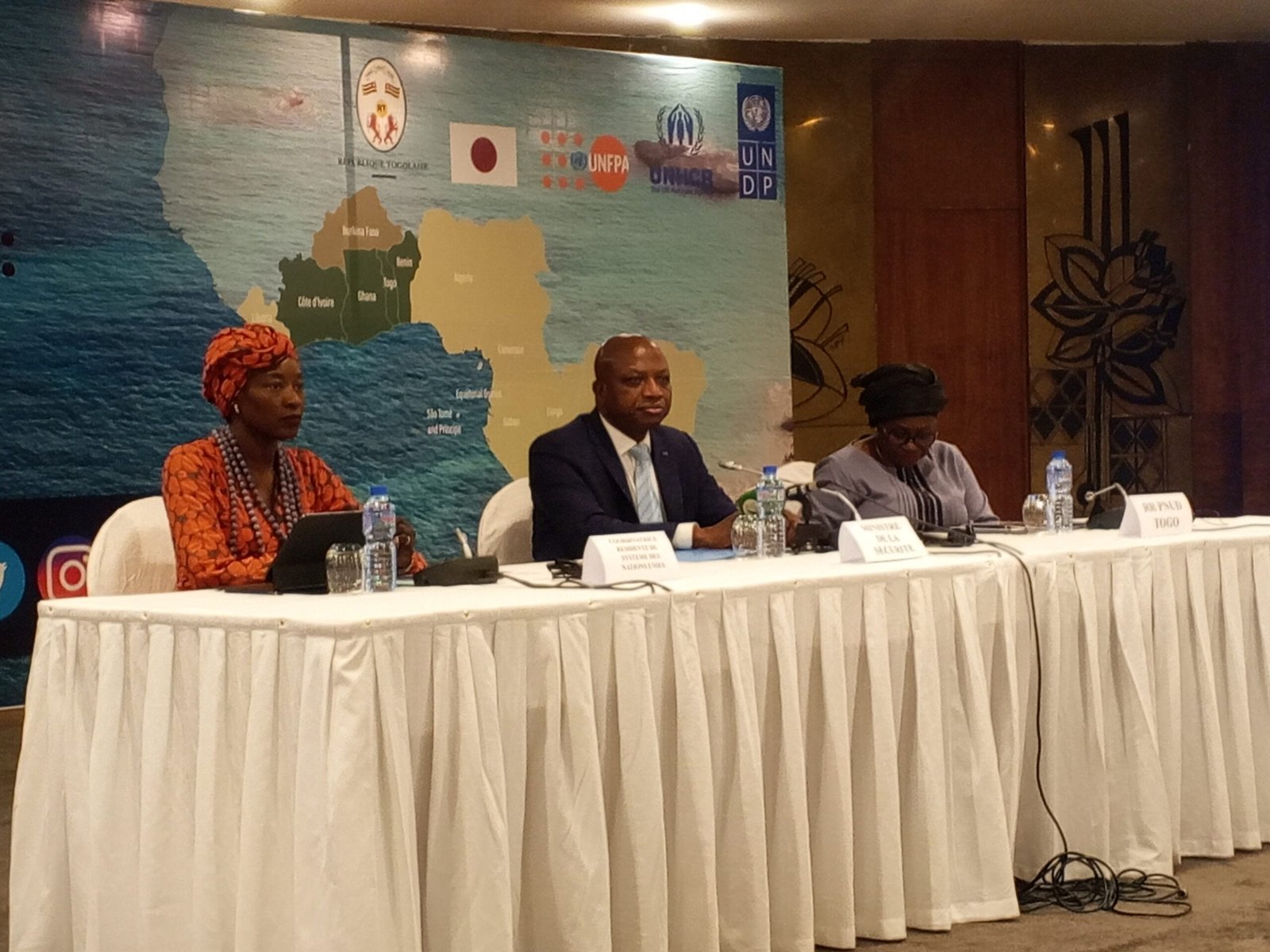
Lomé is hosting a crucial regional dialogue from June 3, 2026, focused on enhancing prevention strategies across the Gulf of Guinea. The event brings together government officials, regional institutions, United Nations agencies, technical and financial partners, and community leaders committed to peacebuilding and conflict prevention.
At the opening ceremony, Calixte Madjoulba, Togo’s Minister of Security, delivered a powerful message: addressing West Africa’s evolving threats requires a unified, sustainable, and prevention-centered approach to ensure lasting stability in the subregion.
Mounting challenges in the Gulf of Guinea
The minister painted a stark picture of the region’s growing security and socio-economic challenges. Violent extremism, terrorism, transnational organized crime, illicit trafficking, arms proliferation, intercommunal tensions, and climate change impacts are steadily eroding social and economic stability in the Gulf of Guinea.
Compounding these threats are the spillover effects of the Sahel crisis, including mass displacements and mounting pressure on host communities and local resources. Madjoulba stressed that no single nation can tackle these challenges alone, emphasizing that the threats transcend national borders and demand collective action.
Togo advocates for a holistic security approach
For Madjoulba, security cannot rely solely on military or law enforcement responses. « Sustainable security cannot be achieved through security measures alone », he declared, underscoring this as a core principle of Togo’s public policy under the leadership of President Faure Essozimna Gnassingbé.
The Togolese strategy hinges on a three-pronged framework: simultaneously strengthening security, development, and social cohesion to address the root causes of instability. Key priorities include reducing inequality, improving governance, fostering social inclusion, creating youth employment, and building community resilience.
The « Protect, Unite, Transform » triad driving Togo’s strategy
At the heart of this approach is the triad « Protect, Unite, Transform », which Madjoulba presented as the guiding compass for government action.
- Protect: Ensuring the safety of populations and preserving peace.
- Unite: Promoting dialogue, rebuilding trust between citizens and institutions, and strengthening social cohesion.
- Transform: Addressing structural vulnerabilities by creating economic opportunities, reducing disparities, and fostering resilient communities.
For Madjoulba, this model aligns perfectly with the goals of the regional dialogue in Lomé, offering a blueprint for addressing the Gulf of Guinea’s complex challenges.
From commitments to tangible results
The dialogue’s theme, « From Commitment to Impact », reflects participants’ determination to translate political ambitions into concrete actions. Madjoulba urged states and partners to move beyond declarations and deliver visible results for local communities.
« Citizens expect effective, context-specific solutions to their daily realities, » he noted. He called for mechanisms to anticipate crises, prevent conflicts before they take root, and build long-term resilience in vulnerable areas.
United Nations support for Gulf of Guinea resilience
The Togolese official also commended the contributions of the United Nations Development Programme (UNDP), the United Nations Population Fund (UNFPA), and the Office of the United Nations High Commissioner for Refugees (UNHCR).
Through the 2026-2029 Joint Prevention Facility for the Gulf of Guinea, these partners are backing a prevention-focused, community-resilient, and inclusive economic development approach. Participants see this initiative as a pivotal opportunity to strengthen regional cooperation, share best practices, and mobilize resources to tackle emerging threats.
Toward a regional roadmap for peace and resilience
Over two days of deliberations, stakeholders in Lomé are expected to finalize an ambitious regional roadmap. The plan aims to strengthen prevention mechanisms, deepen cross-border cooperation, secure sustainable financing, and improve monitoring of ongoing initiatives.
The dialogue reaffirms Togo’s belief that prevention is one of the most strategic investments for fostering peace, security, and sustainable development in the Gulf of Guinea. In a region grappling with multidimensional challenges, the message from Lomé is unequivocal: anticipating crises is far more cost-effective than managing them, and prevention remains the surest path to a stable, prosperous future for all.