Libreville’s urban transformation accelerates under president Oligui Nguema
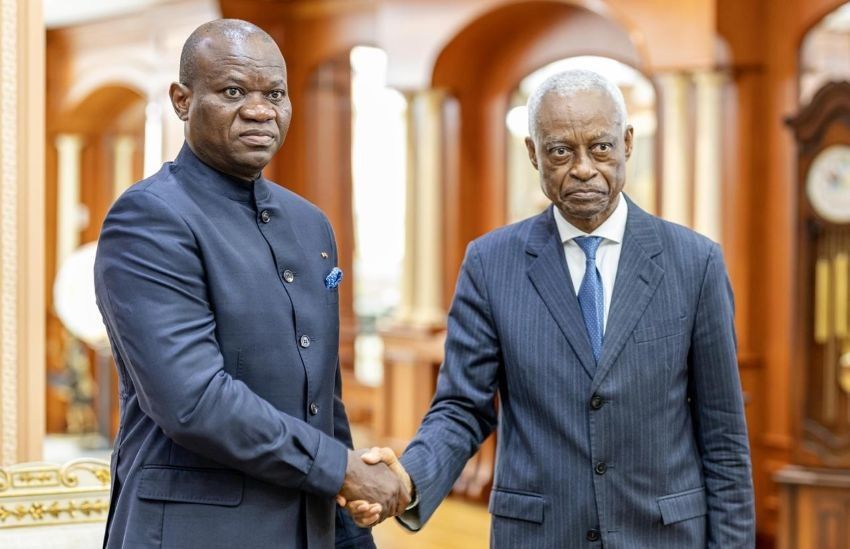
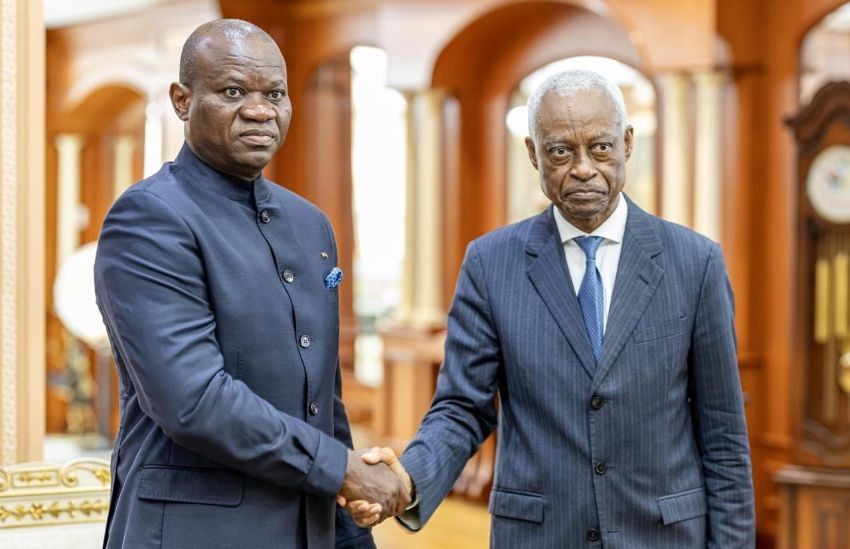
Libreville, Wednesday, June 3, 2026 – The ambitious redesign of Libreville is now under intensified political guidance. President Brice Clotaire Oligui Nguema recently hosted the capital’s Mayor, Eugène Mba, reaffirming the central role of municipal governance in Gabon’s national modernization strategy.
This meeting, part of a routine review of local government actions, underscores the State’s clear commitment to enhancing coordination with local administrations. The objective is to accelerate the transformation of the urban living environment for Libreville residents.
Local governance held to account for tangible outcomes
During their discussions, Libreville’s Mayor presented an update on the roadmap he received upon taking office. This report was accompanied by a new municipal organizational structure and a revised action plan, both designed to inject greater efficiency into the capital’s management. This initiative reflects a drive for increased accountability among local executives, who are now judged on concrete results and their ability to translate policy directives into visible actions on the ground. The municipality is tasked with evolving from a purely administrative body to one focused on transformation.
Reimagining the city: urban planning, public services, and cleanliness
Key discussions centered on foundational projects aimed at permanently reshaping Libreville. Priorities include the strategic reorganization of urban spaces, the development of modern parking facilities, the enhancement of green and botanical areas, and rigorous efforts to combat the unauthorized occupation of public land.
These initiatives reveal a determination to restore coherence and functionality to a capital grappling with increasing demographic pressure and persistent development challenges. The overarching goal is to strengthen local infrastructure, tangibly improve daily life for residents, and re-establish Libreville as a more structured and efficient metropolis.
Urban sanitation also emerged as a critical concern. Faced with persistent issues in waste management, the Head of State emphasized the urgent need for swift and organized action. The collection, transport, treatment, and valorization of household waste are now considered paramount for public health and effective urban governance. In this context, city cleanliness is no longer merely a technical issue but a key indicator of the city’s performance and the efficacy of its institutions.
Digitalization and modernization as catalysts for change
Another significant aspect of the meeting focused on modernizing municipal administration through the digitalization of services. This reform aims to streamline administrative processes, elevate the quality of public services, and bolster transparency in the management of local resources.
Digitalization is also positioned as a strategic tool to secure revenue collection operations and boost the commune’s own financial resources. This aligns with a broader trend of digital transformation in Gabonese public action, where technology is increasingly leveraged for governance and efficiency. Such administrative evolution, however, necessitates a shift in institutional culture, where performance, traceability, and accountability become standard management practices.
Libreville: a national showcase and urban modernity testbed
Beyond specific technical projects, the President reiterated a broader political vision. Libreville, as the nation’s capital and primary showcase, must embody a model of urban modernity and efficient local governance. It is expected to progressively meet international standards in urban planning, public service quality, and the management of urban spaces.
In this vein, the Head of State urged the Mayor to demonstrate rigor, innovation, and effectiveness in executing ongoing projects. This demand reflects a desire to move away from fragmented city management, embedding municipal action within a structured and measurable dynamic.
A new role for local authorities in public action
This audience transcends a simple institutional exchange. It confirms a fundamental shift in national governance, where local authorities are poised to become pivotal actors in national development. By prioritizing citizens’ daily concerns at the heart of public action, the executive aims to bring political decision-making closer to urban realities. Libreville thus serves as a laboratory for territorial reform, where a significant portion of the national transformation’s credibility is being forged.
The success of this ambitious endeavor will depend on the capacity of local institutions to implement, coordinate, and sustain the initiated reforms. In this dynamic, the Gabonese capital is not merely an administrative center, but a genuine test of the State’s modernization efforts.