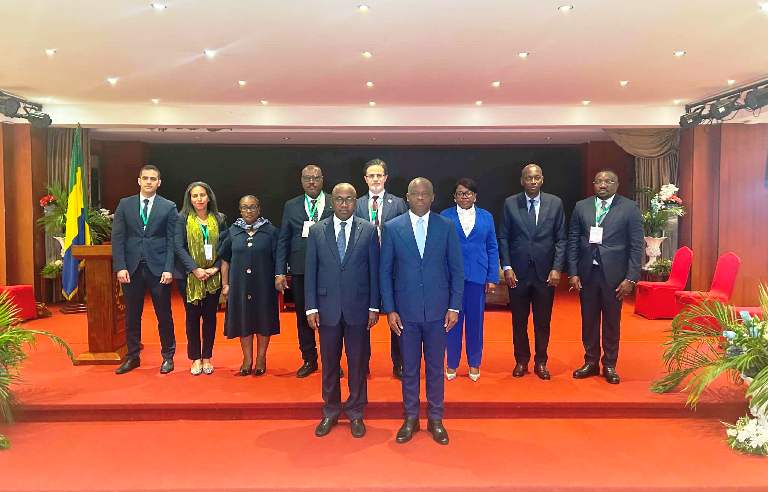
The Gabonese government has taken a decisive step in its fight against corruption by launching a four-day evaluation mission in Libreville. The initiative, which began on June 29, 2026, brings together national officials, UNODC experts, and international partners to assess progress made in implementing measures under the United Nations Convention against Corruption (UNCAC).
Hermann Immongault, Vice-President of the Gabonese government, opened the session by emphasizing the critical role of integrity in driving economic and social progress. « Public integrity enhances government performance, secures investments, and strengthens economic competitiveness while fostering sustainable, inclusive, and equitable development, » he stated.
Gabon, a signatory to the UNCAC since October 1, 2007, is undergoing its second review cycle, focusing on preventive measures and asset recovery. The evaluation aims to strengthen transparency, accountability, and institutional governance across public sectors.
Collaborative assessment for stronger anti-corruption measures
Séraphin Ondoumba, UNODC Focal Point and member of Gabon’s National Commission to Combat Corruption and Illicit Enrichment (CNLCEI), highlighted the broader significance of this dialogue. « This direct exchange isn’t just about technical assessments—it’s a platform to reinforce cooperation among states, share best practices, and elevate our collective efforts against corruption, » he explained.
The mission, led by UNODC’s Chief of Mission Mohamed Cherbal, will closely examine Gabon’s anti-corruption frameworks, particularly how effectively the country is applying UNCAC’s preventive and asset recovery provisions. The review runs from June 29 to July 1, 2026, following the first cycle conducted in 2010, which evaluated legal enforcement and international cooperation.
Identifying pathways for improved governance
According to Nestor Mbou, President of the CNLCEI, this dialogue represents more than just an evaluation—it’s an opportunity for continuous improvement. « This process isn’t merely about assessing legal or institutional frameworks; it’s about recognizing progress, addressing challenges, and crafting actionable recommendations to accelerate reform, » he noted.
The mission’s findings will guide future policy reforms, reinforcing national mechanisms for prevention, oversight, and recovery of illicit assets. The goal is to build a more accountable, efficient, and citizen-focused administration.