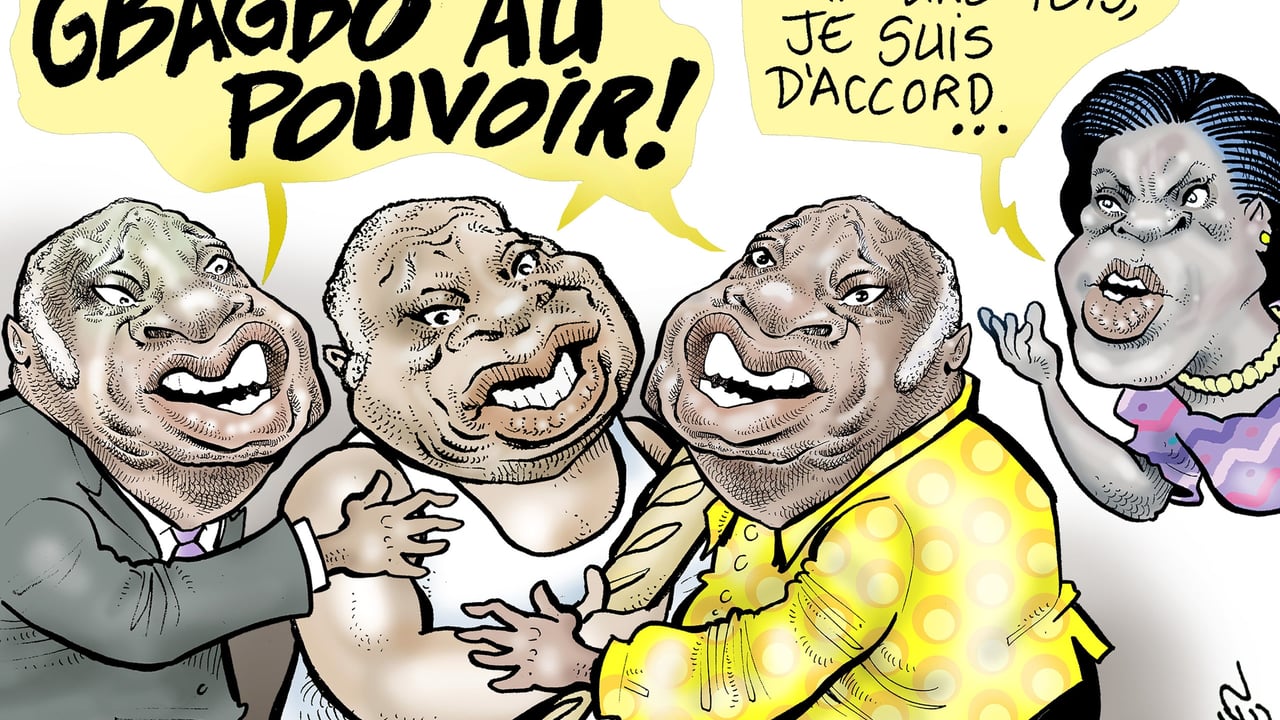
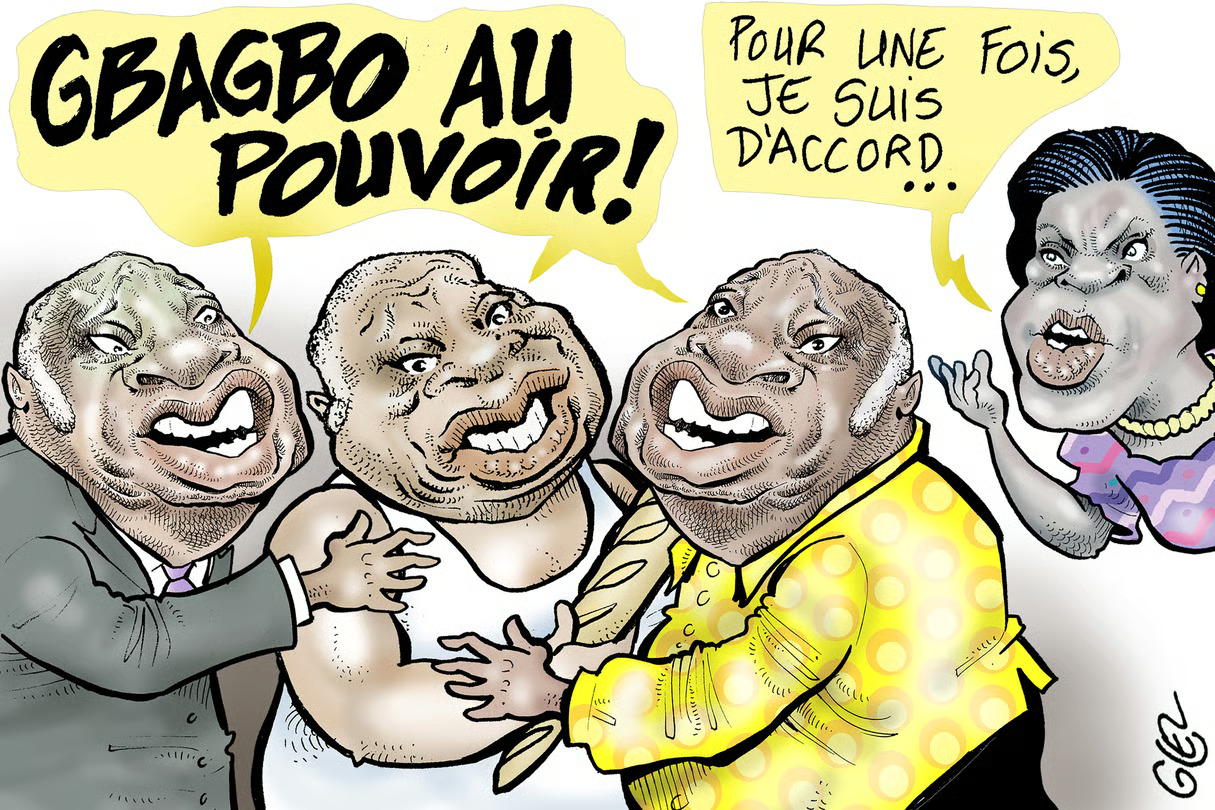
The question lingered for months: would he make a political comeback or step away into retirement? After being barred from running in Ivory Coast’s last presidential election due to a technicality involving grace and amnesty distinctions, former President Laurent Gbagbo had hinted at leaving the political stage. Yet on May 14 and 15, at the first ordinary congress of the People’s Party of Ivory Coast (PPA-CI) in Abidjan’s Treichville Cultural Palace, the party’s founder was overwhelmingly re-elected as its leader—despite his absence.
The move comes as President Alassane Ouattara, Gbagbo’s long-time rival, prepares for another term, while the PPA-CI’s recent electoral performance has fallen short of expectations. Gbagbo’s supporters insist his leadership is essential to guide an Ivory Coast facing significant challenges. Dubbed the “Woody of Mama” for his folksy appeal, the 80-year-old veteran appears to have chosen to remain in the political arena for now.
Party unity after internal purge
More than 3,000 party members gathered for the congress, where Gbagbo was acclaimed as leader—a sign of unity, though one achieved only after a recent internal crackdown. Dissident factions within the PPA-CI, particularly those aligned with former executive vice president Ahoua Don Mello, had pursued independent candidacies in last October’s presidential race, further fracturing the party’s cohesion.
A total of 65 militants were penalized: three were expelled, and 62 were suspended for up to 18 months, including Mayor of Lakota Prince Arthur Dalli, independent deputy Stéphane Kipré, and Professor Georges Armand Ouégnin. Their offense? Defying the party’s boycott of recent legislative elections, which the PPA-CI did not contest in 2025.
Renewed calls for internal reform
The suspended members had advocated for leadership renewal and a reallocation of roles within the party. Their exclusion from the congress underscored the leadership’s determination to enforce discipline. Yet, despite these measures, Gbagbo’s presence looms large. The party’s founding figure has made it clear he does not intend to manage day-to-day operations, but his symbolic leadership remains indispensable. As one observer noted, “once a baker, always a baker.”
Following the congress, Gbagbo addressed supporters at a public event in Abidjan and celebrated what he called a “Renaissance Festival” in his hometown of Songon. His return to the political spotlight suggests that Ivory Coast’s political landscape is far from static—and that Gbagbo’s influence endures.