
This week brought significant developments across the African continent, from high-level diplomatic engagements to critical economic discussions and evolving political landscapes. Here’s a summary of the essential updates:
- Emmanuel Macron’s strategic shift in African policy, culminating in Nairobi.
- The Africa CEO Forum in Kigali urging the private sector to scale up.
- The ongoing mystery of Cameroon’s vice-presidency.
- Senegal’s constitutional reform and its implications for Ousmane Sonko.
- Insights into Philippe Lalliot, France’s new ambassador to Morocco.
1. Emmanuel Macron concludes over a decade of African policy in Nairobi
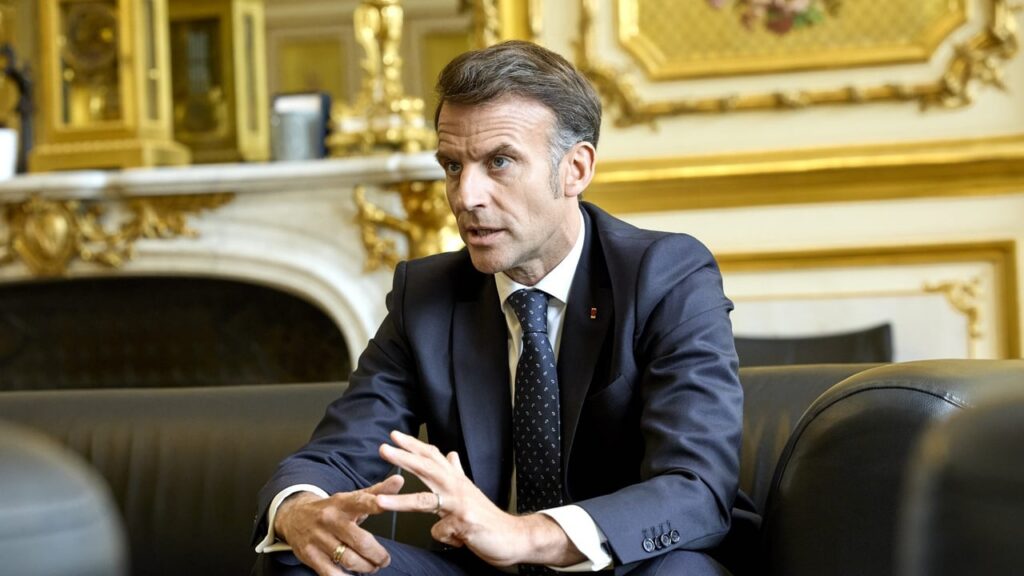
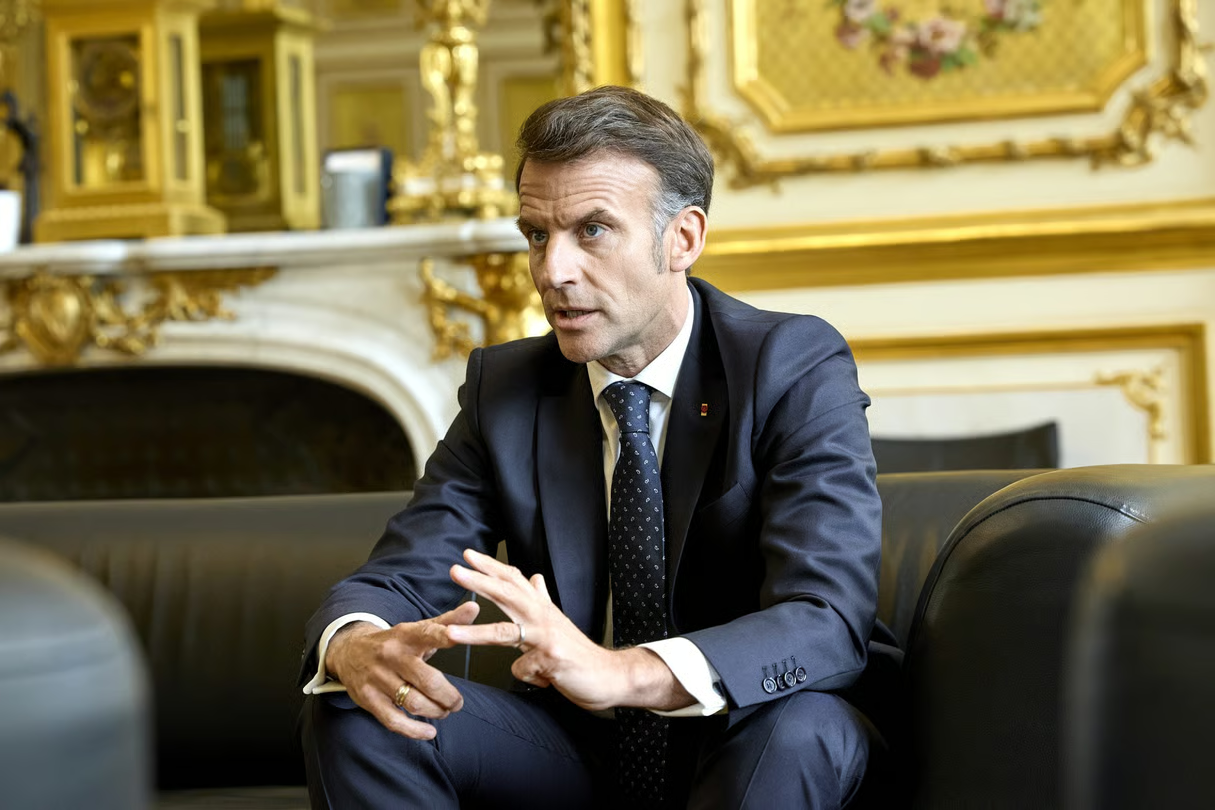
Key Takeaways. President Emmanuel Macron outlined a clear strategic pivot in France’s engagement with Africa during a major interview ahead of the Africa Forward summit in Nairobi (May 11-12). His diagnosis was unequivocal: the traditional paradigm of official development assistance is obsolete. He asserted, “We are no longer in a logic of aid,” instead championing the concept of “solidarity investment.” This message directly targeted private markets, often deterred by unfavorable credit ratings and what is perceived as excessive risk.
Event Highlights. The Nairobi summit, marking the first Franco-African gathering held outside West Africa, convened approximately thirty heads of state, with Kenyan President William Ruto co-hosting. Macron announced €23 billion in investment intentions, including €14 billion from France (encompassing both public and private sectors). Proparco, the private sector arm of the AFD, committed €500 million, representing nearly 50% of its annual African allocation in a single day.
A Major Shift. The French president swiftly addressed the Sahelian issue – stating “no offense” – but the choice of Nairobi speaks volumes. Following recent diplomatic ruptures with Mali, Burkina Faso, and Niger, Paris is strategically reorienting towards Anglophone East Africa. President Ruto benefits from this alignment a year before Kenya’s presidential elections, while Macron seeks a credible partner to advocate for the reform of the international financial architecture at the upcoming G7 summit in June.
The Numbers. Official development assistance from OECD countries has plummeted by over a third in two years. France, specifically, has reduced its allocation by approximately €2 billion. This void is what Macron aims to fill with private capital, a gamble whose concrete results remain to be seen.
2. “We must no longer wait to be swindled”: Africa CEO Forum challenges African private sector to scale up
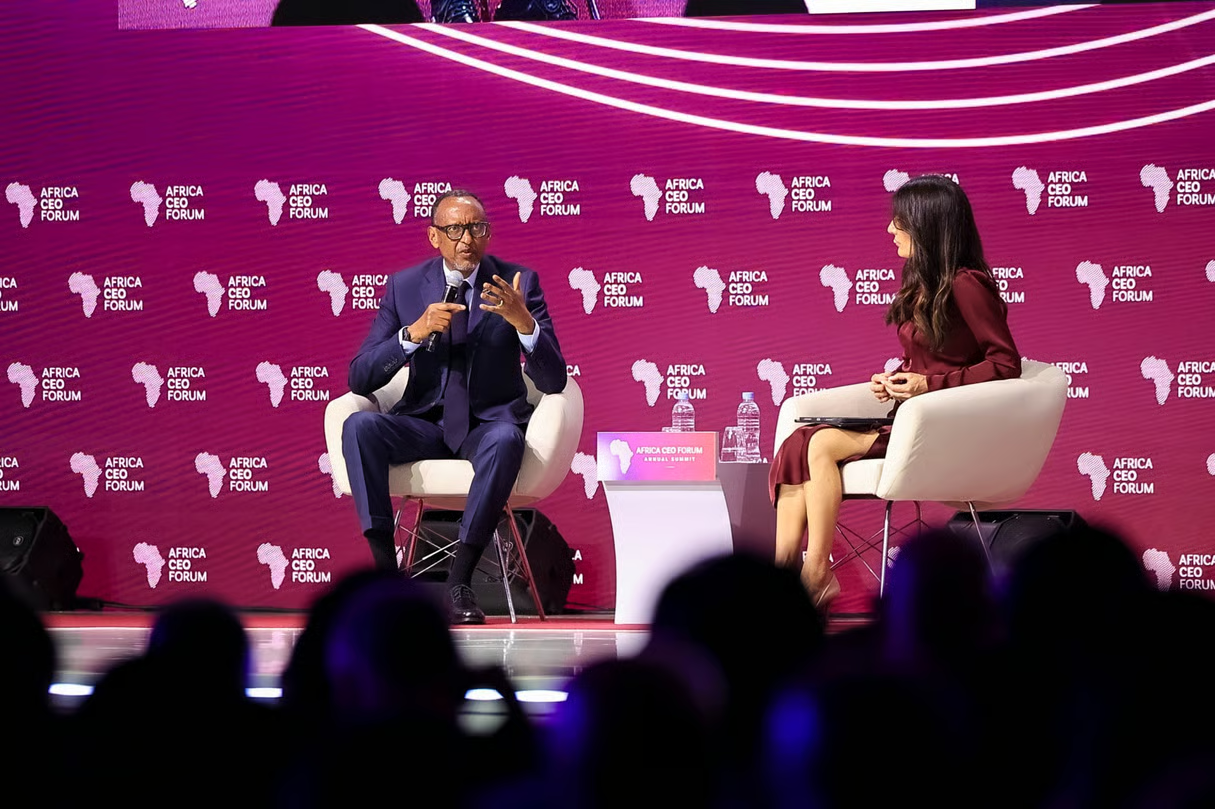
What You Need to Know. The 13th Africa CEO Forum commenced on Thursday in Kigali, under the compelling theme of “scale or fail.” Addressing 2,800 decision-makers and eight heads of state, the message was unambiguous: African national markets are too constrained, intra-African trade remains insufficient, and the continent must cease its fragmented approach.
Why It Matters. The stakes are structural. Without continental champions capable of asserting influence internationally, Africa risks remaining an exporter of potential – minerals, talent, capital – rather than capturing its inherent value. The AfCFTA project, eight years post-launch, is still incomplete, hampered by persistent regulatory barriers, elevated logistical costs, and still marginal intra-African trade volumes.
A Powerful Statement. Rwandan President Paul Kagame declared, “On one hand, they lecture us on human rights, and on the other, they come to take our minerals. We must no longer wait to be swindled.”
3. Paul Biya’s vice president: a prolonged silence and a growing list of contenders

What You Need to Know. The decree re-establishing Cameroon’s vice-presidency has been promulgated, yet the position remains vacant. In Yaoundé, speculation is rife, with a list of hopefuls steadily expanding as President Paul Biya delays his decision. Prominent names include Paul Atanga Nji, Louis-Paul Motaze, Philémon Yang, and Oswald Baboké.
The Stalemate. Franck Biya, the President’s son, was reportedly slated for appointment swiftly after the April decree, with his first official duty being to welcome Pope Leo XIV. A press release was prepared for broadcast on CRTV but was never issued. Information indicates that Chantal Biya intervened at the last minute, advocating for her own son, Franck Hertz. Behind this shifting roster of names, the ongoing struggle for presidential succession plays out in the political shadows.
4. Senegal’s constitutional reform: why it primarily benefits Ousmane Sonko

What You Need to Know. A preliminary draft of a constitutional revision, released on April 27, appears poised to reconfigure the balance of power at the apex of the Senegalese executive, largely in favor of Ousmane Sonko. Two pivotal changes are proposed: the president would now determine national policy “in consultation” with the Prime Minister, and the Prime Minister would gain an independent right to refer matters to the future Constitutional Court, separate from presidential approval. Furthermore, President Faye would be barred from leading a political party or campaigning, while Sonko would retain full autonomy to head Pastef.
Why It Matters. The institutional risk is significant. Article 49 remains unchanged, meaning President Faye could still dismiss Prime Minister Sonko at any moment. However, should the tensions between the two leaders, already evident for several months, escalate to such a scenario, Senegal could face an unprecedented cohabitation: a constitutionally strengthened Prime Minister, leading the parliamentary majority, forced into opposition from the very heart of government.
5. All about Philippe Lalliot, France’s new ambassador to Morocco

Macron’s Choice. Philippe Lalliot, 60, is set to succeed Christophe Lecourtier as France’s ambassador to Morocco—a decision personally made by President Macron. Lalliot’s profile reveals a seasoned diplomat, a product of the Quai d’Orsay, currently serving as the director of the Crisis and Support Center (CDCS). His appointment signals a preference for a crisis management expert over a political figure, aligning with France’s evolving diplomatic approach towards Rabat.
Dual Challenges. Lalliot assumes his role amidst a bilateral relationship that is warming but still incomplete, with a friendship treaty under negotiation and a state visit by Mohammed VI to France yet to be officially scheduled. Simultaneously, he inherits a substantial economic foundation: France accounts for nearly 30% of total foreign direct investment in Morocco. While Paris is keen to accelerate progress, Rabat is proceeding with a measured, step-by-step approach.
You may also like
Mali : 17 morts dans les rangs des dozos, le JNIM accentue sa pression
Sahel : le pari des juntes tourne-t-il à l’échec sécuritaire ?
MALI : Le JNIM diffuse les images de l’attaque de la base de San et contredit la version des FAMa
Insecurity ravages Tillabéri while military authorities boost support for General Tiani in Niger
Senegal’s air expands fleet with new boeing 737-800 jet