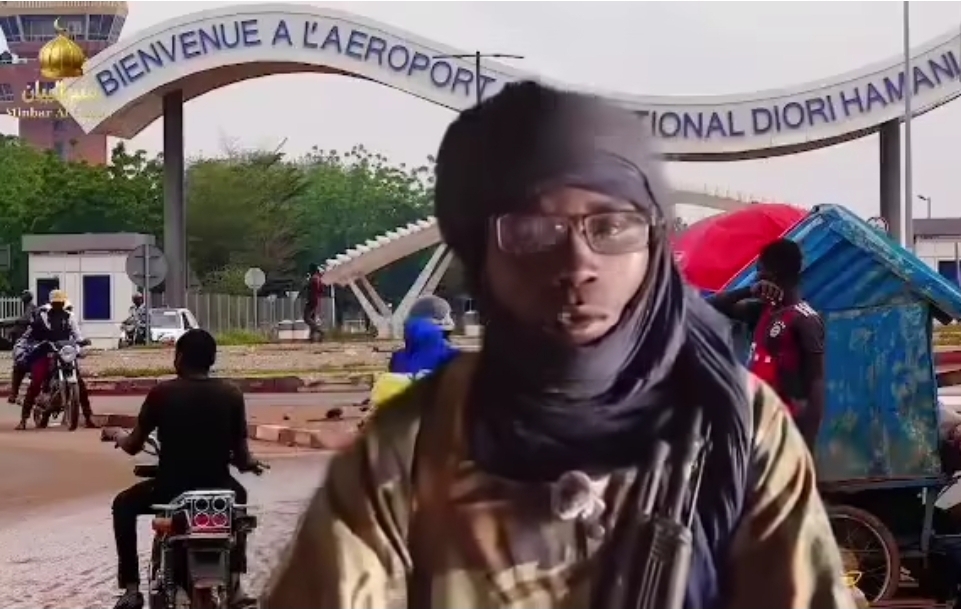
Insecurity continues its alarming advance toward the Nigerien capital. In a video released on June 26, 2026, delivered in the Zarma language, the Support Group for Islam and Muslims (JNIM), through its spokesperson Abdulmajid al-Ansari, conveyed a particularly troubling message to the population of Niamey.
During this statement, the group claimed it does not target civilians. However, it accused a segment of the populace of having collaborated with the Defense and Security Forces (FDS) during the attack on Niamey airport on June 18, 2026. Based on this accusation, the movement explicitly threatens residents who move near the capital, while asserting its ability to strike within Niamey itself. It also announces that the operations already carried out are merely a prelude to actions it describes as “far more significant.”
This communication marks a concerning evolution in the group’s messaging. By equating civilians with alleged military supporters, JNIM maintains an ambiguity likely to heighten fear among the population. Even when an armed group claims not to target civilians, simply labeling them as potential collaborators significantly increases their exposure to violence and intimidation.
These statements come at a time when attacks have multiplied in Niger in recent years, despite changes in security strategy and the strengthening of military partnerships. They also illustrate the intent of jihadist groups to exert psychological pressure on populations by disseminating messages designed to sow fear, erode trust in authorities, and restrict movement in certain areas.
Beyond their military implications, these threats constitute a tool of psychological warfare. They aim to create a permanent climate of insecurity, discourage any cooperation between citizens and security forces, and demonstrate that armed groups seek to extend their influence to the very gates of the capital. Faced with this type of communication, the authorities’ challenge remains both security and informational: protecting the population while preventing armed groups’ propaganda from amplifying the fear they precisely seek to provoke.