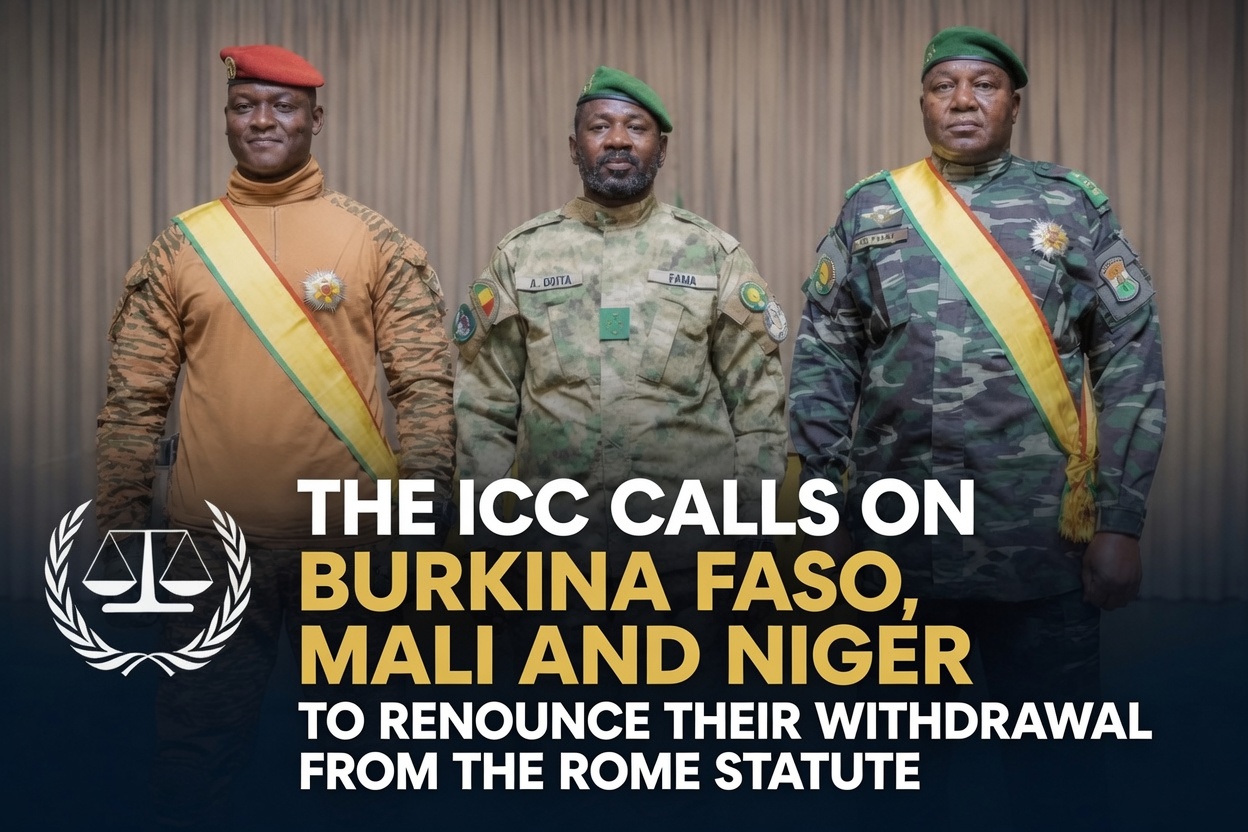
The International Criminal Court (ICC) has issued a direct appeal to Burkina Faso, Mali, and Niger, urging them to reverse their decision to withdraw from the Rome Statute, the foundational treaty of the global judicial body. This significant intervention emerges amidst a period of profound political and diplomatic realignments within the Alliance of Sahel States (AES).
For the ICC, the continued adherence of these three nations to the Rome Statute is deemed crucial for sustaining the global effort against impunity. The international institution underscored its mandate to prosecute individuals suspected of war crimes, crimes against humanity, genocide, and, under specific circumstances, crimes of aggression, particularly when national judiciaries prove incapable of effective action.
The impending withdrawal of Burkina Faso, Mali, and Niger from the treaty has sparked considerable concern across the international community. Many observers contend that such a move could significantly undermine international judicial cooperation frameworks and impede investigations into grave atrocities perpetrated in a region already grappling with widespread armed conflicts and violence targeting civilian populations.
Conversely, the governments of the three West African nations champion a perspective rooted in national sovereignty. They assert that their domestic judicial systems should retain primary responsibility for adjudicating cases within their borders, frequently criticizing what they view as an international justice system that can be selective or swayed by political agendas.
This ongoing debate extends beyond mere legal frameworks, illuminating the enduring tension between the principle of state sovereignty and the imperative to ensure an international justice system capable of prosecuting the most egregious crimes when national remedies fall short.
The ICC’s urgent plea thus underscores the critical choices currently facing Burkina Faso, Mali, and Niger. Their ultimate determination will carry significant ramifications, impacting not only their engagement with international institutions but also judicial cooperation, the safeguarding of victims, and the global perception of their commitment to combating impunity.