internal turmoil within Gabon’s grand lodge
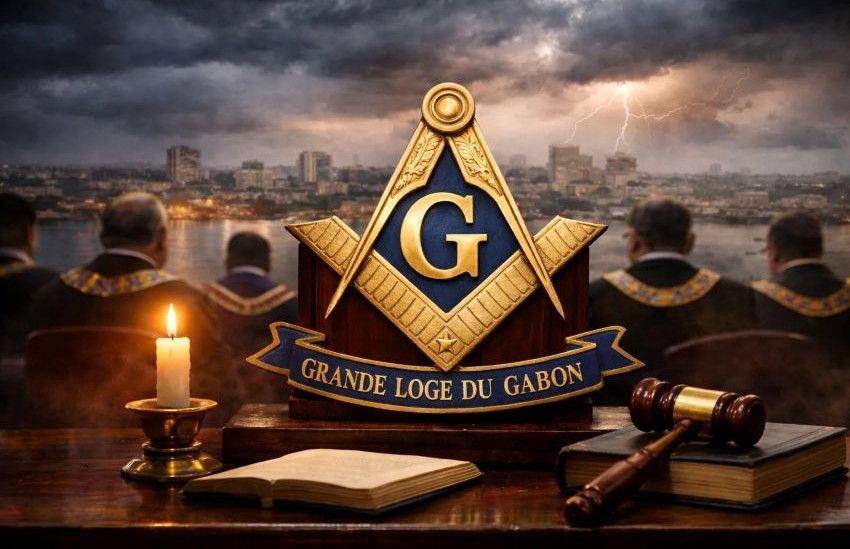
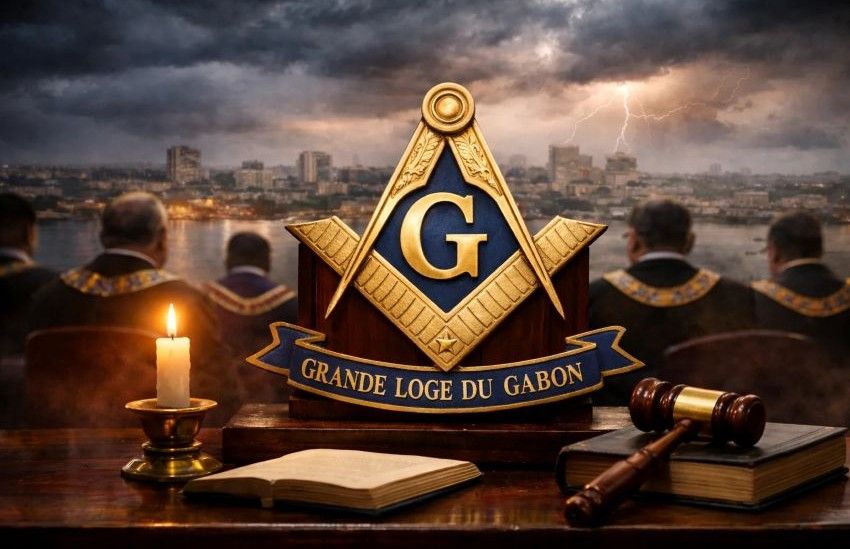
Libreville, Friday, June 19, 2026 – For countless decades, the Grande Loge du Gabon (GLG) meticulously cultivated an aura of discretion, significant influence, and an unwavering image as an institution capable of navigating political turmoil without exposing its internal fissures. Today, this long-standing paradigm appears to be crumbling.
With a pivotal general assembly mere months away, Gabon’s most influential Masonic obedience finds itself embroiled in an overt crisis. This upheaval is a complex tapestry woven from fierce succession battles, challenges to authority, serious financial irregularities, and intense clan rivalries. Yet, beneath these visible disputes lies a more profound systemic transformation: a long-established order, once anchored by a dominant figure, is now compelled to re-establish its own equilibrium.
Numerous accounts indicate an unprecedented level of tension within the Grande Loge du Gabon. An institution that proudly espouses values of fraternity, moral elevation, and harmony now sees its divisions spill far beyond the confines of its sacred temples.
the erosion of a long-standing order
To truly grasp the magnitude of the current crisis, one must consider the recent shifts in Gabon’s power dynamics. For many years, both political and Masonic authority converged around a single, powerful individual. When the President of the Republic simultaneously held the esteemed position of Grand Master, individual ambitions, though present, were effectively restrained by an almost unchallengeable hierarchy.
A significant turning point emerged following the events of August 30, 2023. Contrary to widespread expectations that the new Head of State, Brice Clotaire Oligui Nguema, would assume leadership of the obedience, he instead opted not to seek the Grand Mastership. Subsequently, in February 2024, Jacques-Denis Tsanga was formally installed at the helm of the GLG.
This decision marked a radical departure from a deeply entrenched tradition. For some observers, it signaled a deliberate effort to depoliticize the institution. For others, however, it primarily ushered in a period of profound uncertainty, where the absence of a unifying authority created fertile ground for long-suppressed rivalries to surface.
succession struggles expose deep fractures
Three years into his tenure, Jacques-Denis Tsanga is now facing a torrent of criticism. His proponents highlight the reforms he initiated concerning the organization of Masonic provinces, the management of patrimonial assets, and the obedience’s international outreach. Conversely, his detractors vehemently denounce what they perceive as an excessive centralization of power, opaque governance practices, and the controversial handling of several sensitive matters.
Figures circulating among members underscore the prevailing discontent. Attendance at temples is reportedly in steep decline; out of approximately six hundred recorded members, only about two hundred regularly participate in activities. Expulsions, suspensions, and voluntary resignations have collectively fostered an unparalleled climate of mistrust.
Against this backdrop, the election scheduled for the upcoming general assembly assumes critical strategic importance. Multiple candidacies and aspirations are already emerging. Distinguished historical figures, high-ranking officials, and representatives of newer generations are all appearing as potential contenders for the succession. This battle transcends a mere symbolic function; it fundamentally shapes the very future of the organization.
the search for a new center of gravity
Beyond the specific realm of Gabonese Freemasonry, this crisis offers compelling insight into the evolving centers of influence within the nation. Long shielded by its close ties to the highest echelons of the state, the Grande Loge du Gabon is now confronting the intricate demands of autonomy.
The paradox is striking. Those who once criticized the conflation of political and Masonic power now acknowledge that this very proximity ensured a degree of internal stability. Conversely, the obedience’s gradual emancipation is now revealing deep-seated fractures that the central authority previously helped to contain.
Thus, the issue extends far beyond simply selecting the next Grand Master. It delves into the institution’s fundamental capacity to establish an authority recognized by all within an environment that has become increasingly competitive and fragmented. As in any organization, when the center of gravity becomes uncertain, ambitions cease to coalesce around existing power and instead begin to clash fiercely for its acquisition.
The current crisis represents a significant test for the Grande Loge du Gabon. Should it succeed in transforming this period of intense tension into an opportunity for profound renewal, it could emerge strengthened. If not, the disputes presently roiling its ranks risk paving the way for lasting fragmentation.
For an institution that historically leveraged secrecy as its core strength, the public spectacle unfolding today already carries significant symbolic weight. It starkly reveals that even within the oldest and most influential structures, the essential question remains constant: how to preserve unity when authority is no longer universally unquestioned.