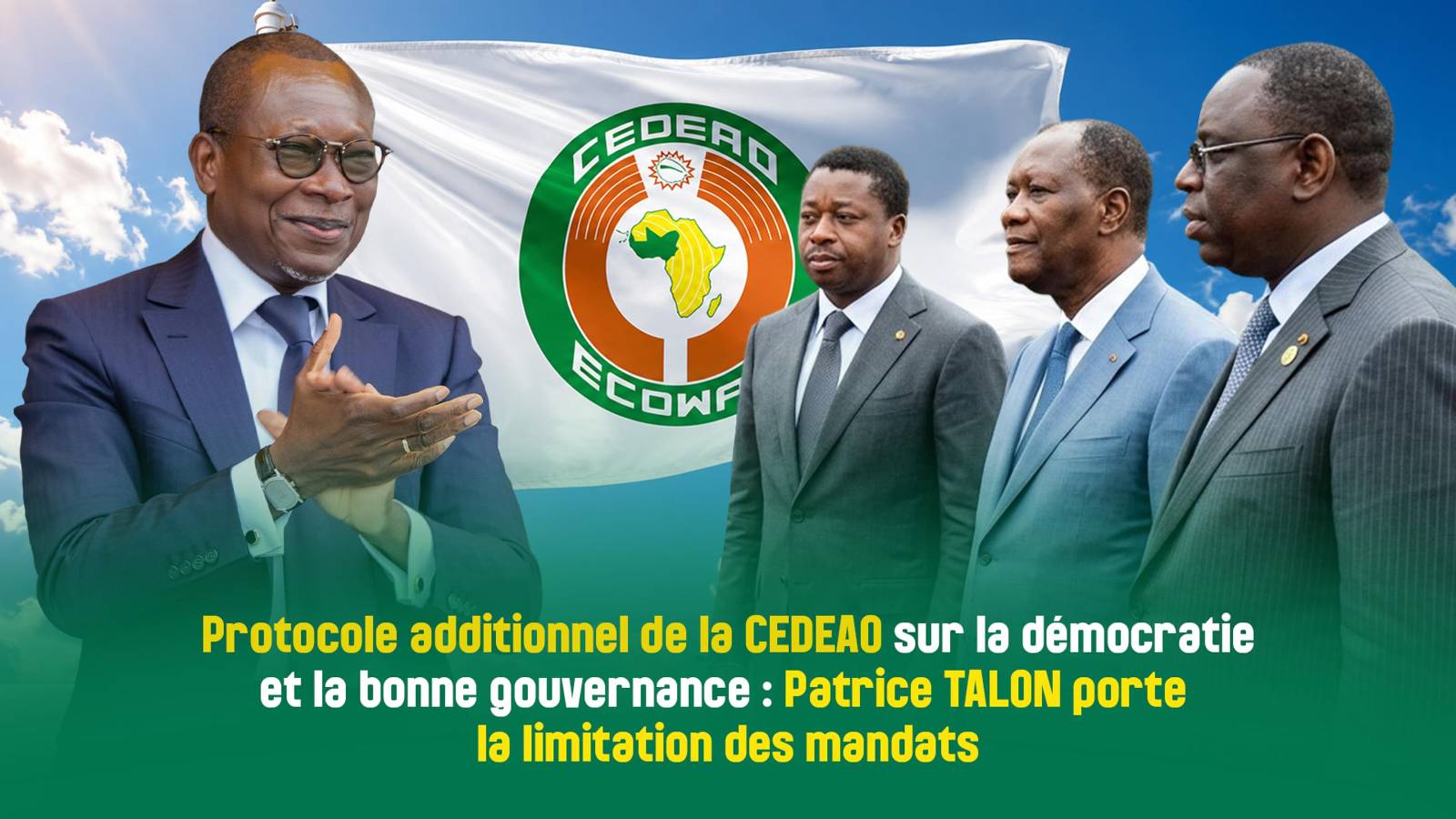
The political landscape of West Africa is currently defined by a high-stakes ideological divide within the Economic Community of West African States (CEDEAO). At the center of this tension is the issue of presidential term limits—a debate that has exposed deep divisions among regional leaders, with Benin’s President Patrice Talon emerging as a vocal advocate for democratic reform.
Benin’s bold push for democratic renewal
Since assuming office in 2016, Patrice Talon has positioned himself as a champion of constitutional term limits, framing it as a cornerstone of regional stability. In his view, the wave of military coups sweeping through Mali, Burkina Faso, and Niger stems directly from leaders clinging to power beyond constitutional boundaries. His administration has been a driving force behind CEDEAO’s proposed amendments to the Supplementary Protocol on Democracy and Good Governance, pushing for a strict two-term limit with no loopholes for constitutional manipulation.
For Talon, this isn’t just about governance—it’s about survival. He argues that unchecked presidential terms erode public trust, fuel instability, and undermine the bloc’s credibility. By advocating for ironclad term limits, he seeks to dismantle the culture of entrenchment that has long plagued West African politics.
The resistance from Accra, Lomé, and Dakar
Yet, Talon’s vision has met fierce opposition from three influential leaders who reject external interference in their domestic affairs. In Togo, President Faure Gnassingbé has defended his country’s shift toward a parliamentary system, which effectively extends executive longevity without violating constitutional norms. Meanwhile, Côte d’Ivoire’s President Alassane Ouattara—who controversially secured a third term in 2020—has consistently argued that term limits should remain a matter of national sovereignty, not regional enforcement.
Senegal’s stance, historically aligned with this bloc, reflects its own turbulent past with term limits under former President Macky Sall. While Dakar has since transitioned to new leadership, its skepticism toward supranational constraints on governance persists. Collectively, these leaders prioritize security cooperation and economic integration over what they see as ideological policing by CEDEAO.
Diplomatic defiance: when principles outweigh presence
Talon’s refusal to compromise has led to a striking pattern: his absence from critical regional summits. While some interpret this as isolation, Porto-Novo frames it as principled defiance. Benin argues that CEDEAO’s selective enforcement—condemning military coups while tolerating constitutional power grabs—undermines its moral authority. By staying away, Talon signals that Benin will not endorse a system that applies rules unevenly.
This stance has resonated with civil society across West Africa, where demands for democratic accountability grow louder. Talon’s insistence on stepping down in 2026—despite no legal obligation—has elevated him as a rare leader willing to sacrifice personal ambition for institutional integrity.
A regional crossroads: can democracy outlast power?
The term-limit debate transcends legal technicalities; it embodies a fundamental choice for West Africa. By challenging allies like Ouattara and Gnassingbé, Talon has redefined the boundaries of acceptable leadership, even if it means defying diplomatic conventions. While the bloc’s traditional power brokers have so far resisted change, the Beninese model of strict alternance stands as a potential bulwark against the region’s democratic backsliding. The question remains: will the pursuit of power yield to the rule of law, or will the status quo prevail?