Gabon’s Boulevard de la Transition: balancing speed and financial scrutiny
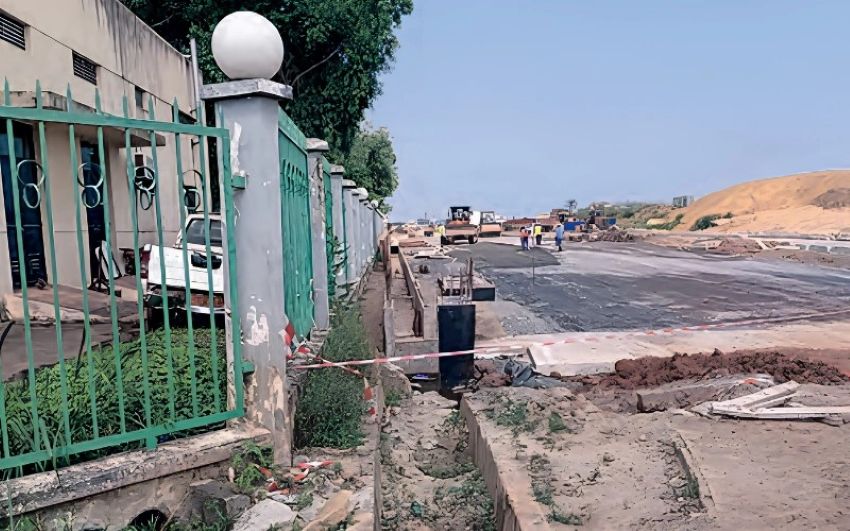
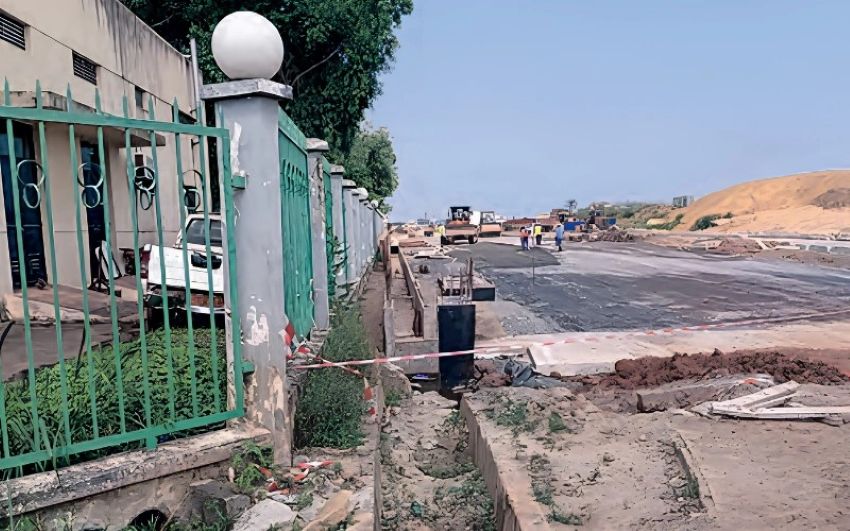
In Libreville, the Boulevard de la Transition is progressing on two critical fronts. On-site, heavy machinery is racing against time to meet deadlines and deliver the first sections of this flagship project. Meanwhile, behind the scenes in government offices, another urgent mission is unfolding: ensuring every franc of public funds is accounted for.
Recent technical and financial reviews have raised significant concerns. What was initially budgeted at 8 billion CFA francs has now ballooned to 16 billion, with approximately 3 billion francs allegedly paid to an overseas operator identified only as Goran. These findings, still under judicial review, have thrust this high-profile project into the spotlight of public procurement scrutiny.
The stakes couldn’t be higher. The Boulevard de la Transition is a cornerstone of Libreville‘s modernization drive—a three-kilometer artery designed to ease the capital’s growing traffic congestion. It’s part of a broader initiative that includes the upcoming Cité administrative, cementing its status as a government priority for 2026. Originally envisioned as a visible symbol of urban transformation, the project now faces tough questions about financial governance.
How could a public contract double in value? What procedures permitted the disbursements now under scrutiny? These are not mere technicalities but fundamental issues for a state aiming to demonstrate a new era of transparent management.
Financial irregularities under judicial review
Investigations by the state’s Taskforce for Financial Control reveal that 3 billion francs were allegedly transferred to Goran without prior bank guarantees. According to official accounts, the operator was later questioned at the B2 facility in Libreville, acknowledged grave errors, and subsequently left Gabon. The dossier has since been forwarded to the prosecutor’s office.
While these allegations demand serious attention, it’s crucial to exercise caution. At this stage, no public findings confirm criminal wrongdoing or assign individual liability. The judiciary’s role is precisely to determine the nature of these financial flows, validate contractual procedures, establish potential responsibilities, and clarify the circumstances surrounding the operator’s departure.
The deeper institutional questions remain unanswered. If the lack of bank guarantees is confirmed, why wasn’t this requirement enforced before payment? If the contract value truly doubled, what contractual amendments, administrative approvals, or economic justifications explain this change? These queries extend beyond the Goran case, touching the very heart of public procurement where government decisions, private enterprises, public financing, and economic interests intersect.
Urban progress cannot overshadow financial accountability
Even as financial investigations intensify, the Taskforce has tightened oversight of the construction site. A report dated August 22 outlines urgent measures: expedited material deliveries, enhanced equipment deployment, and resumption of night work. Following a presidential directive in a meeting on August 20, crews are racing to complete the PK0+240 to PK0+800 section by September 1.
This accelerated timeline aligns with the project’s urban imperatives. Yet it also raises governance questions. While the state has legitimate reasons to deliver critical infrastructure swiftly, it must equally preserve evidence, document contracts meticulously, and hold parties accountable when audits uncover anomalies.
The paradox of the Boulevard de la Transition lies in this dual demand. The more visible the construction becomes, the greater the expectation for transparency. Citizens don’t merely want to see asphalt laid; they deserve to understand the true cost, the justification behind every franc spent, and the rules governing how these contracts were awarded and executed.
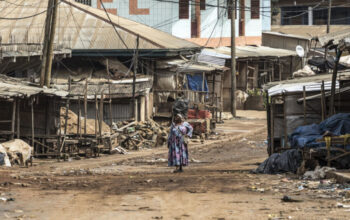
This scrutiny is particularly pertinent given Gabon‘s recent history with large-scale urban projects. In 2025, the Council of Ministers approved a waste management plan for demolition debris from Libreville‘s modernization and the Boulevard works. The resettlement program for affected communities also received support from the BDEAC.
The Boulevard de la Transition must not become a project measured solely in kilometers of completed road. It should exemplify how public investment can be tracked from the first signature to the final franc spent. If the alleged irregularities are substantiated, responsibilities must be established and damages repaired. If they are not, the justice system must make that determination unequivocally. In both scenarios, the true Transition project—one long demanded by citizens—is about making public spending traceable, justifiable, and verifiable.