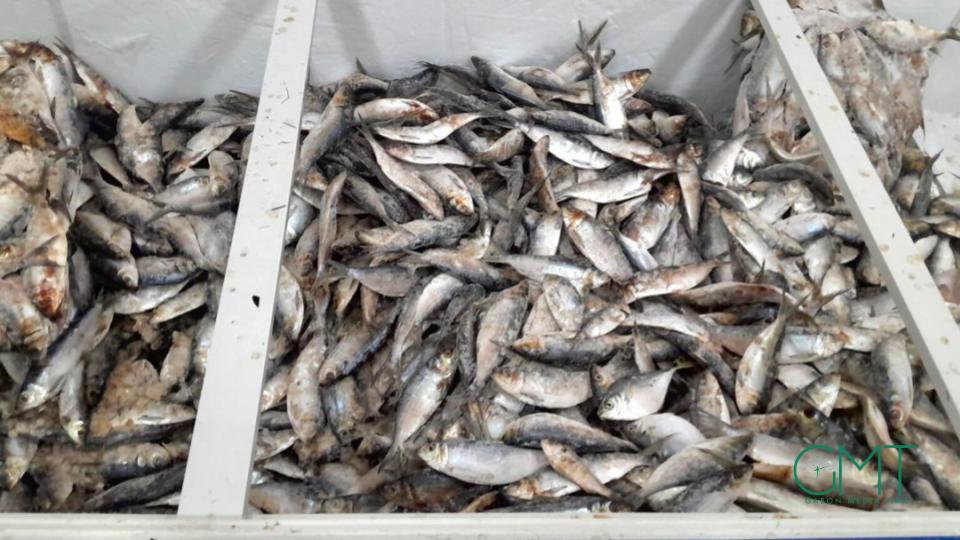
In a decisive move to safeguard the national supply of crucial aquatic products, the Gabonese government has implemented a temporary prohibition on the exportation of sardines (Ethmalosa fimbriata) and the locally known “sans nom” fish (Heterotis niloticus). This directive, effective since March 26, 2026, was officially enshrined in two ministerial decrees from the Ministry of Sea, Fisheries, and Blue Economy, subsequently published in the Official Gazette on April 16, 2026. The measure directly addresses a growing scarcity observed across Gabon’s domestic markets, where these species have become increasingly difficult to find, even as they continue to be channeled into neighboring countries, particularly through border regions like Cocobeach. The government’s primary objective is to prioritize local consumption and curb the unregulated outflow of these vital resources.
Further emphasizing the gravity of the situation, on May 30, the Governor of Estuaire province, Marie Françoise Dikoumba, undertook a visit to Cocobeach. Her mission was to reiterate the mandatory nature of this new regulation to local fishermen, traders, and transporters. This awareness campaign unfolds amidst widespread public concern regarding the dwindling availability of sardines, a staple on market stalls. Authorities contend that unchecked exports to bordering nations have significantly distorted the national supply-demand balance, leading to escalating prices and making an essential food item increasingly inaccessible for Gabonese households.
safeguarding marine resources and strengthening food security
The ministerial decrees explicitly state that this temporary export ban serves multiple strategic aims: to streamline production and distribution networks, stabilize the domestic market’s supply, and actively combat inflationary price surges. Furthermore, the authorities are keen to enhance the traceability of fishery products, ensure the security of future export operations, and guarantee adherence to rigorous sanitary standards. This policy forms an integral part of broader government initiatives aimed at alleviating the high cost of living and fortifying national food sovereignty, both declared priorities for the public administration.
The Ministry of Sea has also highlighted the escalating pressure on sardine stocks within Gabonese waters, alongside similar concerns for “sans nom” populations inhabiting the country’s rivers and lakes. By temporarily halting exports, the State seeks to facilitate the regeneration of biological capital in overexploited areas, thereby ensuring the sustainable management of these valuable species. Violators of this new regulation face severe penalties under the Code des Pêches, ranging from the seizure of their cargo and the revocation of fishing permits to potential legal prosecution, unless an exceptional authorization is granted by the relevant administrative body.
You may also like
Can Togo’s mediation still deliver peace in eastern DRC after Tshisekedi’s latest letter to Gnassingbé?
Mali: did the JNIM ambush on Africa Corps near Niono expose a fatal gap in Russia’s Sahel strategy?
Will Mali’s 73.6 million dollar funding gap decide the fate of millions by 2027?
Guinea-Bissau’s December 2026 vote: can Embaló return legally, and can the result ever be trusted?
Can a $20 million bounty take down Ukraine’s drone war architect?