On the occasion of France’s National Day, Ambassador Rémi Maréchaux, France’s envoy to the Democratic Republic of Congo (DRC), delivered a powerful address reaffirming Paris’s unwavering commitment to peace-building efforts in eastern DRC. Speaking at a high-profile gathering at his residence in Kinshasa, the diplomat underscored the deep historical ties between France and the DRC while highlighting France’s proactive role within the United Nations Security Council.
The ambassador began by clarifying the true meaning of France’s July 14th celebration—not merely a national holiday, but a commemoration of the 1789 French Revolution and its enduring principles: liberty, equality, and fraternity. This historical perspective set the tone for a forward-looking discourse centered on cooperation and conflict resolution.
France’s active role in securing peace in eastern DRC
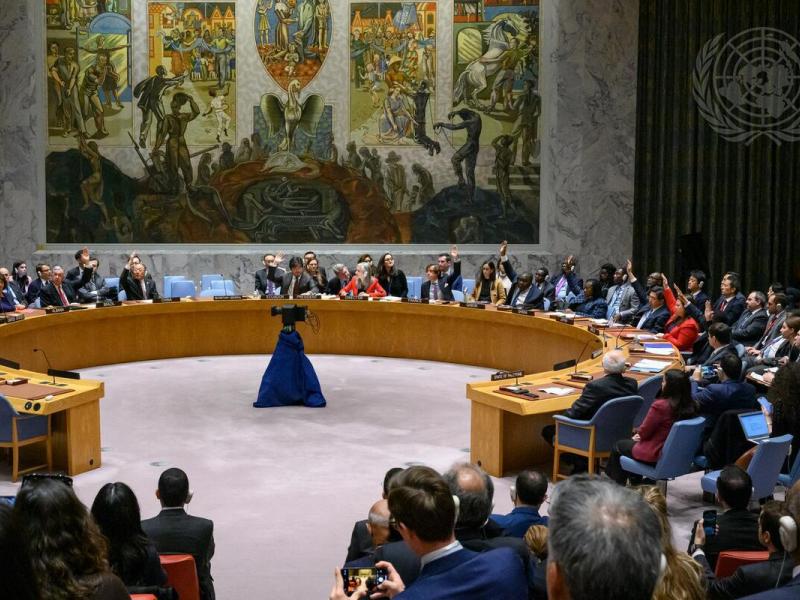
Addressing the ongoing security crisis in eastern DRC, Ambassador Maréchaux reiterated France’s strong backing for diplomatic and multilateral initiatives aimed at ending hostilities. He emphasized France’s pivotal involvement in shaping key UN Security Council resolutions designed to bring lasting stability to the region.
Among the critical measures highlighted was Resolution 2773, unanimously adopted by the Security Council, which lays down essential conditions for resolving the conflict. The resolution calls for:
- An immediate end to hostilities by the M23 rebel group,
- Withdrawal of M23 forces from occupied areas,
- Dismantling of parallel administrations set up by the group, and
- Termination of external support, particularly from foreign armed forces operating within DRC territory.
The ambassador stressed that Kigali must cease all military support to M23 and withdraw its troops from the DRC. He also referenced Resolution 2808, which extended the mandate of the UN Stabilization Mission in DRC (MONUSCO) for an additional year, and Resolution 2825—adopted in early 2026—which extended sanctions against armed groups and maintained the mandate of the UN Experts Group monitoring their activities.
Supporting regional mediation and diplomatic efforts
In his remarks, Maréchaux praised ongoing mediation efforts led by the United States, Qatar, and the African Union, calling them essential pillars in the peace process. He echoed President Félix Tshisekedi’s assertion that diplomacy is not a sign of weakness but a strategic choice rooted in the principles of sovereignty and territorial integrity of the DRC.
« The path to peace in eastern DRC must be based on non-negotiable principles: respect for Congolese sovereignty and the uncompromising protection of its territorial borders, » the ambassador stated.
Strengthening bilateral cooperation for long-term stability
Beyond multilateral engagements, Maréchaux emphasized the importance of bilateral cooperation between France and the DRC, particularly in the realm of security. He cited concrete examples of French support, including the recent regeneration of a Jungle Brigade battalion in Kisangani through training by French military instructors—a mission conducted in March 2026. A second battalion is slated for regeneration in October of the same year.
« These actions are part of a broader commitment to empower the Congolese state through strengthened policing and military capabilities, » he explained. « Our goal is not only to support peace but to ensure that peace is sustainable and rooted in the authority of a capable state. »
The ambassador also highlighted the DRC’s growing influence on the global stage, noting its recent return to the UN Security Council—a position it currently holds as president for the month—and its simultaneous membership in the UN Human Rights Council. Additionally, the DRC is strengthening its role within the International Organisation of La Francophonie, with the candidacy of Juliana Lumumba for the post of Secretary-General.
France champions inclusive multilateralism amid global tensions
In a world increasingly dominated by power asymmetries, Maréchaux defended inclusive multilateralism as the most effective path to global governance. He argued that Africa—including the DRC—must play a central role in shaping international decisions, especially in crises like the one unfolding in eastern Congo.
« The DRC’s return to the international stage is not accidental. It reflects a growing recognition of the country’s vast potential and strategic importance—particularly in energy transition and climate action. This is a moment for Africa to assert its voice and leadership on the world stage, » he concluded.
With diplomatic efforts intensifying following the Washington Peace Agreement—brokered under U.S. mediation between the DRC and Rwanda—the situation in eastern DRC remains fragile. While the agreement calls for de-escalation, withdrawal of Rwandan forces, and neutralization of armed groups like the FDLR, the reality on the ground continues to challenge diplomatic progress. The M23 rebellion, still active in cities such as Goma and Bukavu, maintains control over key mining zones, including coltan-rich areas in Rubaya, fueling ongoing instability.
As the gap between diplomatic commitments and ground realities persists, the international community—led by France—remains focused on achieving a sustainable peace rooted in respect for Congolese sovereignty and territorial integrity.