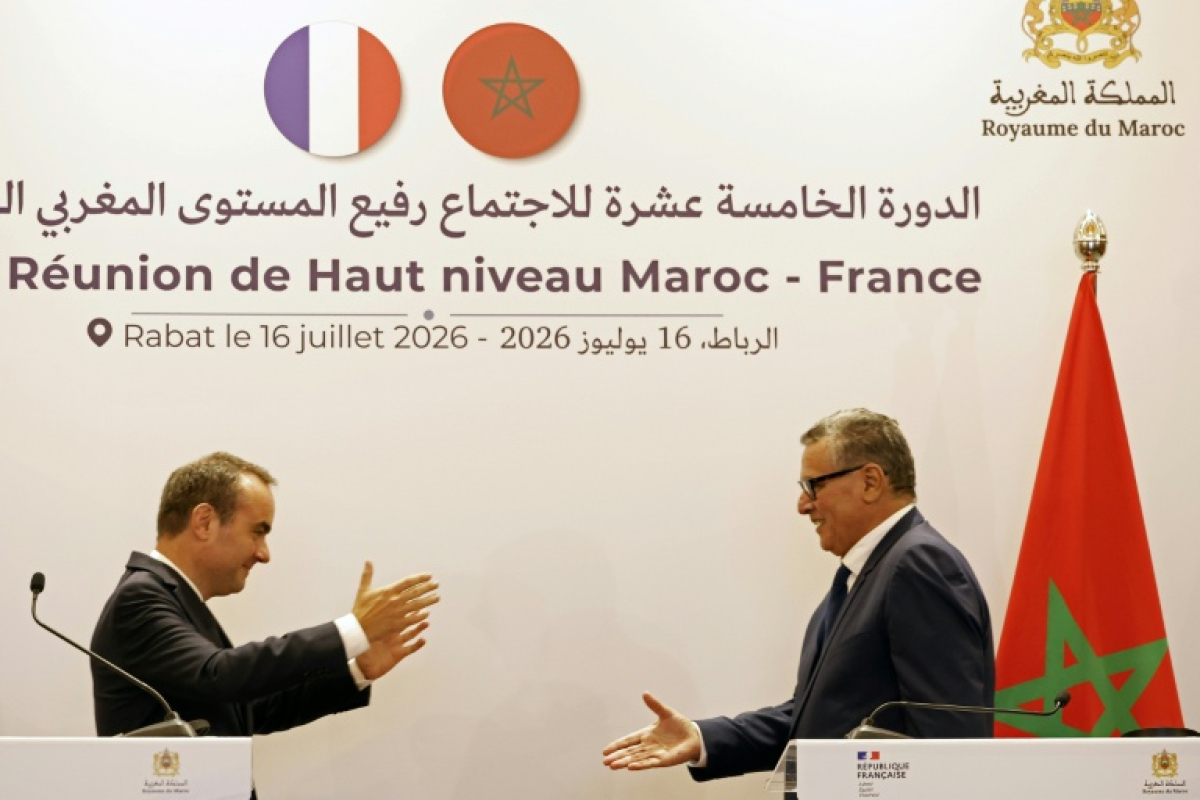
In Rabat, France and Morocco showcased their renewed confidence during a high-profile visit by French Prime Minister Sébastien Lecornu on July 16, 2026. The meeting marked a significant thaw in bilateral relations, following years of strained ties that had been exacerbated by espionage allegations and visa disputes.
Emmanuel Macron’s 2024 recognition of Morocco’s sovereignty over Western Sahara played a pivotal role in resetting the relationship. This gesture, which drew criticism from Algiers, was followed by a triumphant state visit by the French president to Rabat in October of the same year. The visit concluded with a flurry of contracts and the signing of a landmark “exceptional strengthened partnership.”
During Thursday’s talks, Lecornu hailed the exceptionally positive state of Franco-Moroccan relations, emphasizing their resurgence since the historic diplomatic breakthrough. “Our goal is to deepen cooperation and mutual trust with our Moroccan partners,” his entourage stated.
Partnership set to reach new heights
Morocco’s King Mohammed VI, in a message marking France’s Bastille Day, celebrated the consolidation of the two nations’ privileged relationship. The partnership is poised to evolve further, with plans for a historic state visit by the monarch to Paris and the potential signing of an unprecedented treaty—the first France would formalize with a non-EU nation under Sébastien Lecornu’s leadership.
The French delegation, comprising twelve ministers including Foreign Affairs and Interior chiefs, engaged in comprehensive discussions with Moroccan officials. The meetings culminated in the 15th session of the high-level dialogue, a platform dormant since 2019, which Lecornu described as a watershed moment for bilateral ties.
Key priorities include security collaboration and counterterrorism efforts, particularly in the Sahel—a region where both nations face escalating jihadist threats. “We aim to scale up our joint operations,” Lecornu noted, highlighting unprecedented recent successes in combating organized crime and drug trafficking through enhanced intelligence-sharing.
A new era in Franco-Moroccan relations
Moroccan Prime Minister Aziz Akhannouch underscored the strategic vision underpinning the partnership, built on shared political alignment, restored trust, and common ambition. He also addressed visa policies, which had previously sparked tensions in 2021 and 2022 when France halved issuances. Lecornu pledged to facilitate circular mobility between the two nations, prioritizing entrepreneurs and students.
Trade and infrastructure also took center stage. A call for expressions of interest was launched for an electricity interconnection project, while Morocco signed loan agreements with France’s development agency for water projects and the expansion of Rabat’s regional express rail network (RER).
The shift in France’s Maghreb strategy is unmistakable: Paris is now prioritizing Rabat over Algiers, reflecting a deliberate pivot in its regional diplomacy. “Our cooperation in Africa, especially in the Sahel, is more critical than ever,” Lecornu stressed, advocating for joint strategic deployment to counter shared security challenges.
Twelve agreements were finalized during the meetings, signaling a robust commitment to deepening economic and political ties. As the two nations chart a course for deeper integration, the message from Rabat was clear: confidence has been restored, and the future looks promising.