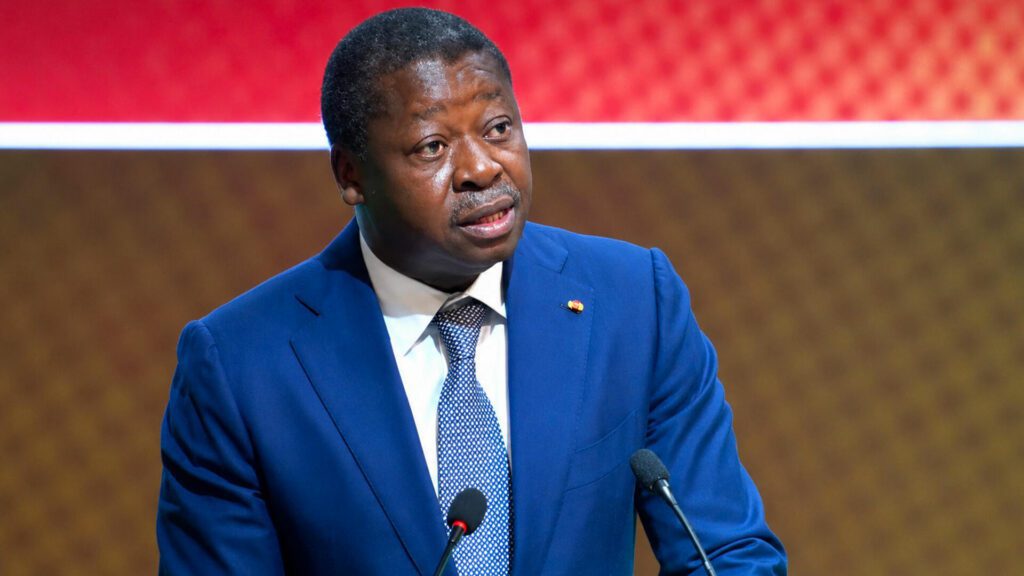
In a decisive call to action, President Faure Gnassingbé urged African nations and economic stakeholders to move beyond theoretical ambitions and deliver concrete results in the implementation of the African Continental Free Trade Area (AfCFTA). This appeal was the centerpiece of his opening remarks at the third edition of the Biashara Afrika economic forum in Lomé, an event dedicated to stimulating intra-African trade and investment.
Speaking to an audience of institutional leaders, entrepreneurs, and international partners, the Togolese head of state emphasized the urgency of transforming political commitments into visible improvements for the continent’s citizens. He remarked that the time for conceptualizing visions has passed, and the current era must be defined by tangible achievements in regional integration.
Strengthening regional cooperation
The Lomé gathering, coordinated by the Togolese administration and the AfCFTA Secretariat, acts as a strategic platform for enhancing economic cooperation. A primary goal of the forum is to solidify regional value chains, ensuring that West Africa Sahel nations and the wider continent can compete effectively in the global market.
According to Faure Gnassingbé, the continent is now equipped with the essential components for success. With a vast internal market, critical natural resources, a dynamic youth demographic, and the unified legal framework provided by the AfCFTA, the foundation is set. He noted that the focus must now shift toward improving public policy efficiency, securing structural investments, and simplifying trade procedures.
Togo as a regional hub
The President highlighted Togo’s role as an emerging model for economic connectivity. He pointed to the country’s advanced logistical infrastructure, specifically the deep-water Port of Lomé, as a cornerstone for trade. Furthermore, he detailed the various reforms implemented to enhance the business environment and draw in foreign capital, contributing to the evolving landscape of Sahel politics today through economic stability.
Despite the optimism, the leader acknowledged that significant obstacles remain. Challenges such as non-tariff barriers, infrastructure gaps, financing hurdles, and the limited involvement of small and medium-sized enterprises (SMEs) in cross-border commerce continue to impede the full realization of the continent’s economic goals.
Through the Biashara Afrika 2026 initiative, participants seek to forge new partnerships and identify practical solutions. The objective remains clear: to convert Africa’s immense economic potential into a future of shared, sustainable growth for all its nations.