DRC at UN slams Rwanda army inaction over critical minerals crisis
- Security
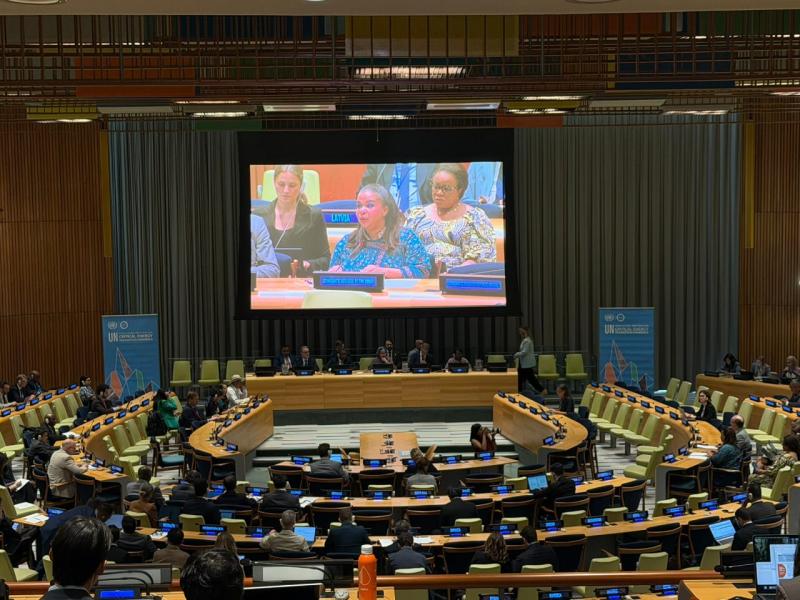
As the world races toward an energy transition, the Democratic Republic of Congo (DRC) has sounded the alarm at the United Nations over the escalating crisis surrounding critical minerals. On Tuesday, July 14, the DRC delegation, led by Foreign Minister Thérèse Kayikwamba Wagner, addressed the UN’s high-level meeting on critical minerals for the global energy shift. The gathering brought together member states to examine the governance challenges tied to minerals essential for the world’s clean energy future.
The Congolese delegation emphasized that for the DRC, the issue of critical minerals transcends mere economic concerns. Highlighting the situation in the eastern part of the country, particularly in Rubaya, a key coltan mining hub, Minister Wagner underscored the severe consequences of illicit exploitation.
“For countries like ours, this is no longer just about development. Illegal exploitation weakens state authority, erodes sovereignty, and can lead to violations of territorial integrity. The case of Rubaya is stark: its mines supply about 15% of global tantalum demand. UN experts report that at least 1,400 tons of coltan were smuggled into Rwanda within a year of being seized from the M23 armed group, a militia backed by Kigali. This generated roughly $800,000 per month for the rebels,” the foreign minister stated.
The minister also condemned the lack of UN sanctions against the Rwandan Defence Forces, despite documented evidence from UN experts linking them to the illegal mineral trade.
“Despite overwhelming evidence, the Rwandan Defence Forces remain unsanctioned by the UN. This exposes both a failure to enforce existing tools and a broader flaw in the international system. Too often, the governance of natural resources is confined to the realm of development, even when illicit exploitation fuels armed conflicts, undermines sovereignty, and violates territorial integrity,” she declared.
During the session, the DRC reaffirmed its commitment—under its current presidency of the UN Security Council—to advocate for a framework that directly links natural resource governance to conflict prevention and peacebuilding.
“As president of the Security Council, the DRC is championing a more coherent approach that ties natural resources to conflict prevention, international peace and security, and shared prosperity. We welcome the Secretary-General’s guiding principles and concrete recommendations, but these measures will only matter if they lead to measurable change on the ground,” Wagner emphasized.
The Congolese delegation also called for more balanced partnerships with critical mineral-producing countries, stressing that responsibility must extend across the entire value chain.
“Partnerships must go beyond securing access to raw materials. They should support local and regional value addition, infrastructure, technology transfer, skills development, industrialization, and access to financing and markets. Responsibility must extend across the entire value chain—from producers and traders to processors, financial institutions, manufacturers, and consumer countries,” she stated.
Addressing traceability, Minister Wagner argued that systems must combat fraud and armed group financing without penalizing legitimate artisanal miners.
“Traceability must tackle fraud, smuggling, and conflict financing without excluding legitimate artisanal producers, creating new market barriers, or placing the full burden of compliance on producing countries. This initiative aligns with the Sustainable Development Goals: clean energy, decent work, industrialization, responsible production, climate action, strong institutions, and global partnerships.”
The minister concluded by stressing that the success of the global energy transition must be measured not only by industrial output but also by its impact on the communities where these resources are extracted.
“Progress toward one goal must never come at the expense of another. Ultimately, the success of the energy transition cannot be measured solely by the number of batteries, electric vehicles, or wind turbines produced. It will also be measured by whether the countries, workers, and communities whose resources make this transition possible are safer, more sovereign, and more prosperous as a result.”
These remarks come amid a strategic partnership between the DRC and the United States on critical minerals, as well as the Washington Agreement signed between Kinshasa and Kigali. The accord includes de-escalation measures, the gradual withdrawal of Rwandan forces from Congolese soil, and the neutralization of armed groups in eastern DRC, including the FDLR, which Kigali views as a security threat. Despite this diplomatic progress, the security situation remains fragile. On the ground, the Doha process, mediated by Qatar to facilitate dialogue between Kinshasa and the M23 rebellion, remains stalled. The rebels, accused by the DRC, the UN, and international partners of receiving Rwandan support, continue to control cities like Goma and Bukavu, as well as several areas in North Kivu and South Kivu provinces. Clashes persist in various zones, while diplomatic efforts struggle to yield lasting results. This disparity between announced diplomatic advances and on-the-ground realities has reignited debates about the persistent gap between rhetoric and reality.
Clément Muamba