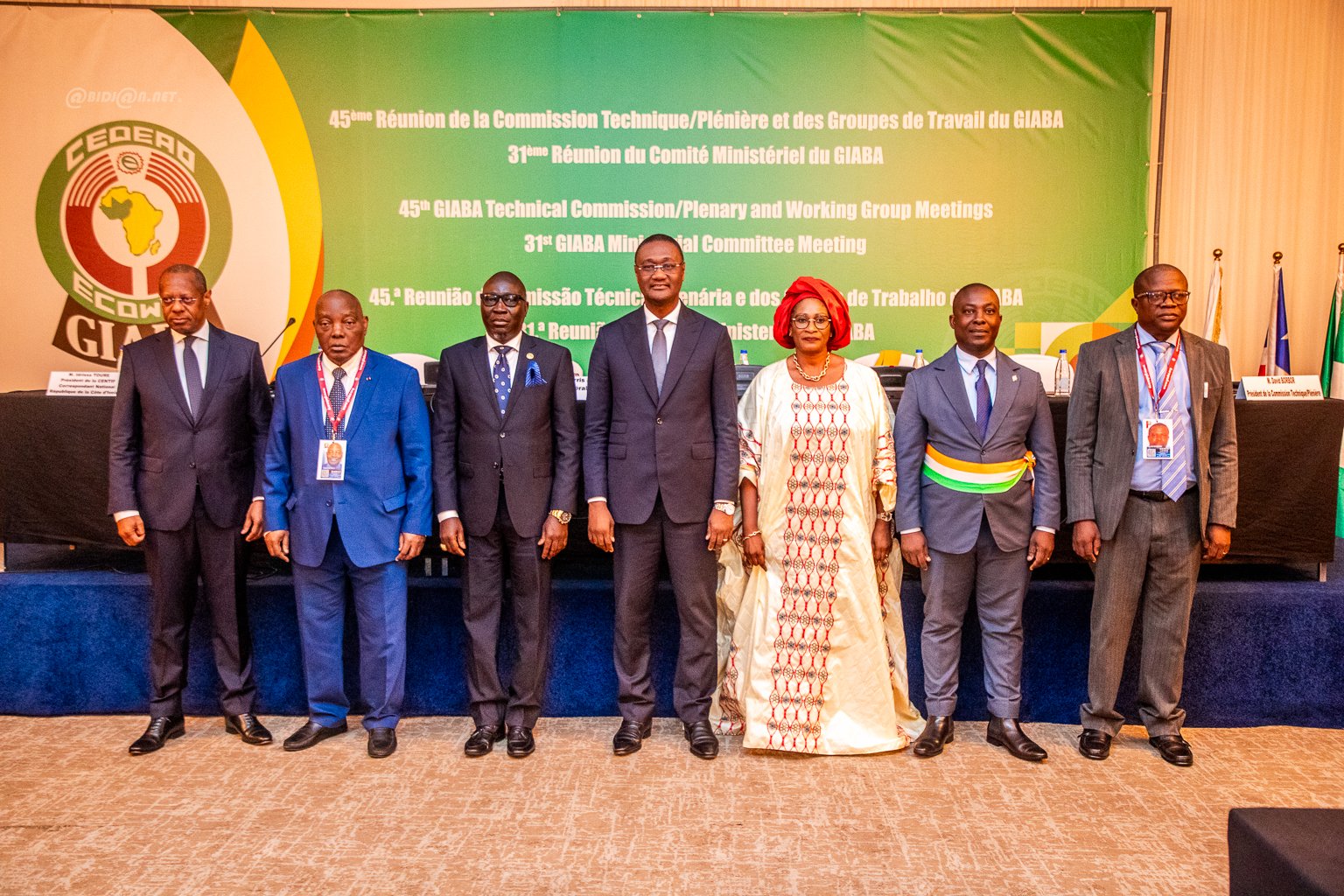
Côte d’Ivoire is currently hosting the 45th technical and plenary meeting of the Inter-Governmental Action Group against Money Laundering in West Africa (GIABA), alongside its 31st Ministerial Committee meeting, from May 18 to 23, 2026. The official opening ceremony took place this Thursday in Cocody, drawing a significant gathering of experts, representatives from ECOWAS member states, technical and financial partners, and international observers.
This pivotal regional gathering, organized in close collaboration with the Republic of Côte d’Ivoire, serves as a primary strategic platform for evaluating and coordinating policies aimed at combating money laundering and the financing of terrorism (AML/CFT) across the entire West African region.
Throughout this plenary session, specialists are set to meticulously review follow-up reports from various member states as part of the second cycle of mutual evaluations. Discussions will also encompass typology reports developed by the Risks, Trends and Methods Group (RTMG), activities of the Forum of Financial Intelligence Units (FIU Forum), and mechanisms for technical assistance designed to support member countries.
Moussa Sanogo, the Minister of Construction, Housing and Urbanism, speaking on behalf of the Minister of Economy, Finance and Budget, underscored Côte d’Ivoire’s unwavering dedication to bolstering the regional framework for combating financial crime.
”Côte d’Ivoire fully recognizes its responsibility and pivotal role within the sub-region. Under the strong leadership of President Alassane Ouattara, our nation has chosen to act with a methodical approach, unwavering determination, and transparent practices,” he affirmed.
The Ivorian government representative further detailed that numerous structural reforms have been initiated to align the national framework with the rigorous international standards set by the Financial Action Task Force (FATF).
He noted that despite the rapid evolution and sophistication of transnational criminal networks, the progress achieved so far remains encouraging.
In his address, he emphasized the critical need for enhanced sub-regional cooperation to effectively counter the emerging forms of financial criminality.
”None of our countries can achieve success in isolation. Our collective effectiveness hinges on shared information, mutual trust, and consistent political will,” he asserted, adding that the fight against money laundering is also ”a struggle for development, economic stability, and peace.”
The minister additionally highlighted that purifying financial systems is essential for boosting the economic attractiveness of West African states and securing both national and international investments.
Hafsat Abubakar Bakari, President of the GIABA Technical Commission, commended Côte d’Ivoire’s diligent efforts in financial governance and the interoperability of AML/CFT data.
She observed that several member states are making significant technical strides, primarily through improvements in legislative frameworks and the modernization of their Financial Intelligence Units.
However, she also drew participants’ attention to new challenges posed by emerging technologies, specifically generative artificial intelligence, deepfakes, and synthetic identities. These tools are increasingly exploited by criminal networks to circumvent traditional verification and Know Your Customer (KYC) procedures.
”Our detection systems, reporting regulations, and the training of investigators must urgently adapt to these evolving threats,” she advised.
The Technical Commission President also stressed the imperative of strengthening transparency regarding the beneficial owners of legal entities, a key focus for GIABA’s third cycle of mutual evaluations.
Finally, she applauded the progress made by certain member states, notably Burkina Faso, Mali, and Nigeria, which have recently been removed from the FATF grey list. She further encouraged GIABA to continue providing technical assistance to Côte d’Ivoire to facilitate its swift exit from this list.
This crucial regional meeting is expected to culminate in actionable recommendations aimed at solidifying mechanisms for the prevention, detection, and suppression of illicit financial flows across the ECOWAS space, particularly within a context marked by intensifying security and technological threats throughout West Africa.