The «Pleins Feux» initiative, unveiled in Abidjan in April 2026, marks a bold step in Ivory Coast‘s ongoing effort to reshape its education system under President Alassane Ouattara. Supported by global partners, the project focuses on enhancing educational governance and optimizing public policy implementation to drive sustainable learning improvements.
With Ivory Coast‘s population now exceeding 30 million—youthful and rapidly growing—the demand on schools has intensified, particularly in rural regions. Education has become a cornerstone of President Ouattara‘s agenda, aligned with the UN’s Sustainable Development Goal 4 (SDG 4) and the 2030 Agenda. Over the past decade, the government has rolled out multiple reforms to expand access and elevate teaching standards across the country.

Expanding access and upgrading teacher quality in Ivory Coast
Since 2011, Ivory Coast has significantly boosted its teaching workforce, recruiting over 69,000 primary school teachers and over 30,000 secondary educators. Recent efforts have prioritized science disciplines, with 1,800 new teachers deployed in mathematics and physics to meet labor market demands and support the country’s economic transformation goals.
At the same time, school infrastructure development has accelerated, especially in rural areas, to shorten travel distances, reduce early dropouts, and bring education closer to communities. New schools have been built nationwide, expanding coverage and improving accessibility.
The opening of the CAFOP in Boundiali—in northern Ivory Coast—exemplifies this push. Competitive entrance exams for teacher training centers drew nearly 68,000 applicants in 2026 for just 7,000 available spots, highlighting the strong commitment to upgrading educator qualifications and sustaining teaching standards.
Creating safe, inclusive learning environments in Ivory Coast
Improving teaching conditions has emerged as a key driver of education quality. Between 2011 and 2025, starting salaries in primary schools rose by over 30%, while secondary school salaries increased by up to 15%, making the profession more attractive and helping retain skilled teachers.
Inclusion has also taken center stage. New teaching materials for students with disabilities reflect progress toward a more accessible school system. Complementary initiatives—such as awareness campaigns against school-related pregnancies—aim to safeguard student pathways, minimize academic interruptions, and support continued enrollment.
‘Pleins Feux’: a governance-driven push for better education outcomes
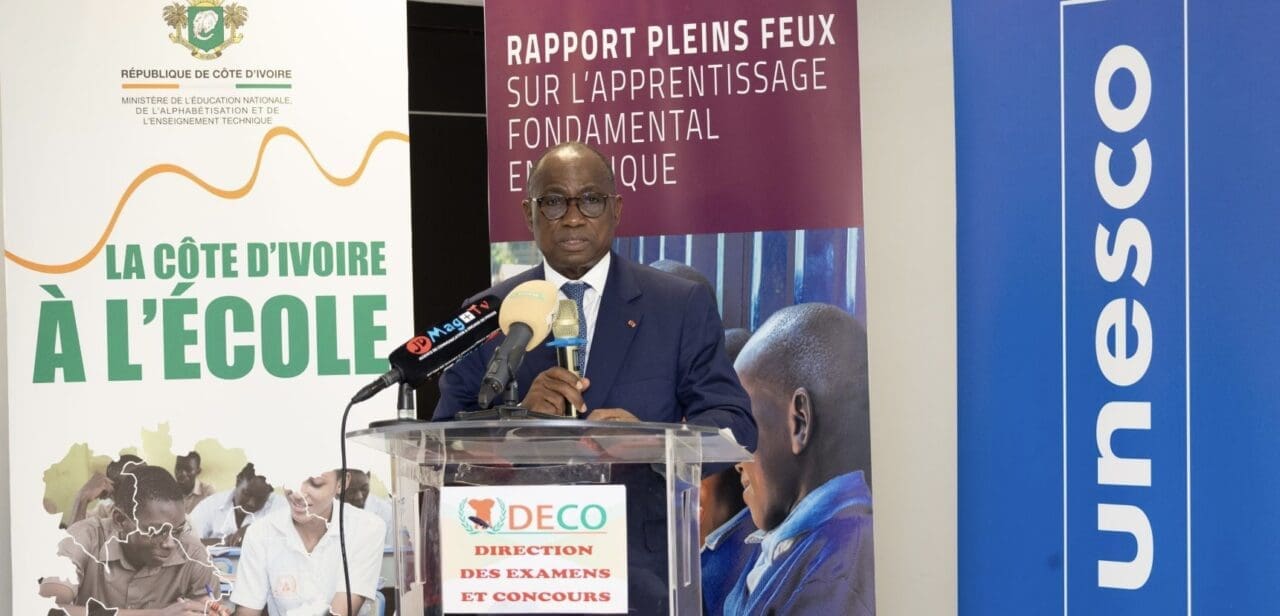
Launched in Abidjan on April 12, 2026, the Pleins Feux project zeroes in on educational governance rather than infrastructure or enrollment. Designed with the UNESCO, African Union, and the Global Education Monitoring Report, the initiative stems from two years of collaborative work in Ivory Coast, Ghana, and Ethiopia.
Its goal is to strengthen the capacity of policymakers and school leaders, ensuring policies are implemented effectively and deliver measurable results. This comes as international partners commend Ivory Coast’s progress in foundational learning, and the government continues to leverage diverse partnerships—local, regional, and global—to advance its education transformation agenda.