Tensions flared in Chad’s capital after remarks by a prominent lawmaker demanding immediate transparency on a rumored water-sharing agreement. The call came from a deputy who pressed the Environment Minister to disclose the pact’s contents—yet no such revelation has occurred to date. Formerly Vice-Prime Minister and Environment Minister from mid-2021 to mid-2025, and now Minister of State for Social Affairs, Ms. Bazaïba alleged that President Idriss Déby Itno had warned in 2021: ‘If Congo refuses to share its water, Chad will take what it needs by any means necessary.’ That statement followed Chad’s controversial intervention in the Central African Republic under the guise of Seleka rebels. President Déby Itno was killed in combat on April 20, 2021, and succeeded by his son, Mahamat Idriss Déby Itno, who has since retained power, partly through mediation efforts by Félix Tshisekedi—an alliance commemorated by the renaming of a major N’Djamena avenue in his honor.
The Democratic Republic of the Congo (DRC) has not remained passive. In response to perceived threats to its water resources, the National Assembly established a monitoring unit on April 16, 2014, initially led by a group of lawmakers including Eve Bazaïba, who repeatedly warned of ‘an international conspiracy against the country, with internal accomplices.’ Despite her later appointment as Environment Minister, the unit has yet to produce any tangible results in twelve years.
Fast forward to this year, when Mahamat Idriss Déby invited President Félix Tshisekedi to the inaugural ‘African Water Forum’ in N’Djamena. During the event, the Congolese leader outlined five strategic priorities to address Africa’s water challenges. First, he urged an end to siloed approaches to water, agriculture, energy, health, urban planning, environment, and infrastructure. Second, he emphasized strengthening governance through efficient institutions, accountability, and transparent management of water infrastructure. Third, he called for technically matured and financially structured projects to attract greater investment. Fourth, he proposed financing water infrastructure through public, private, and international partnerships. Fifth, he advocated positioning water as a driver of industrialization—building local capacity for pipe production, pumps, meters, treatment systems, irrigation solutions, and digital tools.
The President underscored a critical truth: ‘No single nation can secure its water security alone.’ He called for a unified African front to establish a cooperative water governance model and urged a coalition among states to prioritize water as a top political agenda. While the DRC has not explicitly endorsed controversial water transfers from the Ubangi River, observers suggest Kinshasa may be quietly receptive to such discussions. Only time will reveal the true intentions.
With vast hydrological potential, the DRC has set ambitious targets: by 2035, it aims to expand potable water access to 60% of the population, improve sanitation and hygiene services to 50%, and ensure adequate water and sanitation infrastructure in 80% of schools and health facilities. For Mahamat Idriss Déby, the N’Djamena forum symbolizes Africa’s renewed commitment to reclaiming control over its water future and fostering shared prosperity.
The intentions from N’Djamena are clear and unfiltered by diplomatic niceties. However, the absence of key regional players at the forum raises questions. Neither Cameroon, Niger, nor Nigeria—all members of the Lake Chad Basin Commission—attended, despite the lake’s dramatic shrinkage from 25,000 km² in 1964 to just 2,000 km² by 2024, though rising to around 4,500 km² during rare flood periods. Only Gabon, Mauritania, and a representative from Benin joined Chad and the DRC at the gathering.
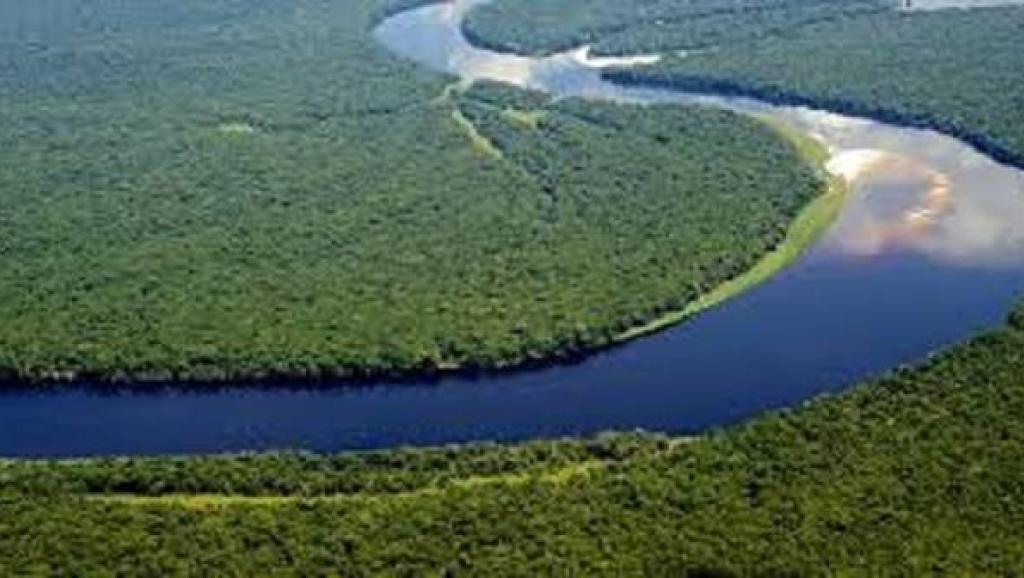
Why the boycott? In 2019, former Foreign Minister Patrick Mayombe warned that external interests pushing for water transfers from the Ubangi River to Lake Chad were bypassing Congolese authorities. He revealed that a certain Kalele, an NGO leader based in Kisantu, had reportedly signed DRC-related water transfer documents on behalf of the country—actions taken without Kinshasa’s official consent. Even in Bologna, Italy, meetings on Congo’s water were held under the Sant’Egidio movement without official DRC representation.
Swiss political scientist, sociologist, and former UN Special Rapporteur on the Right to Food, Professor Jean Ziegler, once described the DRC in a chilling phrase: ‘a non-profitable people.’ According to his analysis, populations unable to adapt to global dynamics risk losing access to resources essential for the planet’s flourishing. The warning resonates deeply in the DRC, where water flows freely from the highlands of Mitwaba to the shores of Banana, yet leadership appears oblivious to the looming collective crisis. As journalist and former senator Modeste Mutinga Mutuishayi wrote in his provocative book ‘The Republic of the Unconscious,’ ‘If water is life—and life has no price—then why do our leaders seem blind to the suicide we’re marching toward?’