Centrafrique under Wagner’s shadow of terror
Brutal executions and horrific decapitations carried out by Wagner operatives have once again shocked the citizens of the Central African Republic. Opposition groups and civil society continue to demand the withdrawal of these mercenaries, who operate under a license to kill granted by the local authorities. A grim update from a land where terror reigns.
- Politics

On July 8, one of the most chilling incidents in recent memory unfolded in the heart of the Central African Republic. Graphic videos, widely shared across social platforms, captured a scene of unspeakable cruelty. In a rural area, a group of men—some combatants seeking to disarm, others civilians including a village leader—fell into a deadly trap set by Wagner mercenaries. The outcome was a grotesque display of violence: systematic shootings followed by decapitations, with severed heads deliberately arranged on a makeshift carpet as if part of a macabre exhibition. The perpetrators, assisted by local auxiliaries dubbed the “Black Russians” by residents, documented their atrocities, punctuating the horror with taunting commentary. The voice of the Wagner militia commander is clearly audible in the footage, barking orders: “You don’t want peace? Then here it is. Slaughter every last one of them!” The brutality evokes the darkest tactics once associated with jihadist groups, though now perpetrated by a different kind of armed actor.
The normalization of extreme violence
The victims were not hardened criminals or hardened insurgents, but individuals drawn to a supposed disarmament operation—only to be met with premeditated slaughter. Among the dead were combatants from local armed factions who had come in good faith, as well as civilians who had come to witness what they believed was a state-led peace initiative. While the public recoils in horror, such atrocities have become almost routine in parts of the Central African Republic, where Wagner operatives, armed with a state-sanctioned license to kill, continue their reign of terror.
For decades, the Central African Republic has been described as a non-state, a failed entity, even a country that doesn’t exist—a phrase immortalized in a 2017 publication by journalist Jean-Pierre Tuquoi. Despite cycles of political instability, mutinies, coups, and foreign interventions, the nation remains trapped in a cycle of fragility. The national army and international partners have failed to curb the proliferation of armed groups, leaving vast areas outside government control. In this vacuum, the United Nations Multidimensional Integrated Stabilization Mission in the Central African Republic (MINUSCA)—once a beacon of hope—has struggled to restore order. Instead, communities have grown numb to extreme violence, and the arrival of Wagner’s mercenaries, operating under a bilateral agreement with Moscow, has only deepened the crisis. International observers appear to have accepted this new normal, turning a blind eye to a country sliding further into the shadows of lawlessness.
A modern colonial order in the heart of Africa
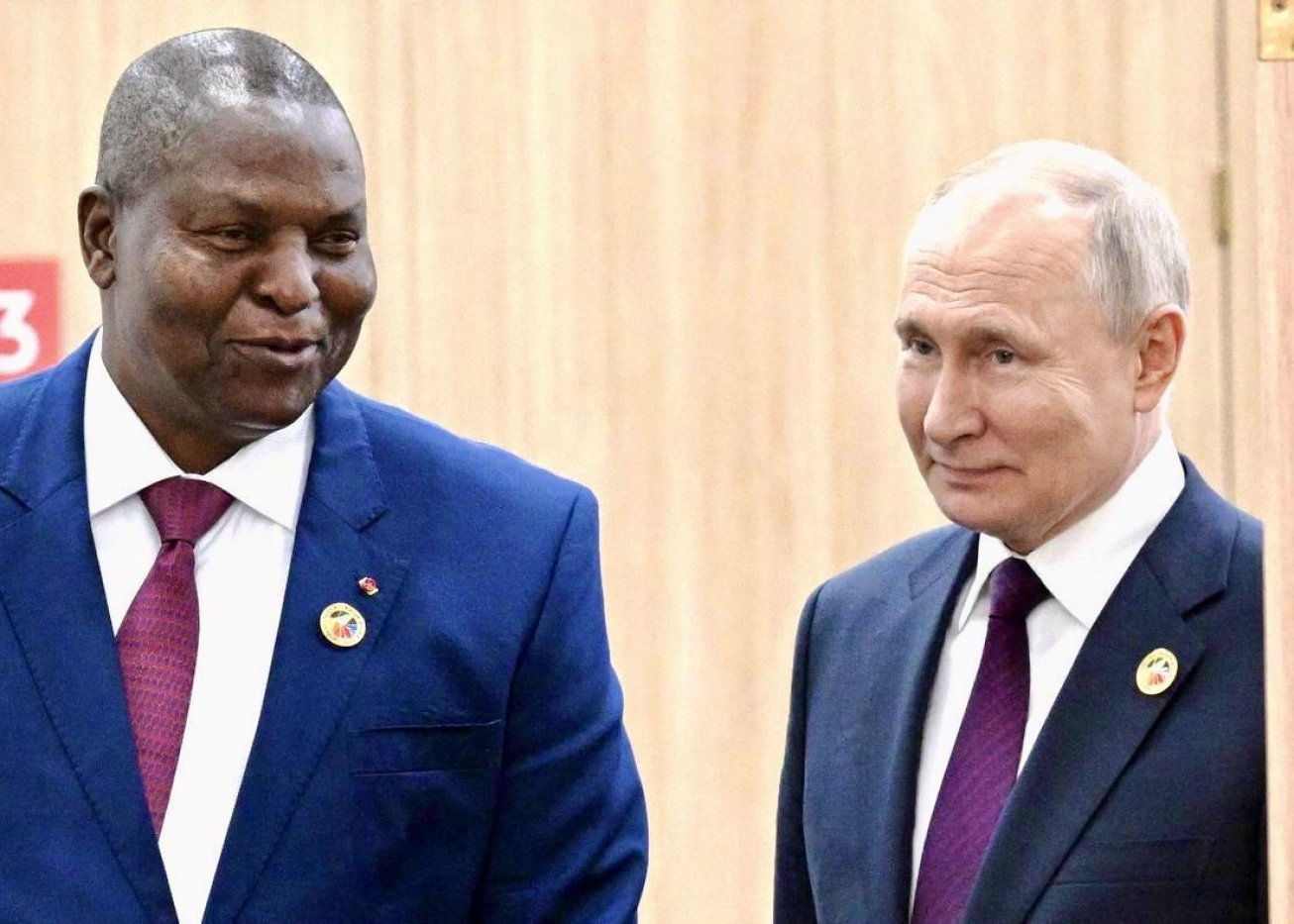
Wagner’s presence in the Central African Republic is no fleeting deployment. The group has embedded itself across the country, not only enforcing its brutal rule but also exploiting the nation’s rich mineral resources. While human rights organizations decry the litany of abuses—forced disappearances, torture, harassment, and extrajudicial killings—the group enjoys full protection from the Central African authorities under President Faustin-Archange Touadéra. Effectively functioning as a parallel government, Wagner exerts control over the military, police, judiciary, intelligence services, and even airport operations in Bangui. Its influence permeates every sector of national life, with impunity becoming the defining feature of governance in the country.
Unlike in other African nations where Wagner has rebranded itself as “Africa Corps” following the death of its founder Evgeny Prigozhin in August 2023, in the Central African Republic, Wagner clings to its original name. A statue of Prigozhin stands proudly in the country, and his birthday is annually commemorated by Central African soldiers alongside their Wagner “partners.” This macabre cult of personality underscores the emergence of a new, chilling form of colonial order—one where foreign mercenaries dictate the terms of life and death.
In the aftermath of the July 8 revelations, political opposition and civil society have renewed calls for Wagner’s expulsion and an end to its reign of impunity. Yet the government has responded with its customary silence, leaving citizens paralyzed by fear in the face of this Russian-backed paramilitary force that has made terror its preferred method of coexistence.
Four years ago, during a closed-door meeting with ministers, one official voiced concerns about the potential backlash from Wagner’s behavior. President Touadéra, then preparing to alter the constitution to secure a controversial third term, reportedly replied: “We need the Russians. It is thanks to them that we hold onto power.” To cling to power at any cost has transformed the Central African Republic into a capital of extreme terror and a nation adrift—caught between nowhere and oblivion.
A field report by a regional correspondent.