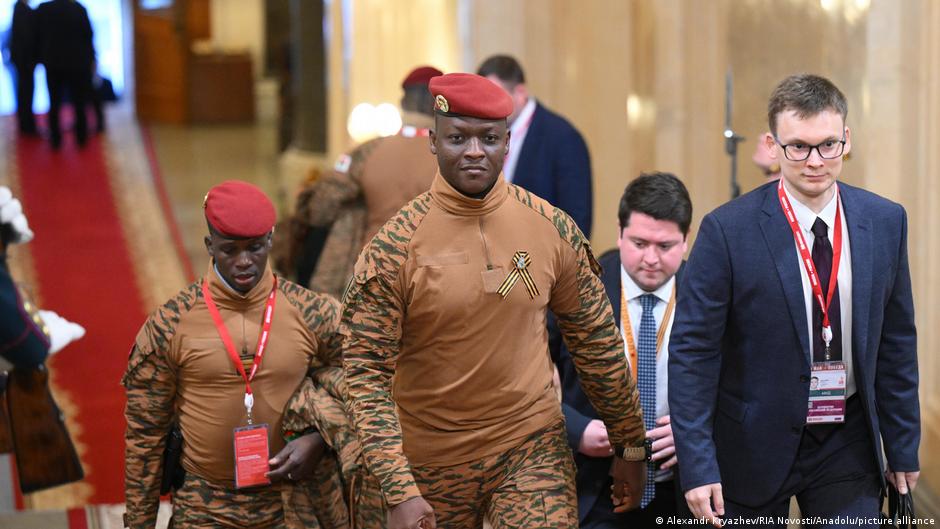
The adoption of Burkina Faso’s new Charter for the Popular Revolution has reignited debates about the country’s trajectory under Captain Ibrahim Traoré’s leadership. Since seizing power in late September 2022, the military leader continues to face scrutiny over his democratic credentials and long-term intentions, despite initial promises of a temporary role.
Once hailed as a transitional figure, Captain Traoré now presides over a regime marked by stringent suppression of dissent, while invoking the legacy of Burkina Faso’s revolutionary icon, Thomas Sankara.
In late March, the Charter for the Popular Progressive Revolution (RPP) was unanimously approved by members of the Transitional Legislative Assembly (ALT), replacing the previous 2024 Transition Charter. The move has drawn sharp criticism from Amnesty International, which urges the military authorities to immediately reverse the dissolution of over a hundred associations, including human rights groups.
Under the traditional Arbre à Palabres forum, a panel of experts dissects these developments. The discussion also examines the mid-term progress of the Alliance of Sahel States, established on September 16, 2023, to strengthen regional cooperation amid growing security challenges.
Panelists
- Teehl Loé Konaté, project coordinator and analyst specializing in Pan-African dynamics and international relations. He also serves as the two-hour secretary-general for Kamita, a civil society organization focused on culture, history, and Pan-African foresight.
- Paul Amegakpo, president of the Tamberma Institute for Governance (ITG).
- Mayra Djibrine, president of the Alliance of Sahel Democrats.
For the full debate, listen to the audio recording.