Boko Haram’s funding secrets: how kidnapping fuels terror in West Africa
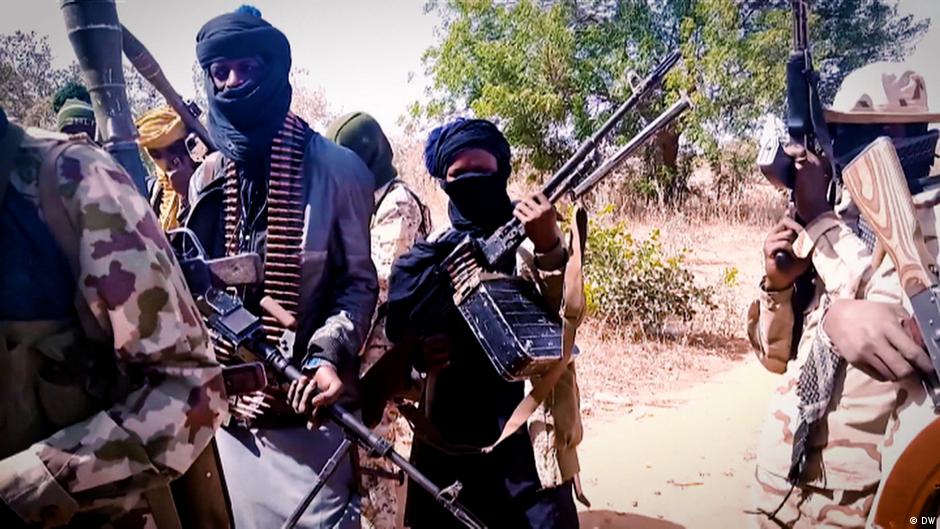
The kidnapping industry has become a lucrative financing mechanism for Boko Haram, stretching across Nigeria, Chad, Niger, and Cameroon. This organized crime wave is not just a security threat—it’s a financial engine powering one of Africa’s most notorious terrorist organizations.
The kidnapping economy: a billion-naira business
Nigeria bears the heaviest brunt of this crisis. According to SBM Intelligence’s security risk assessment, between July 2024 and June 2025 alone, nearly 4,700 people were abducted in nearly 1,000 incidents. These crimes frequently target schools in northern Nigeria, though violence has also spread to central regions. The most prominent groups behind these acts include Boko Haram—designated a terrorist organization by the UN in 2014—and the Islamic State’s West Africa Province (ISWAP).
The terror extends beyond Nigeria’s borders. In Cameroon’s Far North, Boko Haram claimed responsibility for abducting passengers from a bus in Ziguagé last year. More recently, in Niger, the group kidnapped seven Chadian nationals near the Chad border in late March, with one hostage killed and others still held captive.
Dual motives behind mass abductions
Remadji Hoinathy, a researcher at the Institute for Security Studies (ISS), explains the two primary objectives:
- Forced recruitment: Young men are conscripted as fighters, while women and entire communities may be enslaved or used as labor. Some are forced into sexual servitude.
- Economic exploitation: Ransom payments—often ranging from thousands to millions of naira or CFA francs—fund Boko Haram’s operations. Families, communities, and even governments have paid to secure releases.
For the seven Chadian hostages, Boko Haram demanded 50 million CFA francs for five captives. The sixth, a physician, fetched a staggering 500 million CFA francs—ten times the sum. This shocking disparity was highlighted by the Chadian Human Rights League in Lac Province.
Governments caught between law and reality
While Nigeria’s official policy prohibits ransom payments to avoid financing terrorism, the law—enacted in 2022 and imposing up to 15 years in prison for violators—appears rarely enforced. Many families and even authorities reportedly pay ransoms to secure releases.
In November 2025, approximately 230 students and staff from a Catholic school in Niger State were abducted. Despite Abuja’s denial, reports suggest the government paid a substantial sum to Boko Haram for their release. Estimates range from €1.3 million to €6 million, allegedly delivered in cash via helicopter to a Boko Haram commander in Borno State.
Experts warn that acknowledging ransom payments could bolster terrorist propaganda. The Nigerian government insists the liberation resulted from intelligence and military operations, not financial transactions.
Boko Haram’s strategic stronghold: the Lake Chad Basin
Boko Haram was founded in 2002 in Maiduguri, Borno State, by preacher Mohammed Yusuf. Its name, derived from Hausa, translates to “Western education is sin,” reflecting its rejection of Western cultural and political influence.
Over time, the group expanded from its Nigerian base to become a regional menace, establishing a stronghold across the Lake Chad Basin—including parts of Niger, Chad, and Cameroon. This area remains a critical operational zone for Boko Haram.
According to Remadji Hoinathy of ISS, the Lake Chad Basin offers several strategic advantages:
- Transnational mobility: The region borders the Sahel, where ISIS-affiliated groups like EIGS operate, and serves as a transit hub for arms and fighters moving from Libya.
- Marginalized terrain: Weak state presence and robust cross-border economies—including agriculture and pastoralism—create fertile ground for militant groups.
- Geographic concealment: The basin’s islands, marshes, and dense forests provide natural hiding spots when military pressure intensifies.
The ISWAP split: a rival emerges
In 2016, ISWAP emerged from a major schism within Boko Haram. Disillusioned with the group’s founder, Abubakar Shekau, whose indiscriminate violence targeted civilians—including Muslims—ISWAP aligned with the Islamic State and adopted a more structured, community-focused approach.
Today, ISWAP and Boko Haram are locked in a violent rivalry, battling for territorial and resource control across the Lake Chad Basin. This internal conflict has intensified the regional crisis, further destabilizing communities.
Regional responses: military and beyond
Governments in the region have coordinated military responses through the Lake Chad Basin Commission’s Multinational Joint Task Force. However, challenges persist, as Remadji Hoinathy notes:
“Initially, each state responded militarily within its borders. The commission later introduced stabilization strategies, emphasizing development and state presence in affected areas. Yet, after over a decade, Boko Haram continues to adapt, evade, and regroup, demonstrating remarkable resilience.”
Since 2009, this jihadist insurgency has claimed over 40,000 lives and displaced two million people in Nigeria’s northeast. To bolster Abuja’s efforts, the United States deployed approximately 200 troops in 2025 to train and support Nigerian forces.