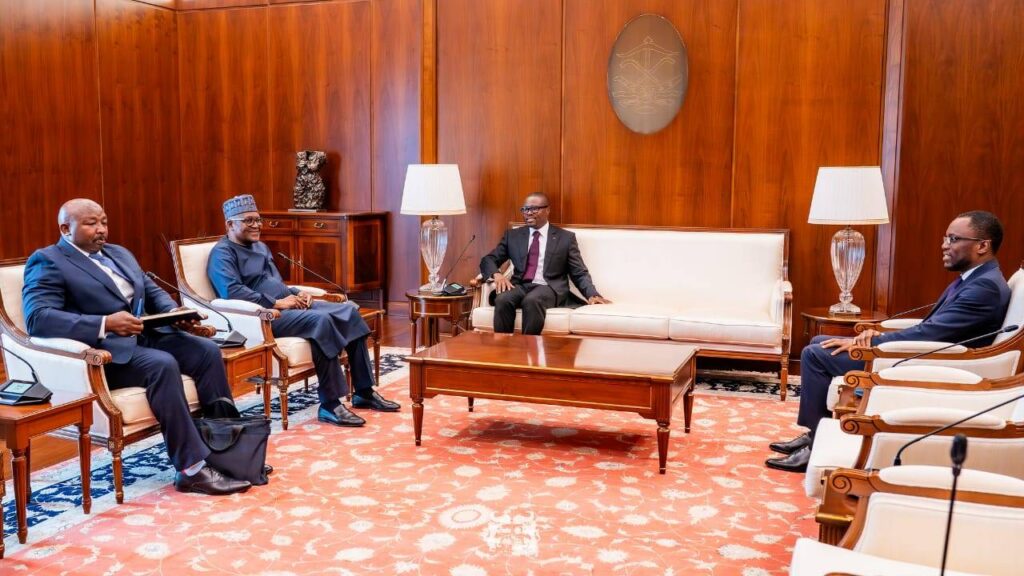
In a landmark engagement that could redefine economic ties in West Africa, Benin’s President Romuald Wadagni welcomed Africa’s richest businessman, Nigerian industrialist Aliko Dangote, for a high-level meeting at the Palais de la Marina in Cotonou. The July 2026 summit was not just a diplomatic gesture—it signaled a bold step toward deepening bilateral cooperation, unlocking major investments, and positioning Benin as a key player in regional industrial integration.
A strategic alliance at the heart of West African growth
The corridors of power in Cotonou buzzed with anticipation as President Wadagni opened the doors of the presidency to one of Africa’s most influential industrial figures. This was more than a routine meeting—it was a deliberate move to consolidate a partnership that could shape the economic future of both nations.
For President Wadagni, known for his technical expertise in public finance and economic development, hosting Aliko Dangote underscores a clear commitment to accelerating Benin’s economic transformation. The timing is strategic: in a region where regional cooperation is becoming essential for resilience, this meeting signals a shared vision for stronger economic integration between Benin and Nigeria.
Dangote’s industrial empire eyes Benin as a gateway to growth
Aliko Dangote needs no introduction. As the founder and chairman of the Dangote Group, his business empire spans cement, sugar, agro-processing, logistics, and—most recently—oil refining with the mega Dangote Refinery in Nigeria. For the group, Benin is not just a neighbor—it is a critical market, a logistical hub, and a historical trade partner with deep, long-standing connections.
The July meeting was an opportunity for Dangote to reaffirm his interest in Benin’s economic potential. His objective is straightforward: identify new growth opportunities, secure cross-border supply chains, and launch high-impact projects that can serve both the Beninese market and landlocked countries across West Africa.
“The potential for growth in West Africa is immense when we align the strength of African industries with the strategic vision of our governments,” noted a close associate of Dangote following the meeting.
Benin’s economic gains: What’s on the table?
Beyond the diplomatic symbolism, this meeting raises a critical question: What tangible benefits will Benin gain from a strengthened partnership with Africa’s largest private conglomerate?
Boosting foreign direct investment (FDI)
The arrival or expansion of Dangote Group projects would inject substantial fresh capital into Benin’s economy. Whether through competitive construction materials, expanded storage infrastructure, or industrial ventures, every investment strengthens the country’s industrial base and supports long-term economic resilience.
Job creation and skills transfer
Large-scale industrial projects are catalysts for job creation—both directly and in supporting sectors. For Benin’s young workforce, this means new opportunities in manufacturing, logistics, and technical roles. But the benefits go further: exposure to modern management practices and advanced technical know-how will elevate the skills of local professionals.
Port of Cotonou and logistics boost
Benin’s Port of Cotonou is the lifeblood of its economy. A deeper collaboration with Dangote could unlock new trade flows, streamline transport corridors—road, rail, and maritime—and increase customs and tax revenues for the national treasury. Optimized logistics mean faster turnaround times, lower costs, and a more competitive business environment.
Energy security and resource supply
With the Dangote Refinery now operational in Nigeria, Benin stands to gain preferential access to refined petroleum products and petrochemical derivatives—including fertilizers critical for agriculture. This would reduce the country’s exposure to volatile global oil markets and support food security initiatives.
From rivalry to collaboration: A new Benin-Nigeria economic axis
Relations between Benin and Nigeria have often been strained by political volatility and unpredictable border closures. Yet this meeting signals a shift toward sustainable normalization and pragmatic economic cooperation. By engaging directly with Nigeria’s top private sector leaders, Benin is shifting from dependency to partnership. The goal is clear: position Benin as an indispensable logistics, financial, and service hub for Nigerian businesses looking to expand into West Africa.
This rapprochement also offers Benin a chance to formalize cross-border trade, reducing dependence on informal channels and increasing state revenue through structured, taxable commerce.
Looking ahead: A vision for Benin’s economic future
The July 2026 meeting at the Palais de la Marina marks a turning point in President Romuald Wadagni’s economic roadmap. By welcoming Aliko Dangote, he has laid the foundation for large-scale industrial and financial partnerships that could transform Benin’s economic landscape.
While formal agreements and operational roadmaps are still to be finalized, the intent is unmistakable: to make Benin a magnet for high-impact investments and turn its geographic proximity to Nigeria into a national prosperity engine. The coming weeks will reveal the first concrete outcomes of this strategic dialogue—outcomes that could redefine Benin’s role in West Africa’s economic future.
You may also like
Niger: opposing Tiani’s junta means losing your citizenship
Benin and Spain: a cultural pact built on art and diplomacy
Niger: Tiani’s post-coup purge strips 25 citizens of nationality
Niger: 1.8 billion FCFA monthly military fund at centre of Tiani-Mody-Zeine power struggle
Mali press reform: a decade of internal division behind the employers’ consensus