After three years of strained relations, a joint expert committee is finally offering hope for a thaw in the diplomatic freeze between Benin and Niger. The panel’s findings highlight shared progress on security, transit rules, and key economic and legal frameworks—yet Niamey insists on three non-negotiable conditions before any border reopening can move forward.
What would it take to turn this tentative progress into a lasting resolution—one that could ease the heavy economic and humanitarian burdens weighing on both nations?
three hardline demands before any border reopening
Niamey has drawn a clear red line: unless these conditions are met, the border—closed since 2023—will remain shut. The first is a formal defense and security pact with Benin, explicitly banning either country from allowing its territory to be used as a launchpad for attacks against the other.
Analyst Régis Hounkpè, executive director of InterGlobe Conseils, calls the demand unremarkable yet critical in the current climate. “Mutual non-aggression is standard practice, but after three years of escalation, it takes on added significance. Implementation will be the real test—both sides must ensure this clause isn’t just symbolic but actively enforced.”
The second condition calls for a joint intelligence-sharing cell to monitor cross-border threats in real time—especially terrorism and smuggling networks. Hounkpè endorses the move, emphasizing reciprocity: “The goal is to guarantee that neither side tolerates destabilization efforts across the border.”
The final demand targets transparency over foreign military presence along the frontier. “This touches on sovereignty,” Hounkpè explains. “President Wadagni has repeatedly affirmed Benin’s autonomy in defense partnerships—whether with France, China, Russia, Turkey, or African allies—as long as those ties don’t threaten Niger’s stability. Pragmatically, destabilizing neighbors serves no one’s interest.”
economic fallout of a closed border
For landlocked Niger, Benin’s port of Cotonou is a vital lifeline: nearly 70% of its imports flow through this corridor. Mali and Burkina Faso—also part of the Alliance of Sahel States—rely on Benin for fuel, construction materials, and food staples like rice. Detours via Togo or Nigeria add 30% to 50% in logistics costs and stretch delivery times.
The suspended Niger-Benin pipeline, spanning nearly 2,000 km, has compounded losses. Once exporting up to 90,000 barrels daily, the shutdown has deprived Niger of expected revenues, while Benin loses transit fees. Congestion at Cotonou’s port and rerouted shipments to Lomé or Lagos risk eroding Benin’s role as West Africa’s trade hub.
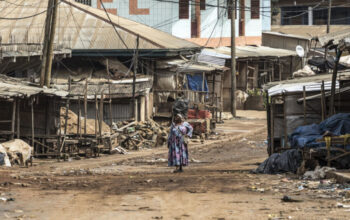
Local economies are reeling. Markets in Malanville (Benin) and Gaya (Niger) report up to 50% fewer customers. Closed shops, layoffs, and surging transport costs have pushed basic goods beyond reach for many households. Families separated by the border face higher risks crossing by pirogue, while communities grow increasingly isolated.
reopening could spark regional momentum
Régis Hounkpè stresses the macro-level stakes: “Reopening would restore trade flows, revive Cotonou’s port activity, and let transporters, logisticians, and businesspeople on both sides rebuild livelihoods lost over three years.”
Hounkpè is cautiously optimistic that Presidents Romuald Wadagni and General Abdourahamane Tiani will prioritize pragmatism over ideology. “They’re bound by geography—compelled to cooperate for economic survival, logistics, security, and counter-terrorism. The time has come to set aside political posturing and focus on what matters.”
A phased reopening, starting with essential goods under strict controls, appears most likely. If successful, the agreement could set a positive example for the Alliance of Sahel States and ECOWAS—mirroring the recent economic détente between Mali and Côte d’Ivoire.