Benin-Niger border reopening: a relief for both nations, says analyst
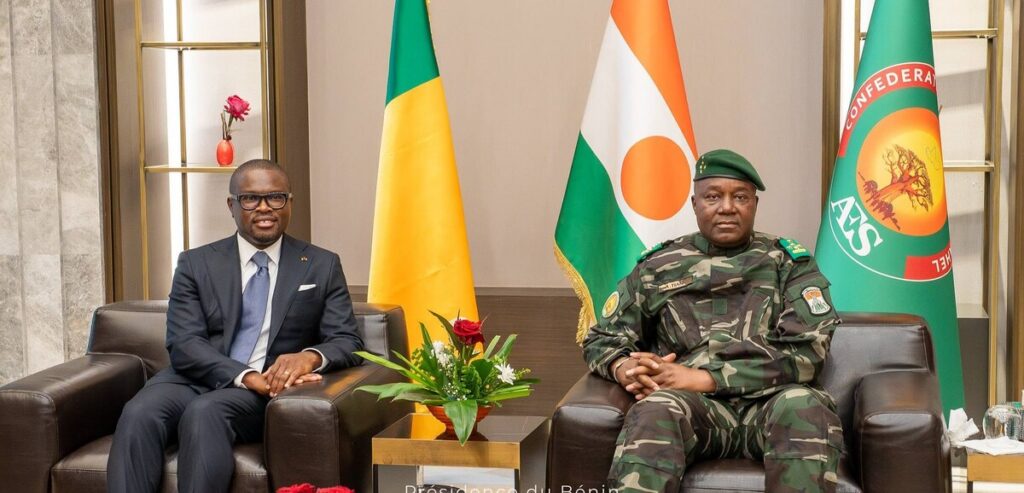
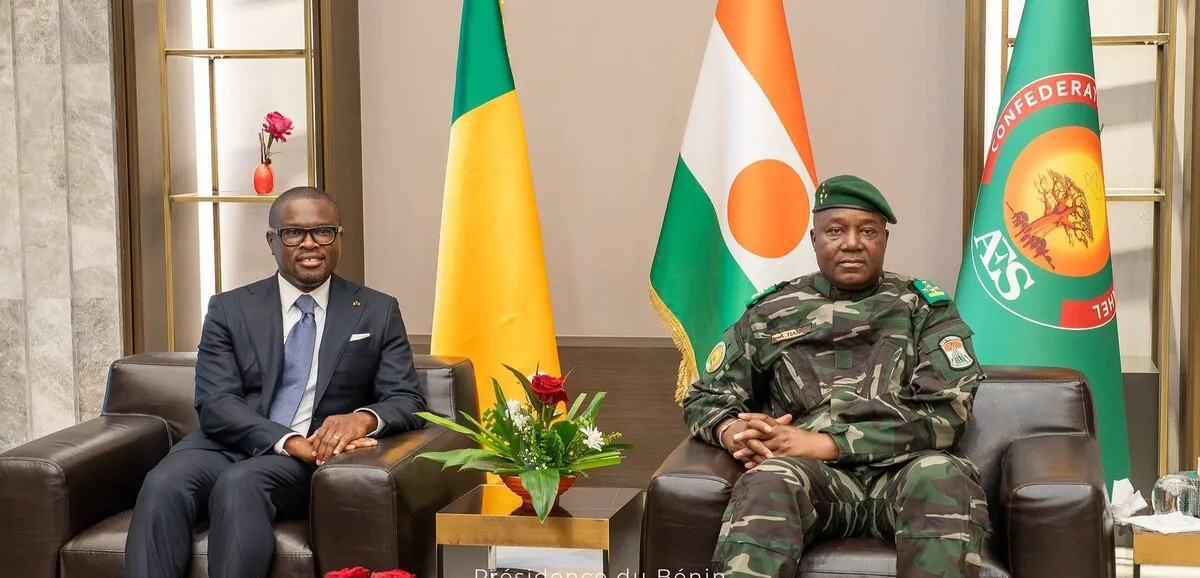
Closed for three years, the Benin-Niger border may soon reopen. On Saturday, June 20, Niger’s Interior Minister, General Mohamed Toumba, visited Benin to meet with experts handling the border reopening dossier. He laid down three conditions for reopening: signing a defence agreement, signing a security agreement establishing the non-negotiable principle that neither country’s territory will be used against the other, and full transparency regarding foreign military assets stationed near the shared border. Guillaume Moumouni, a political science PhD, shared his analysis on these developments.
On Saturday, Niger’s interior minister was in Benin to meet experts handling the reopening of the common border between Benin and Niger, and he set three conditions for reopening: signing a defence agreement, a security agreement that establishes the non-negotiable principle of non-use of one country’s territory against the other, and full transparency on foreign assets stationed near the border. Does Benin have reasons not to accept these conditions?
First, it should be noted that this is part of the normal context of negotiations. When entering negotiations, each side seeks to maximise its expectations, even if adjustments may later be made to what is actually acceptable to the partner. In principle, Benin cannot reject the preconditions as stated, especially since a defence agreement already existed between the two countries before the Nigerien regime denounced it in September 2023.
Regarding transparency, Benin has already provided educational explanations on several occasions to reassure Niger that there are no foreign military bases. This second point mainly comes down to a communication effort to ease Niger’s concerns. It is primarily a matter of territorial integrity. The third precondition, however, appears more sensitive and will likely lead to further discussions. This does not mean that all conditions will be accepted as a package.
After Romuald Wadagni’s visit to Niger in early June, a committee of experts was tasked with identifying sticking points before proposing conditions for reopening. Beyond the three conditions, what are these sticking points?
The first sticking point seems to be the lack of guarantee on the Nigerien side that its territory will not be violated by foreign forces. To put it plainly, this mainly concerns France, which no longer has good relations with the Nigerien authorities, while it maintains normal relations — including military cooperation — with Benin. That is the main point of friction.
We are in a context of a security dilemma. Even though the highest-level authorities in both countries have clearly expressed their political will to warm relations and restore diplomatic ties, this point is not insurmountable. The Nigerien side primarily seeks reassurance and verification that there are no hostile intentions at its borders.
The border has been closed for three years, with many consequences on the daily lives of border communities, on truck drivers using this route, and on economic and security levels. Is reopening not ultimately inevitable for both economies and for solving part of the security problems?
This is a key point. It is also important to better explain, on the Nigerien side, that the border closure is not solely attributable to Benin; Niger is also responsible. Everyone knows that the port of Cotonou is the natural gateway for Niger. The opportunity cost is very high for Niger, and the consequences are significant for both the Nigerien and Beninese economies. Both parties therefore have an interest in finding a solution.
You may also like
Will Benin’s AEO exporters finally crack the Chinese market?
Northern Niger’s unanswered question: can Tiani’s government deliver water and power where it matters most?
Can Air Sénégal survive the Interpol smuggling probe? The stakes for crew, passengers and the airline’s future
As donor fatigue spreads, can Benin’s €544,042 UNAIDS pledge keep the HIV response on track?
Who pays the price when Burkina Faso’s public payroll contracts? Households weigh the cost of 1,917 fewer agents