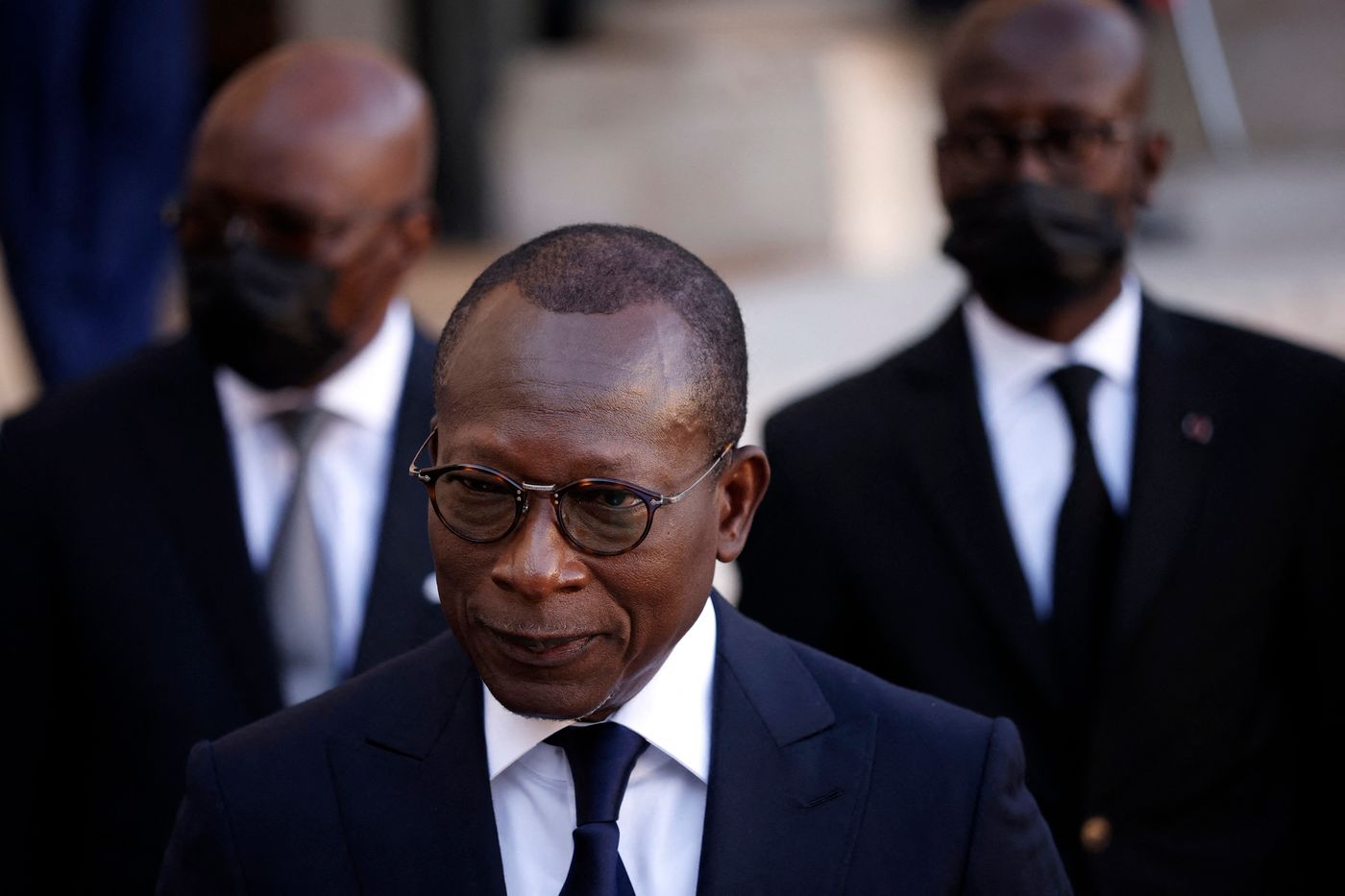
On Sunday morning, a group of soldiers in Benin announced on national television they had « removed from office » President Patrice Talon. Hours later, the President’s inner circle confirmed he was safe and the army had reasserted control over the situation.
Patrice Talon was scheduled to step down in April following a presidential election in the West African nation—a country known for steady economic growth but struggling with escalating jihadist violence in its northern regions. The broader Sahel region has witnessed a surge in military takeovers since 2020, including recent coups in Mali, Burkina Faso, Niger, Guinea, and Guinea-Bissau at the end of November.
The self-proclaimed « Military Committee for Rebuilding » (CMR) claimed responsibility for the move, broadcasting their statement on state television before the signal was cut off. A government source swiftly dismissed the action as a « fringe group with only temporary access to media outlets », asserting that the regular army had already regained full authority. « Cotonou and the entire country remain fully secure. Normalcy will return shortly as operations are underway to restore order », the source stated.
The French Embassy in Benin issued an advisory via X (formerly Twitter), reporting « gunfire near the presidential residence in Cotonou » and urging French citizens to remain indoors for safety.
A military spokesperson later confirmed the situation was « under control », noting that the mutineers had failed to seize either the President’s residence or the presidential palace. « The cleanup operation is progressing smoothly. Stability will be restored in due course », the spokesperson added.
restricted access in key areas
Early Sunday, journalists observed military blockades at the national broadcaster and the presidential palace. Several high-profile locations—including the Sofitel, a five-star hotel in the economic capital, and districts housing international organizations—were also cordoned off. However, no military presence was reported at the airport or elsewhere in the city, where daily life continued uninterrupted.
Benin’s political backdrop and talon’s legacy
Benin has a long history of political instability, including multiple coups and attempted takeovers. Patrice Talon, who has led the country since 2016, is constitutionally barred from seeking a third term when his second mandate concludes in 2026. The upcoming election will feature the ruling party against a self-described « moderate » opposition candidate.
While praised for economic advancements, Talon’s administration has faced criticism for what opponents call an authoritarian shift in a nation once celebrated for its vibrant democratic traditions.