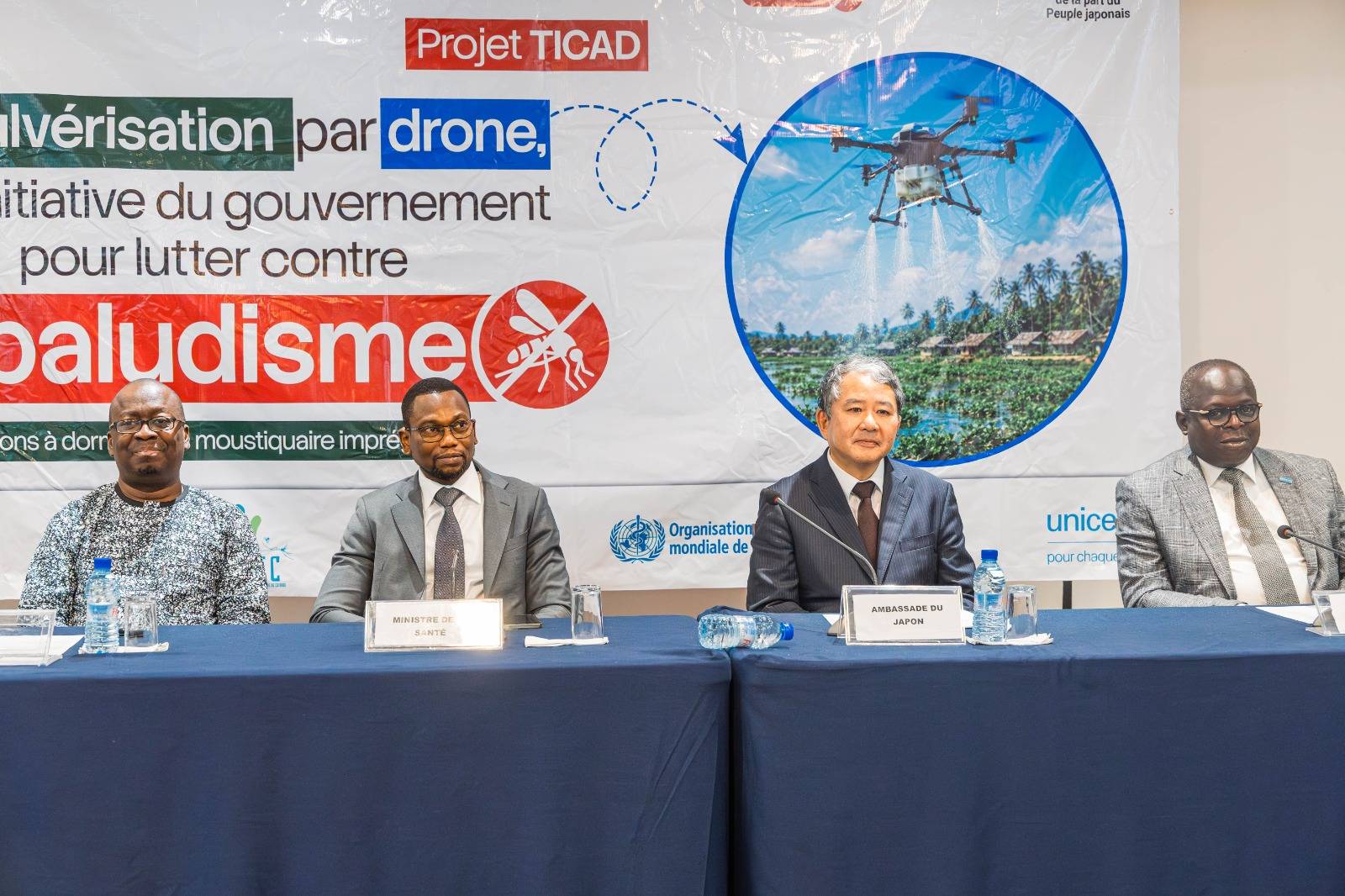
On a landmark Tuesday in Cotonou, the Beninese government unveiled an unprecedented initiative blending artificial intelligence, geospatial mapping, and drone technology to target mosquito breeding grounds and curb malaria transmission. With a $2.3 million investment from Japan and support from UNICEF, the pilot program is now operational in six strategically selected municipalities across the country. This technological leap arrives as a lifeline for communities long burdened by the economic and health toll of malaria, a disease that has plagued the nation for generations.
A new era in malaria prevention
The launch event at the Ministry of Health headquarters marked the beginning of a preventive strategy that shifts the fight against malaria from reactive measures to proactive, precision intervention. Health Minister Professor Benjamin Hounkpatin emphasized the urgency of this approach: “We are moving from treating the symptoms to eliminating the cause. By targeting larval habitats before mosquitoes emerge, we can break the transmission cycle and protect entire communities.”
How the technology works
The initiative operates through a three-pronged technological framework. First, advanced geospatial mapping and AI-driven analytics process environmental and climate data to pinpoint high-risk zones with centimeter-level accuracy. Next, state-of-the-art drones equipped with high-precision dispersal systems fly over these areas to deploy WHO-approved larvicides directly into mosquito breeding sites. The system’s ability to reach remote or inaccessible terrain ensures comprehensive coverage, even in rural and peri-urban areas.
“This method eliminates the need for ground teams to navigate hazardous or difficult-to-reach environments,” explained Minister Hounkpatin. “We’re not just reducing mosquito populations—we’re doing it safely, efficiently, and sustainably.”
Six municipalities at the forefront
The pilot phase targets six diverse communities representing the country’s varied ecological and demographic challenges: Copargo, Djougou, Tchaourou, Ouidah, Abomey-Calavi, and Cotonou. From bustling urban centers to isolated rural villages, each location has been chosen to test the system’s adaptability and effectiveness. The financial backing of $2.3 million from Japan underscores the international commitment to strengthening health resilience in West Africa, aligning with the nation’s Bénin 2060 Alafia vision and broader continental health security goals.
Transforming lives and livelihoods
The human impact of this initiative is already resonating with residents. For small business owners, artisans, and families, malaria is more than a health crisis—it’s an economic catastrophe. The disease drains household budgets, forces missed workdays, and stifles local economies, particularly in the informal sector that sustains most Beninese livelihoods.
Amavi, a mother of four and textile vendor in Abomey-Calavi, shared her experience: “Every rainy season brings fear. Last year, my two youngest children were hospitalized twice. The medical bills and lost income nearly ruined us—more than a month’s earnings vanished in a blink. If these drones can stop mosquitoes from breeding in the marshes behind our homes, our families can finally breathe easier.”
The relief extends beyond individual households. Farmers, traders, and micro-entrepreneurs across Tchaourou and Cotonou echoed the sentiment, describing how malaria outbreaks force them to halt work for weeks, draining productivity and savings. By reducing malaria-related illness in these pilot zones, the project aims to bolster local economies, enhance financial stability, and free families from the cycle of poverty exacerbated by preventable disease.
Youth as the backbone of change
While drones and AI provide the technological edge, the project’s sustainability hinges on community engagement. UNICEF’s role in the initiative underscores the importance of grassroots participation, particularly among young people. Local youth are being trained as community health advocates, responsible for monitoring drone interventions, raising awareness about environmental hygiene, and preventing the reformation of mosquito breeding sites through proper waste and water management.
“This isn’t just about technology—it’s about people,” noted a UNICEF representative during the launch. “By empowering young leaders to take ownership of their health, we ensure that the gains made today will last for generations.”
A model for the future of public health
The fusion of cutting-edge innovation and community-driven action positions Benin at the forefront of malaria elimination efforts in West Africa. If the pilot program proves successful, its framework—combining drone-based larvicide dispersal, strengthened vaccination campaigns, and citizen vigilance—could be scaled nationwide and serve as a blueprint for neighboring countries.
As the first drones take flight over Benin’s pilot municipalities, they carry more than just insecticide. They carry the promise of a healthier, more prosperous future—one where families no longer live in the shadow of malaria.