
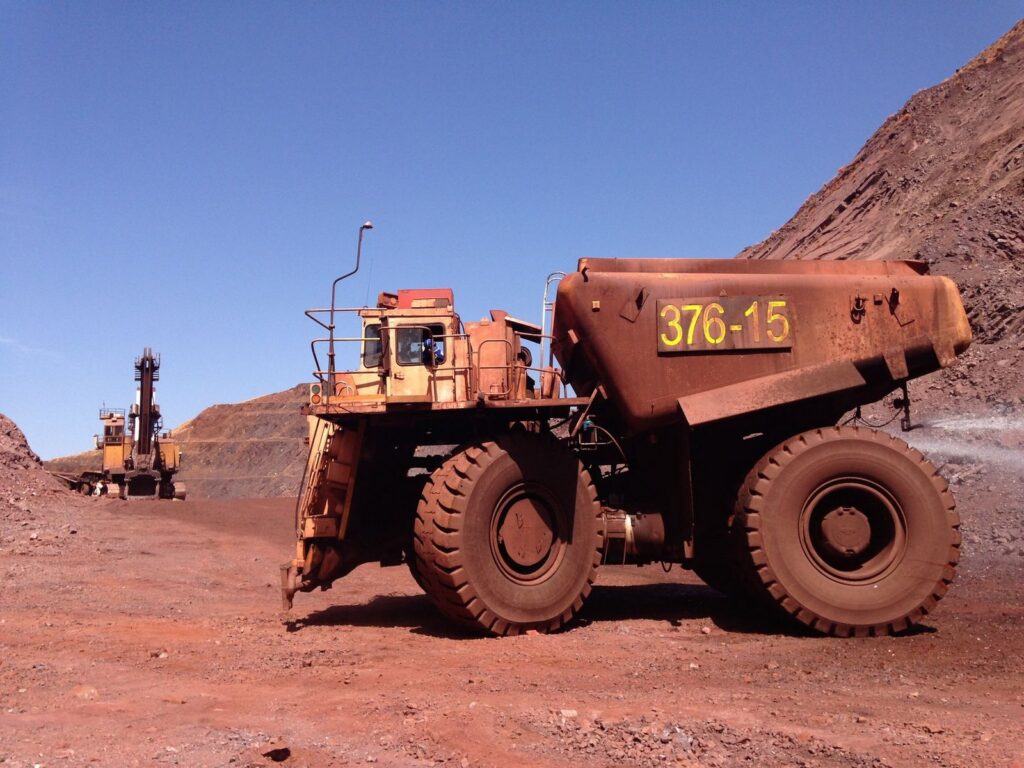
The African continent holds a crucial portion of the world’s critical mineral reserves, essential raw materials for the global energy transition and digital revolution. A significant conference held on July 27, 2026, under the theme « Africa at the Crossroads: Navigating Global Geopolitical Competition in the Era of Critical Minerals » illuminated the immense challenges ahead. Public officials, experts from the extractive industries, and civil society representatives shared their perspectives on a strategic transformation that is reshaping the continent’s economic and security landscape.
Geopolitical competition reshapes africa’s political economy
Global demand for vital resources like cobalt, lithium, nickel, graphite, and rare earth elements is skyrocketing, driven by the electrification of transportation and the expansion of digital infrastructure. Africa, home to nearly 30% of the world’s identified strategic mineral reserves, finds itself at the epicenter of a complex international dynamic. Major global powers such as Washington, Beijing, and Brussels, alongside regional players like Abu Dhabi, Riyadh, and Ankara, are actively pursuing bilateral agreements, acquiring stakes, and offering investments across various mining regions.
Speakers emphasized that this intense global scramble is fundamentally reshaping the continent’s political economy. Producing nations now wield unprecedented negotiating power but remain vulnerable to commodity price fluctuations and the allure of resource rents. The Democratic Republic of Congo with its cobalt, Guinea with bauxite, Zimbabwe with lithium, and Mozambique with graphite exemplify varied trajectories, where mineral wealth can either fuel industrial growth or exacerbate instability.
Mining governance and security architecture under pressure
The issue of governance was a central theme throughout the discussions. Participants highlighted that the majority of value addition continues to be realized outside the continent. Refining, chemical processing, and battery manufacturing supply chains are predominantly concentrated in Asia, leaving producing nations largely confined to the extractive phase. Nevertheless, several recent initiatives aim to invert this paradigm. The agreement between the Democratic Republic of Congo and Zambia to establish a regional electric battery value chain stands as a prime example of such progress.
Simultaneously, the extraction of critical minerals frequently takes place in areas plagued by latent or active conflicts. Regions like eastern Democratic Republic of Congo, the Sahel, and parts of the Gulf of Guinea combine rich subsoil resources with institutional fragility. This combination fosters a war economy where armed groups exploit opaque export channels. Speakers advocated for bolstering traceability mechanisms, similar to those implemented by the Extractive Industries Transparency Initiative (EITI), and called for more robust pan-African coordination. The West Africa Sahel region, in particular, faces significant challenges in this regard.
Towards a second independence through local transformation
The concept of a « second independence » is gaining significant traction within African mining communities. This phrase encapsulates the ambition to break free from a colonial-era economic model, where the continent primarily exports raw materials only to import high-value manufactured products. Practically, achieving this requires substantial investments in energy infrastructure, comprehensive training for engineers, the establishment of specialized economic zones dedicated to metallurgical processing, and a fundamental rethinking of mining taxation policies.
Several nations are proactively advancing their strategies. Guinea, for instance, has mandated the construction of an alumina refinery on its territory as part of the colossal Simandou project. Zimbabwe took decisive action in 2022 by prohibiting the export of raw lithium. Meanwhile, Namibia and Botswana are exploring regulatory frameworks that would enforce a minimum level of local processing. These strategic decisions, occasionally met with apprehension from international investors, signify a clear doctrinal departure from the mining liberalism prevalent in the 1990s.
Discussions also focused on the pivotal role of African financial institutions, which are urged to develop financing mechanisms tailored for transformation projects. The African Development Bank (AfDB) and Afreximbank are actively developing specialized instruments, while sovereign wealth funds from the Gulf region are demonstrating increasing interest in African mining assets across the continent. The struggle for mineral sovereignty will unfold not only in the mines but equally in the financial markets. It is clear that the command over critical minerals now stands as a primary indicator of African power in the 21st century.
You may also like
-
Burkina Faso struggles between nationalist fervor and deepening security crisis
-
Morocco’s royal vision drives remarkable political and economic success
-
Benin tightens enforcement of minimum wage amid persistent violations
-
Initiatives pour la paix et la résilience communautaire au Niger : Le dialogue inclusif, une voie salutaire pour le vivre ensemble et la lutte contre l’extrémisme
-
Burkina Faso : Ibrahim Traoré et sa « milice numérique »