water security emerges as africa’s defining challenge of the century

N’Djamena, July 15, 2026 — The African continent witnessed a pivotal moment today as leaders from across the region gathered in Chad’s capital for what has become more than just another diplomatic summit. The inaugural African Water Forum has transformed into a strategic battleground where the future of Africa’s development, economic stability, and national sovereignty will be shaped for decades to come.
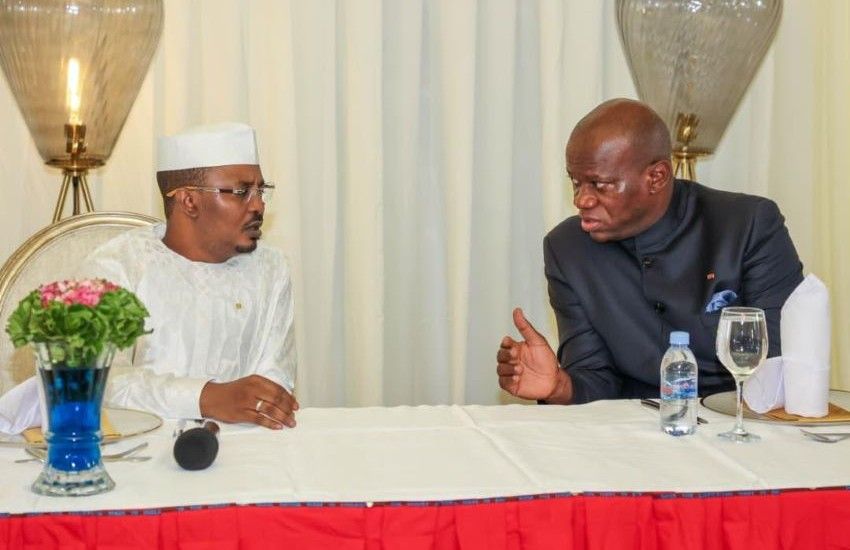
The Gabonese Head of State, Brice Clotaire Oligui Nguema, arrived in Chad this morning to participate in this landmark event, carrying with him not just diplomatic credentials but a bold vision for how his nation will contribute to solving one of Africa’s most pressing crises: securing sustainable access to clean water for all citizens.
Upon landing at Hassan Djamous International Airport, President Oligui Nguema was greeted by Chad’s Prime Minister and Gabon’s Consul General, Allah-Maye Halina. Their meeting set the stage for two days of intensive discussions co-hosted by the Government of Chad and the World Bank. The forum’s overriding objective? To bridge the gap between political will and concrete action by mobilizing the financial resources and technical expertise needed to deliver clean water infrastructure across the continent.
The event, themed “From Vision to Action,” brings together heads of state, international financial institutions, development partners, and private sector stakeholders to confront a critical question: How can Africa accelerate the construction of vital water infrastructure to support its rapidly growing population and economic ambitions?
Water: Africa’s new frontier of sovereignty
Historically viewed through the lenses of public health and social welfare, water management has quietly evolved into one of Africa’s most pressing geopolitical challenges. Despite holding nearly 9% of the world’s renewable freshwater resources, Africa paradoxically hosts the largest number of people without reliable access to safe drinking water or modern sanitation systems.
This stark contradiction underscores a fundamental truth: Water is no longer just a basic need—it is the foundation upon which Africa’s economic competitiveness, industrial growth, food security, and climate resilience are built. The ability to secure and manage water resources will determine the continent’s stability, public health outcomes, and educational progress for generations to come.
Global experts now warn that future conflicts will increasingly revolve around water rather than traditional resources like oil or minerals. In this evolving landscape, the African Water Forum represents far more than a sectoral gathering. It is emerging as a platform where the architecture of continental security and cooperation is being redefined.
Gabon commits to continental water security agenda
President Oligui Nguema’s participation in the forum reflects Gabon’s ongoing commitment to transforming its water sector. Though blessed with abundant water resources, Gabon faces challenges familiar to many African nations: rapid urbanization, demographic growth, aging infrastructure, and the urgent need for substantial investment to modernize water and sanitation systems.
By joining this continental dialogue, Gabon is signaling its intent to align its national reforms with a broader regional strategy. Sharing best practices, attracting international funding, and forging technical partnerships are now essential levers to accelerate the modernization of Africa’s water infrastructure—a sector where annual investment needs exceed tens of billions of dollars.
The World Bank, a co-organizer of the forum, is actively advocating for increased capital flows into this critical sector, emphasizing that the time for planning is over. The focus must now shift to delivering tangible, scalable infrastructure that reaches every community.
From vision to action: the infrastructure imperative
The forum’s theme is deliberate. For decades, Africa’s water challenges have been well-documented, with countless studies and strategies identifying priorities. Yet the greatest obstacle remains the same: transforming these plans into operational dams, distribution networks, treatment plants, and innovative recycling systems that serve the people.
The pillars of this new water economy—reservoirs, pipelines, sanitation plants, and recycling technologies—must be built at scale and with urgency. Failure to do so will not only perpetuate existing inequalities but also undermine Africa’s long-term prosperity and social cohesion.
President Oligui Nguema’s presence in N’Djamena reaffirms Gabon’s commitment to strengthening African cooperation on water security. It sends a clear message that the Gabonese government is ready to play a leadership role in building sustainable solutions that transcend national borders.
More than a technical debate or financial negotiation, this forum addresses a profound reality: Water is no longer a secondary issue. It is a strategic imperative that will define whether Africa can turn its natural wealth into collective prosperity, social stability, and lasting sovereignty for future generations.