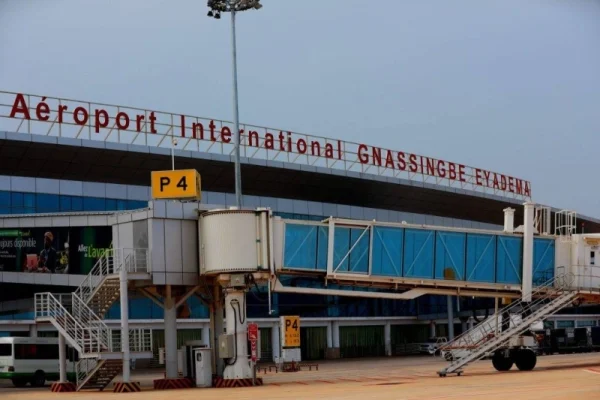
The grand stage of Lomé played host to a stark lesson in continental ambition this week as the third edition of Biashara Afrika unfolded. As leaders and business elites gathered to champion the African Continental Free Trade Area (AfCFTA) and its promise of a unified market of 1.4 billion consumers, the reality of cross-border bureaucracy delivered an unwelcome reality check right on the tarmac of Gnassingbé Eyadéma International Airport.
The incident didn’t just steal the spotlight—it hijacked the narrative entirely. What was meant to be a celebration of economic integration became a case study in how administrative hurdles can undermine even the most ambitious continental projects.
the passport paradox: why an african investor needs a european ticket to land
The scene unfolded during a high-profile address by Nigeria’s Minister of Industry, Trade, and Investment, Dr. Jumoke Oduwole. Instead of reciting the usual platitudes about intra-African trade, she recounted a real-time example of the challenges facing African investors: two high-profile businessmen—one Nigerian, the other Ghanaian—fresh off a flight from Europe, were denied entry to Togo simply because they presented their national passports.
Despite both passports being issued under the ECOWAS framework—a bloc that has championed free movement since the 1970s—border officials stood firm. Their solution? A 24-hour emergency visa, which required the investors to produce European passports as an alternative.
The minister’s blunt assessment left little room for doubt:
« One of them, a financial services investor, told me he wouldn’t consider investing here. We hadn’t even left the airport, and his decision was already made. If a European were forced to request a visa with an African passport within the European Union, it would never happen. »
The irony is palpable: in Togo, the path to welcome is clearer with a European passport than an African one. For ordinary travelers, visa requirements are an accepted norm. But for investors? The message is clear—the rules bend, and the barriers remain.
when bureaucracy trumps ambition: the cost of closed doors
For a nation positioning itself as a regional logistics and financial hub, the fallout is immediate. Visa restrictions on neighboring states don’t just inconvenience travelers—they repel investment. The damage to Togo’s reputation was broadcast live, in front of the very investors the country seeks to attract.
The question lingers: Is Togo truly open for business, or is it a closed shop in disguise?
48 hours to restore credibility: faure’s swift response
The president of the Council, Faure Gnassingbé, wasted no time. Recognizing that the airport incident risked overshadowing the entire forum, he bypassed the usual bureaucratic channels and issued a direct command:
« I give the Minister of Security 48 hours to resolve this anomaly. »
The ultimatum set a tight deadline—by the forum’s closing day, the immigration services would need to demonstrate compliance with free movement principles. The message was clear: the era of unchecked border restrictions ends now.
Biashara Afrika had set out to dismantle non-tariff barriers strangling trade. By week’s end, Lomé’s airport had learned a hard lesson: even the most ambitious economic projects can hinge on a single misplaced stamp.
africa’s integration dilemma: from slogans to substance
Economists and entrepreneurs at the forum were unanimous in their assessment. As one Ivorian economist remarked:
« This isn’t just an anecdote—it’s a warning. Without free movement of people, the AfCFTA is nothing more than an empty promise. »
A Ghanaian entrepreneur added:
« If investors need European passports to do business in Africa, then integration is just a word on paper. »
The incident exposed the gaping chasm between policy and practice. The AfCFTA promises a market worth $3.4 trillion and 1.4 billion consumers, but its credibility is eroded by inconsistent visa regimes, outdated border procedures, and a lack of political will to align action with ambition.
Observers now await the next steps: streamlined visa policies, digitalized border processes, and, above all, a renewed commitment to turning the AfCFTA’s rhetoric into reality. Because in Lomé, Africa learned the hard way that even the smallest administrative misstep can cost millions in lost investment.