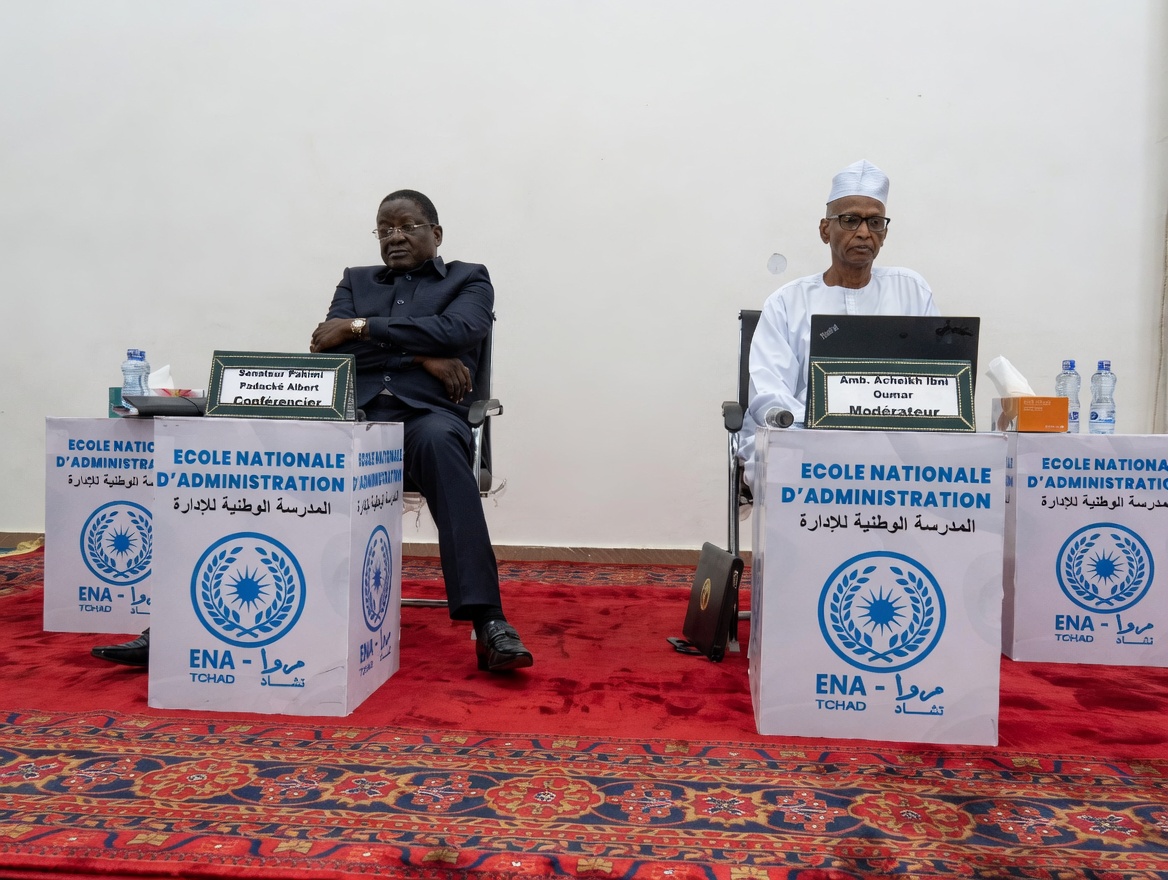
During the latest edition of the Grandes rencontres de l’ENA, the National School of Administration hosted a dynamic discussion this past Friday afternoon. The event featured a keynote speech by Senator and former Prime Minister Albert Pahimi Padacké, focusing on a pressing topic: decentralization as a driver of development through provincial councils. The fully packed amphitheater welcomed students, civil servants in training, administrators, and political figures, all eager to engage with the speaker’s insights.
Mr. Pahimi Padacké, a seasoned politician with two terms as Prime Minister and a background in civil administration, delivered a compelling presentation. He structured his remarks around three central themes: the political and legal foundations of decentralization as a development tool, the persistent obstacles hindering provincial councils from fulfilling their mandate, and actionable strategies to transform them into engines of local progress.
Historical foundations of Tchad’s decentralization journey
He traced the origins of the process back to the 1993 Sovereign National Conference, a pivotal moment when national stakeholders pushed for a unitary state with strong decentralized governance. This vision was enshrined in the 1996 Constitution and further reinforced in subsequent texts, including the 2023 Constitution of the Fifth Republic.
Legally, key organic laws have cemented this framework, such as the 2024 organic law on the status of autonomous local governments and the 2024 law regulating the division of responsibilities between the central state and local authorities. Pahimi Padacké emphasized two core principles: the transfer of competencies and resources to local governments and the principle of subsidiarity, which mandates decision-making at the most local level possible (Constitution, Article 271).
Current challenges slowing progress
The former Prime Minister highlighted critical gaps crippling the system. Delays in transferring financial and human resources, limited technical and administrative capacity within provincial councils, weak local governance, and coordination failures between decentralized administration and elected local bodies all undermine effective decentralization. Despite the 2024 organic law transferring significant responsibilities to provincial councils, the lack of implementing texts continues to stall practical application.
Pathways to meaningful change
To accelerate progress, Pahimi Padacké outlined clear steps: expediting the transfer of resources—including oil and tax revenue shares—to local hands, strengthening the skills of elected officials and council staff, establishing robust monitoring and evaluation mechanisms, and deepening collaboration with civil society and development partners. Above all, he stressed the need to adhere strictly to the subsidiarity principle to ensure decentralization delivers tangible, not symbolic, results.
In closing, he urged future administrators to embrace these challenges. The success of decentralization, he argued, is the linchpin for balanced national development and bringing governance closer to the people.