A meticulous assessment of government ministries has identified 245 dormant infrastructure assets and stalled projects across Senegal, offering both challenges and opportunities for economic recovery. These include completed but unused facilities, ongoing construction initiatives, assets ready for repurposing, and prime real estate with untapped potential.
Four categories of infrastructure assets
The Prime Minister highlighted these assets fall into four distinct categories during a recent interministerial infrastructure review:
- Completed but unused infrastructure (30 projects): These ‘sleeping assets’ include 25 blocked projects with a frozen investment of 279 billion CFA francs. Fifteen have been classified as top priority due to their financial impact and nature of delays.
- Operational assets ready for repurposing (23 assets): Spanning eight sectors across 13 managing entities, these represent an estimated value of 1,065 billion CFA francs.
- Ongoing projects requiring completion (94 projects): Sixty-two of these face significant delays, with total investments of 5,227 billion CFA francs and an additional 973 billion needed for completion.
- Recyclable state real estate (97 properties): Primarily concentrated in Dakar (91 properties) with a combined market value of 132 billion CFA francs and renovation costs estimated at 12.1 billion.
Root causes of infrastructure delays
Analysis reveals multiple factors behind these project stagnations:
Financial constraints
- 42 projects stalled due to insufficient investment credits
- Non-payment of scheduled installments
- Unpaid contractor invoices leading to work stoppages
Technical and operational challenges
- 18 projects facing technical issues primarily from poor coordination between project owners and utility operators (water, electricity, telecommunications)
- Incomplete technical work and missing installations
- Undelivered or improperly connected equipment
- Unreleased land parcels preventing site availability
Legal and administrative hurdles
- 14 projects delayed by legal conflicts and contract cancellations
- Pending administrative approvals and unsigned agreements
- Missing institutional decrees formalizing project status
Operational oversights
13 near-complete projects – some for years – remain unused due to absent operational models or management frameworks, representing particularly paradoxical cases of wasted potential.
Government response and future measures
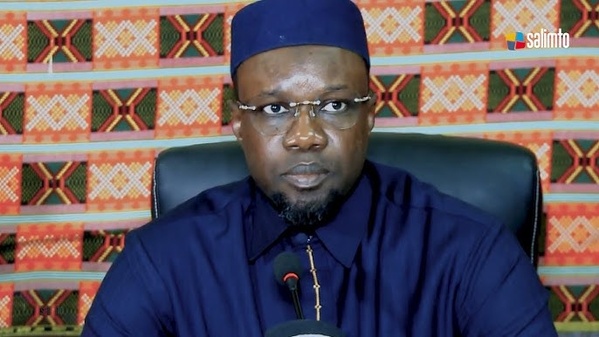
Prime Minister Ousmane Sonko emphasized that construction without clear operational planning constitutes a fundamental flaw in project execution. He announced two key initiatives:
- Establishment of a dedicated committee at the Prime Minister’s office to finalize the infrastructure inventory
- Mandate to expand the current assessment, which may not yet capture all problematic assets
Sonko further instructed government services to proactively address technical hurdles in utility connections, particularly for hydraulic and electrical networks. He condemned the ‘massive losses’ incurred through these delays and called for zero tolerance toward negligence, laxity, and procedural circumvention that perpetuate project stagnation.
The Prime Minister stressed that these infrastructure challenges extend beyond financial costs to encompass systemic failures in project conception, execution, and management – failures that demand immediate structural solutions to unlock Senegal’s development potential.