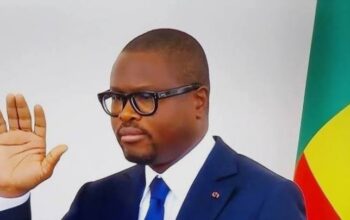
The dismissal of Waly Diouf Bodian, a vocal supporter of opposition leader Ousmane Sonko, from his role as Director of the Dakar Port Authority has sent shockwaves through Senegal’s political landscape. President Bassirou Diomaye Faye’s decision arrives at a moment when a controversial 2022 Facebook post predicting former President Macky Sall’s political fate resurfaces with unsettling precision.
As a prominent figure in the Pastef movement and one of its most outspoken advocates, Waly Diouf Bodian’s removal marks another significant shift in the leadership of Senegal’s public enterprises. His departure follows a string of high-profile replacements at key state-run institutions, including Aïda Mbodji at DER/FJ, Toussaint Manga at LONASE, and Ngagne Demba Touré at SOMISEN.
In 2022, Bodian made a bold prediction on social media, declaring that by April 2024, former President Macky Sall would no longer set foot in the Presidential Palace unless invited by Ousmane Sonko. The irony of fate now looms large: Sall returned to Senegal in 2024, but Sonko was not in power. The timing of Sall’s return coincided precisely with Bodian’s dismissal—a development that underscores the unpredictability of Senegal’s political currents.
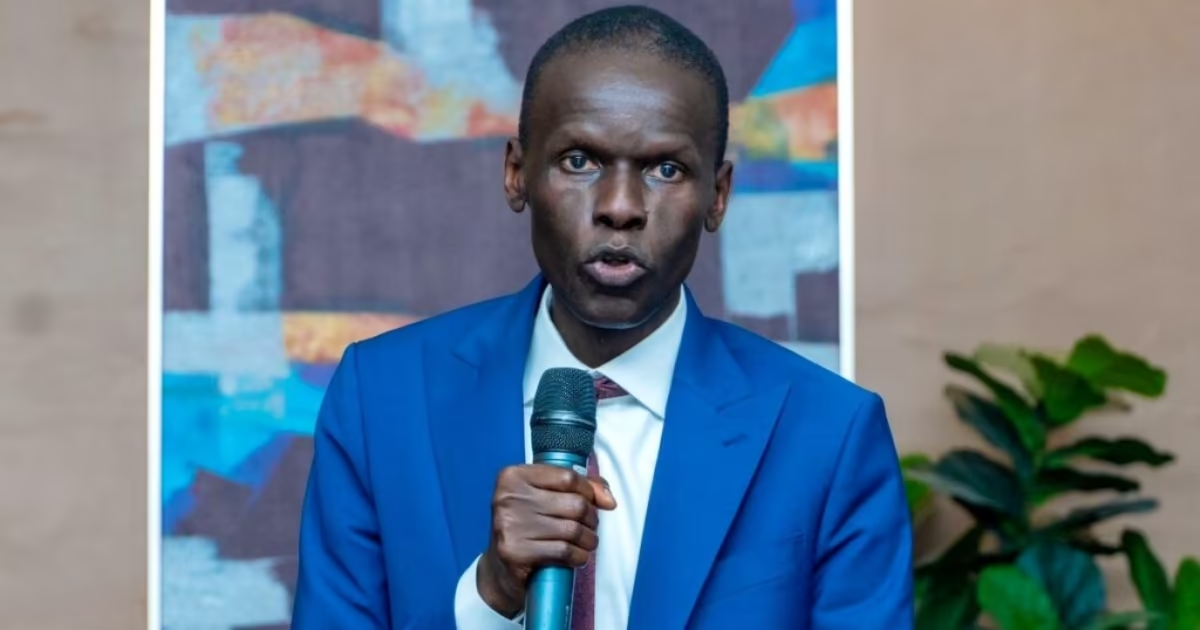
The reshuffle at the Port Authority was formalized through a Council of Ministers communiqué, announcing Bodian’s replacement by Doune Pathé Mbengue, a civil administrator and current mayor of Cambérène. Mbengue, previously serving as Deputy Director of Legislation and International Cooperation at the Directorate General of Taxes and Domains, officially assumed the role on July 16, 2026, nearly two years after Bodian took charge on May 13, 2024.
The weight of political loyalty under scrutiny
Bodian’s tenure at the Port Authority was not merely administrative—it was deeply political. As a staunch defender of Ousmane Sonko, he positioned himself as a vocal critic of the opposition, often clashing publicly with detractors of the Pastef leader. His allegiance reached new heights when he declared himself the “Guardian of the Guardian of the Revolution,” a title he adopted in response to Sonko being named “Guardian of the Revolution.”
His removal comes despite expectations from some Pastef supporters that he would resign in protest following Sonko’s removal from the Prime Minister’s office. Bodian, however, maintained his position, arguing that his role was a collective decision by the party rather than an individual stance. “There is individual management and collective management,” he stated. “Some have chosen to handle this matter individually. But we are politicians, bound by party decisions. I was not self-appointed; I was nominated within the framework of the party.”
The president’s decision to dismiss him signals a clear break from the past. Bassirou Diomaye Faye’s move to replace Bodian underscores the evolving priorities of the administration and a potential recalibration of political alliances within the ruling coalition. Bodian’s response to his dismissal was characteristically measured—no public outcry, no defiance, just a concise statement on his Facebook page: “Alhamdoulillah. I give thanks to God.”