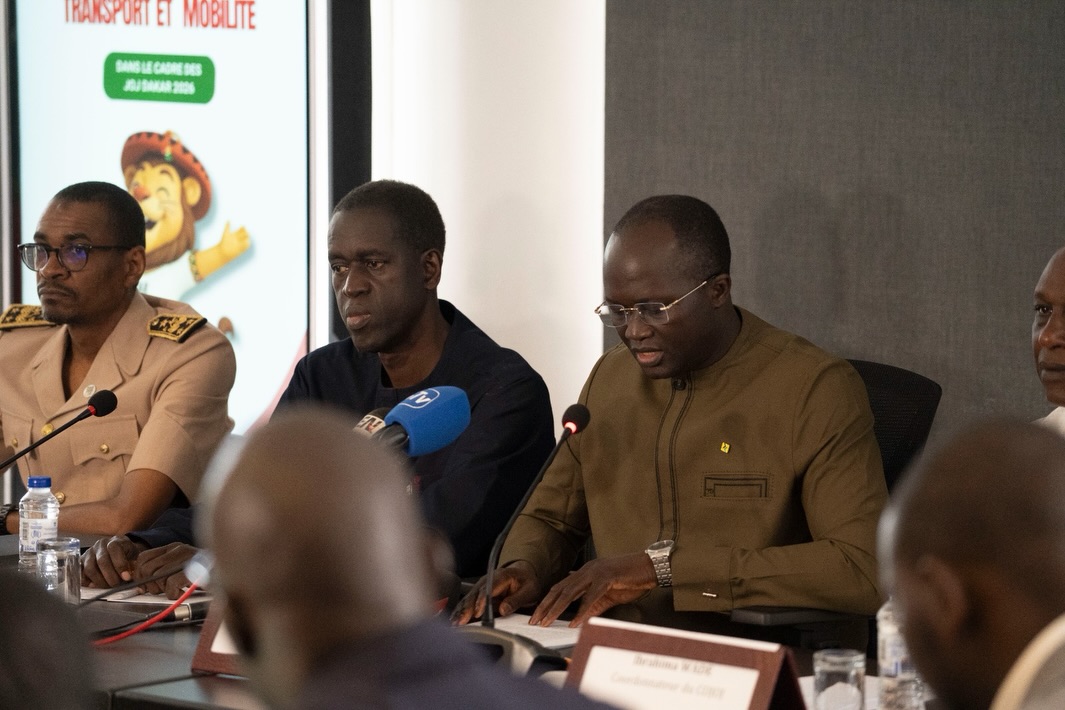
The Senegalese government is rolling out a structured transportation and mobility plan to ensure seamless operations for the 2026 Dakar Youth Olympic Games (YOG), the first ever Olympic event of its scale on African soil.
The initiative, led by the Minister of Terrestrial and Air Transport, Yankhoba Diémé, marks the official launch of the operational blueprint for this landmark sporting event. Scheduled to welcome over 2,700 athletes from 206 National Olympic Committees, alongside officials, volunteers, and spectators, the Games present a monumental logistical challenge.
To tackle this, authorities have established a three-tiered organizational framework spanning Dakar, Diamniadio, and Saly/Mbour. The structure includes:
- The Steering Committee (COPIL), chaired by Minister Diémé, overseeing high-level coordination;
- The Technical Committee on Mobility for YOG 2026, managed by the CETUD, focusing on transport efficiency; and
- The AIBD Operations Committee, handling passenger flows at the Blaise Diagne International Airport.
Rail transport has been identified as a key enabler to swiftly connect key hubs—Dakar, Diamniadio, the airport, and Thiès—ensuring swift and secure athlete and spectator movement. The government is now prioritizing accelerated execution, with full-scale simulations underway to validate the transportation and security systems.
The ultimate goal? To position Dakar 2026 as a benchmark for African excellence in event management, while embedding a lasting legacy in Senegal’s transport governance.