
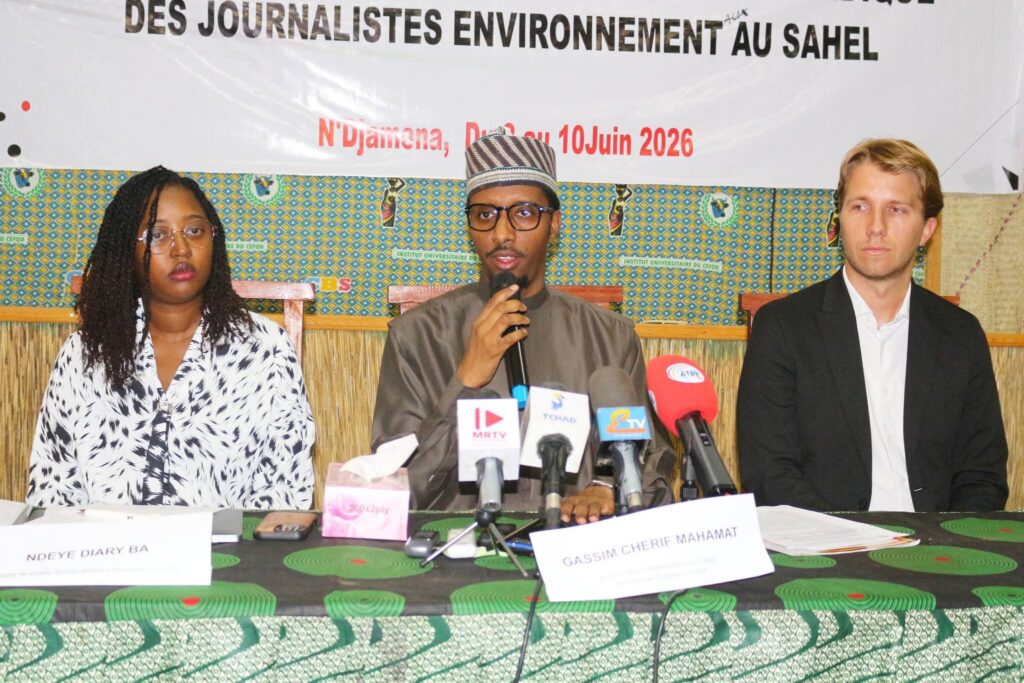
A three-day regional workshop focused on enhancing the legal safeguards for environmental journalists commenced on Monday, June 8, 2026, in N’Djamena. Hosted by Reporters Without Borders (RSF) in partnership with Chad’s ministries of Communication and Environment, the event brings together nearly twenty media professionals from Chad, Burkina Faso, Mali, and Niger.
This initiative is part of the broader project titled ‘Defending and Protecting Environmental Journalism in the Sahel’, which aims to improve working conditions for journalists reporting on environmental issues across the region.
The primary goal of the workshop is to deepen participants’ understanding of their rights, existing legal protections, and risk mitigation strategies. It also seeks to foster stronger collaboration between journalists, legal experts, and human rights organizations, creating a unified approach to addressing the challenges faced by media professionals in this field.
The RSF’s Sub-Saharan Africa Project Manager, Ndeye Diary Ba, emphasized the importance of equipping journalists with the necessary tools to perform their duties safely. « This gathering provides a vital platform for journalists to discuss pressing issues, evaluate national and regional legal frameworks, and enhance their digital security and risk management skills », she stated.
Chad’s Minister of Communication and Government Spokesperson, Gassim Cherif Mahamat, highlighted the significance of hosting the workshop in N’Djamena. He acknowledged the persistent challenges faced by Sahelian countries in safeguarding journalists and press freedom, noting that media professionals play a crucial role in raising awareness about environmental concerns.
« Journalists are indispensable in educating the public on environmental challenges, but they must also operate within a framework that ensures their safety and protection. This training will equip participants with practical skills in risk assessment, legal text comprehension, and combating misinformation—all essential components of modern journalism », he explained.
Over the course of three days, attendees will share experiences, strengthen their capacities, and develop strategies to inform the public about environmental challenges while operating in safer conditions.
You may also like
JOJ 2026, Diomaye appelle la jeunesse sénégalaise à porter l’image de l’Afrique
Mali: près de 80 soldats tués dans l’attaque du camp de Dioura
Côte d’Ivoire : le Burida redistribue 795,4 millions FCFA à 5 435 ayants droit
Paris FC vs Lyon: kick-off time and TV channel for the Ligue 1 matchday 4 clash
Niger: Tiani’s purge and the hidden fractures within the junta