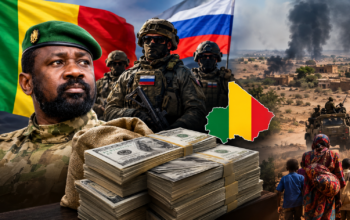
The geopolitical landscape of the Sahel region has undergone a dramatic transformation in recent years, particularly within the member states of the Alliance of Sahel States (AES). Public demonstrations, steeped in sovereignist rhetoric, have increasingly featured Russian flags and pro-Moscow slogans. For a vocal segment of activists, Russia has emerged as an indispensable alternative to the continent’s historical Western partners.
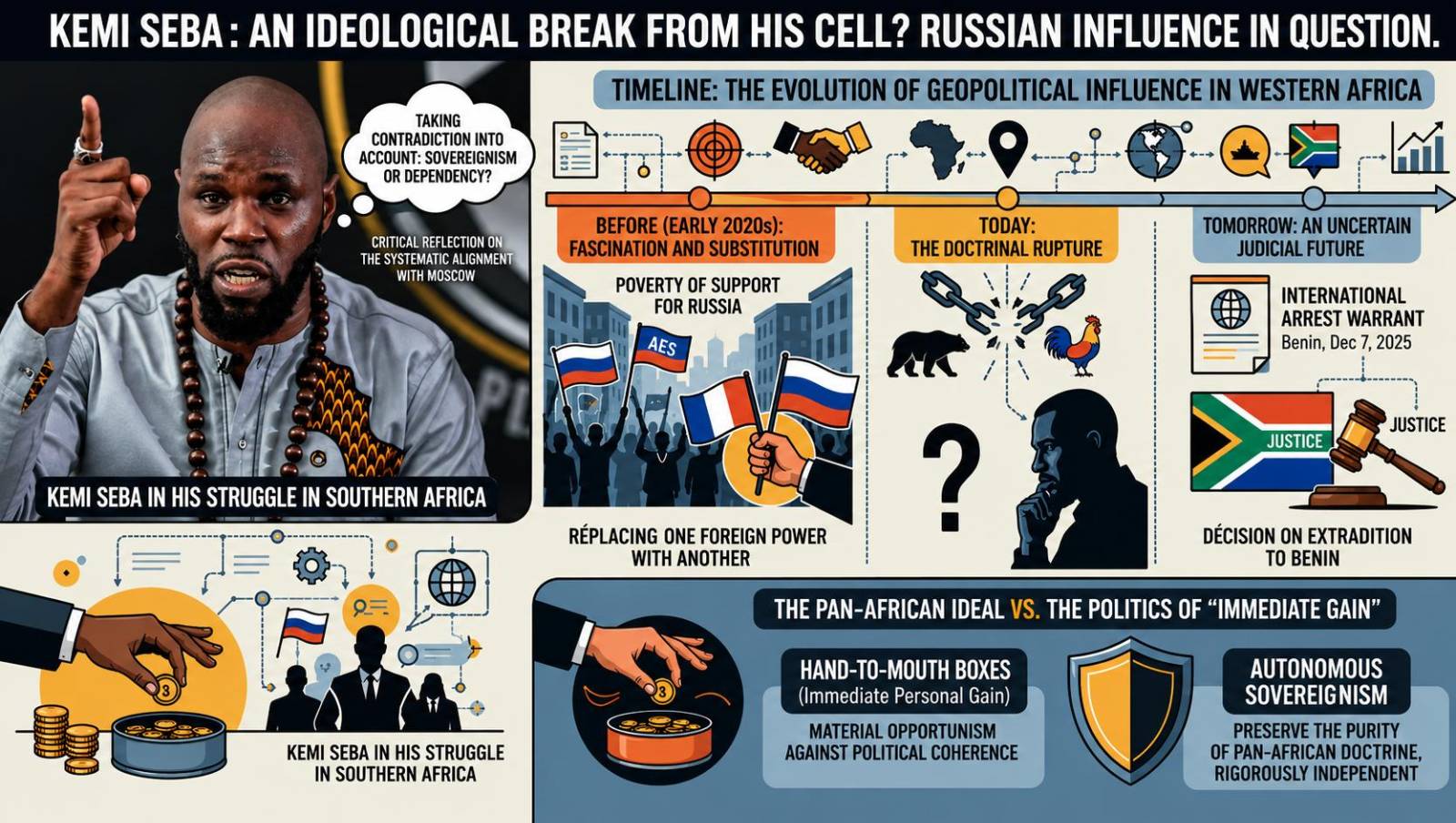
Yet this emerging allegiance has sparked profound debates, especially among movements advocating total independence. Now, one of the most prominent voices of contemporary Pan-Africanism, Kemi Seba, appears to be challenging this trend from behind bars in South Africa, signaling a significant ideological shift.
the dangers of replacing one dependency with another
While seeking new international partnerships is a legitimate diplomatic pursuit, replacing one foreign influence with another risks perpetuating a cycle of dependence rather than achieving true emancipation. Many observers argue that substituting French influence with that of Russia does not represent genuine liberation but merely shifts the center of control.
Kemi Seba now seems to recognize this contradiction. The Pan-African ideologue has begun to question the limitations of an uncritical alignment with Moscow, rejecting the notion of any form of protectorate—even one opposed to Western powers.
panafrican ideals versus short-term political opportunism
This reconsideration has exposed divisions within sovereignist movements. While some support for Russia stems from a genuine desire for geopolitical change, other dynamics appear driven by material rather than ideological interests.
Seba vehemently opposes this opportunism, which he critiques through the metaphor of “maintaining the stew pot”—a reference to prioritizing immediate personal gain over long-term political coherence. By refusing to endorse mercenary ideology, the activist seeks to uphold the doctrinal purity of a Pan-Africanism rooted in absolute autonomy.
a pivotal moment for Seba’s future and influence
This period of ideological reflection coincides with a critical juncture in Seba’s personal and legal situation. Following his arrest in South Africa, he faces an international warrant issued by Benin in connection with the December 7, 2025 coup attempt in Cotonou. The upcoming judicial proceedings in Pretoria will determine whether he is extradited to Benin, further shaping the trajectory of his political legacy and the movements he has inspired.
The coming weeks will be decisive—not only for Seba’s fate but for the future direction of Pan-African discourse across the Sahel.