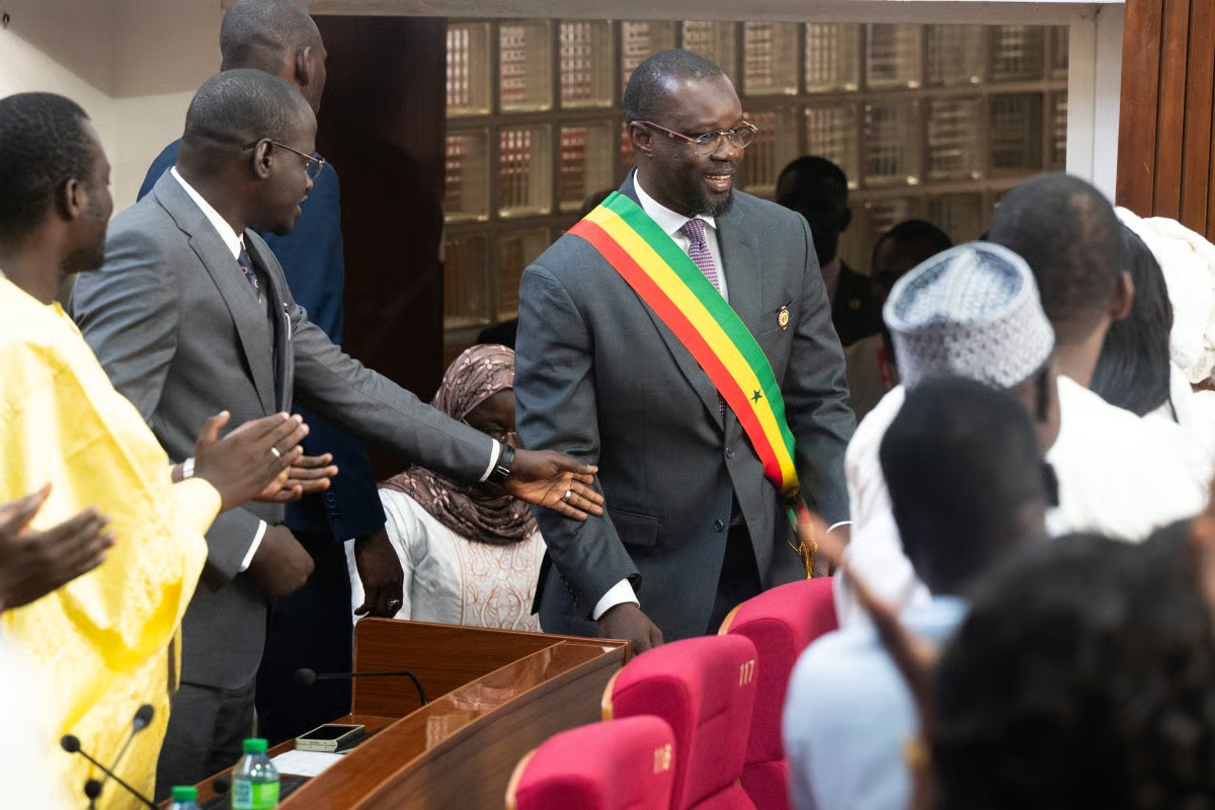
a swift rise to power in Senegal’s national assembly
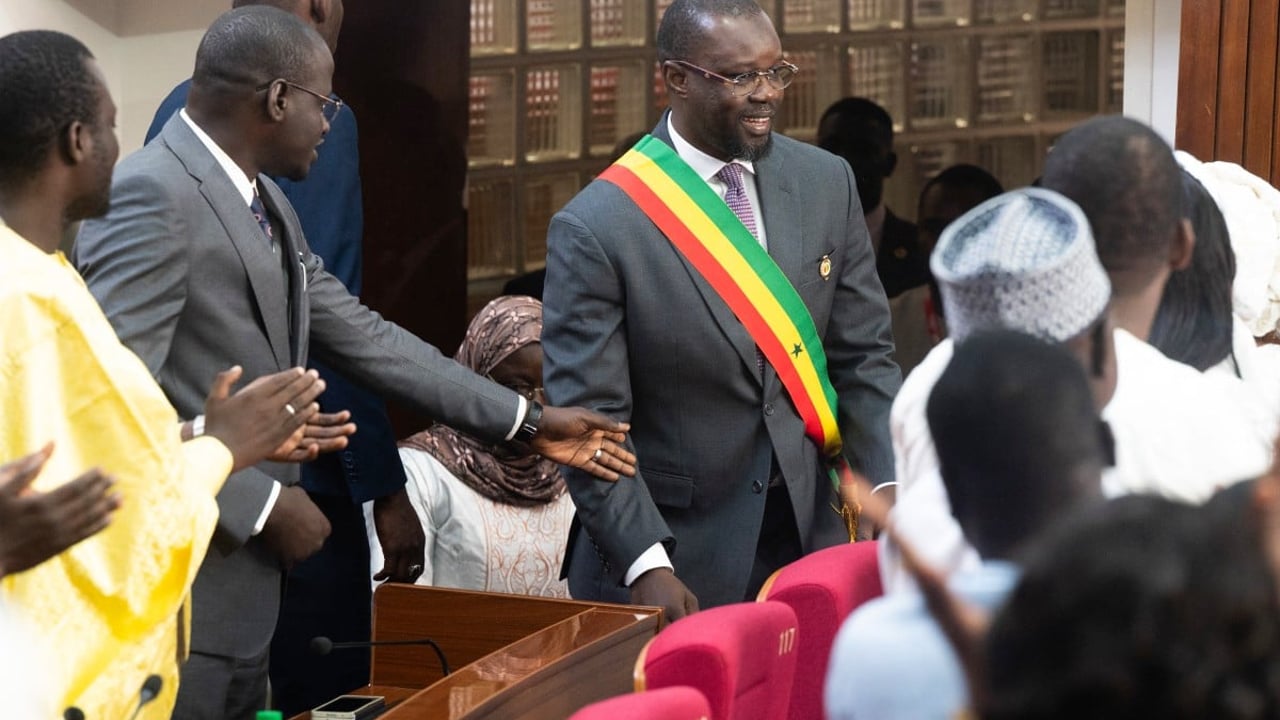
In a move that caught many off guard, Ousmane Sonko—recently dismissed as Prime Minister by President Bassirou Diomaye Faye on May 22—has swiftly ascended to leadership, securing the presidency of Senegal’s National Assembly just four days later. The session, which convened at 9 a.m. on May 26, unfolded with remarkable speed, culminating in Sonko’s election and his delivery of a fiery inaugural address to his peers.
Colleagues have affectionately—and at times critically—dubbed him the “revolution’s guardian,” a title that underscores his rising influence within the political landscape of West Africa’s Sahel region.
opposition denounces what they call a ‘sham election’
While Sonko’s supporters celebrated his victory as a democratic triumph, the opposition wasted no time in condemning the process. Describing the election as a ‘masquerade’, dissenting lawmakers and activists argue that procedural irregularities and partisan maneuvering undermined the legitimacy of the vote. The backlash reflects deepening political divisions in Senegal, a nation navigating complex reforms under its new administration.
Analysts suggest that the controversy could further polarize an already fractured parliament, where Sonko’s party now holds significant sway. The accusations of electoral misconduct add another layer of tension to a political climate already charged with anticipation and unease.
sonko’s political trajectory: from opposition leader to assembly president
The son of a civil servant, Ousmane Sonko has long been a polarizing figure in Senegalese politics. Initially gaining prominence as a tax inspector turned whistleblower, he transformed into a vocal critic of the previous government, championing anti-corruption campaigns that resonated with a disillusioned electorate. His ascent to the premiership—and now to the helm of the National Assembly—signals a dramatic shift in the country’s political direction.
Critics, however, view his rapid rise with skepticism, citing concerns over governance transparency and the concentration of power. Supporters, on the other hand, hail his leadership as a bold step toward systemic change in Senegal.
what’s next for Senegal’s political landscape?
The implications of Sonko’s election extend far beyond the walls of the National Assembly. With President Bassirou Diomaye Faye at the helm of a reform-driven agenda, the new assembly president’s role will be pivotal in shaping the nation’s legislative priorities. Key areas of focus may include economic recovery, anti-corruption measures, and navigating Senegal’s position within the broader West Africa Sahel region.
As political stakeholders digest the fallout from this unexpected turn of events, one thing is clear: Senegal stands at a crossroads, where the balance between reform and stability hangs in the balance. All eyes are now on Dakar, where the future of the nation’s democracy will be tested.