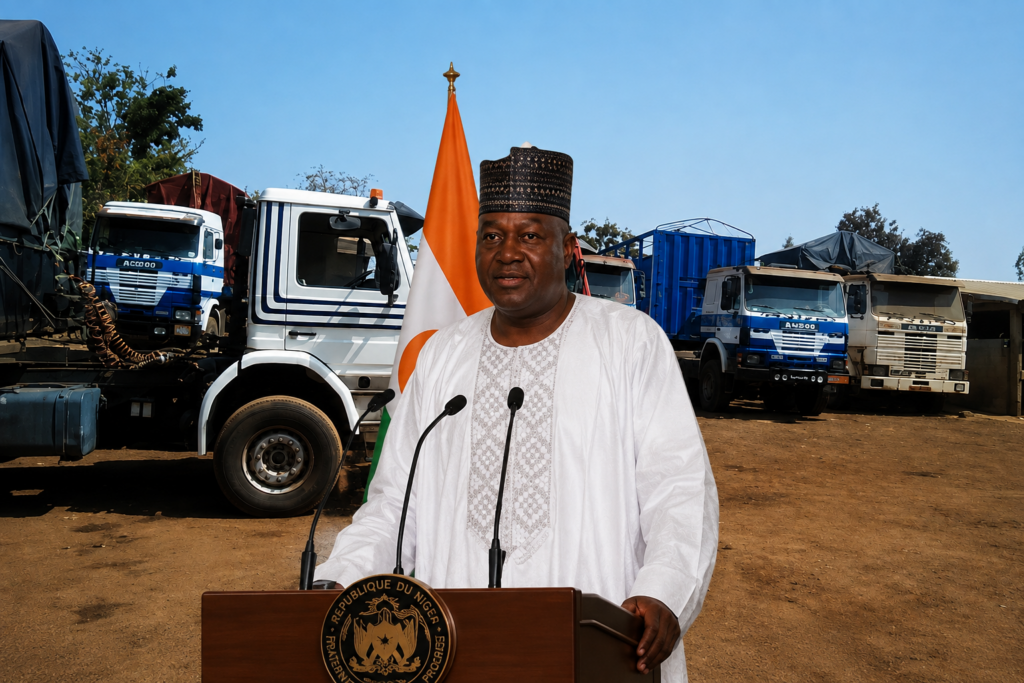
On July 26, 2023, General Abdourahamane Tiani justified his seizure of power in Niger by vowing to rescue the country from what he described as an unmanageable security breakdown. Three years later, the situation has failed to align with those assurances. Instead of restored stability, the nation grapples with deepening insecurity, a faltering economy, eroded diplomatic ties and shrinking fiscal capacity for the state. A closer look at key indicators reveals a country trapped in a spiral where overlapping crises reinforce one another.
Security promises remain unfulfilled
The primary justification for the coup was the pledge to restore security more effectively than civilian authorities had managed. Yet the reality today shows an even more volatile landscape. Armed groups aligned with Jama’at Nusrat al-Islam wal-Muslimin (JNIM) and the Islamic State in the Greater Sahara (ISGS) have expanded their operational reach across multiple regions of the country.
The nature of attacks has shifted dramatically. Insurgents no longer limit themselves to isolated military outposts. Their tactics now include:
- ambushes on military and supply convoys;
- attacks on civilian villages and communities;
- disruptions along critical road networks;
- targeting of economic infrastructure;
- sabotage of supply chains.
In many areas, communities live under constant threat, severely restricting movement for residents and public services alike. The consequences are widespread:
- abandonment of farmlands;
- slowdown in domestic trade;
- closure of schools in affected zones;
- limited access to healthcare;
- surge in internally displaced persons.
The human cost continues to rise as rural populations bear the brunt of a conflict that persists despite leadership changes.
Military spending rises, but gains remain elusive
Since the change in leadership, a significant share of public funds has been redirected toward military efforts. Despite increased expenditures, however, there has been no decisive shift in the balance of power on the ground.
The armed forces face mounting challenges:
- vast terrain difficult to secure;
- multiple active fronts;
- highly mobile insurgent groups;
- logistical constraints.
Constant operational pressure has led to personnel fatigue, accelerated equipment wear and rising mission costs. Each new attack underscores the limitations of a strategy focused almost entirely on military response—one that overlooks the economic, social and territorial roots of the crisis.
Trade routes severed, prices surge
Niger’s economy remains heavily dependent on regional commerce. The prolonged closure of its border with Bénin, compounded by regional diplomatic tensions, has disrupted traditional trade corridors. The Cotonou-Niamey route, historically the most efficient commercial axis for the country, has become severely compromised.
The disruption has triggered a chain reaction:
- prolonged delays in supply deliveries;
- sharp increases in transportation costs;
- frequent stock shortages;
- generalized price inflation.
Households face declining purchasing power as food, medicine, construction materials and everyday goods become increasingly expensive. Traders and transporters at border cities such as Gaya report steep drops in business activity.
The most affected sectors include:
- transport and logistics companies;
- customs brokers;
- warehouse operators;
- small-scale merchants;
- hotels and roadside eateries.
The contraction in trade has also reduced state revenue, further limiting public investment capacity.
Investment climate deteriorates
The current climate of political and diplomatic instability has created an environment of uncertainty that discourages private capital inflows. Investors typically seek:
- stable institutions;
- clear legal frameworks;
- smooth commercial relations;
- predictable economic outlooks.
Niger, however, now presents heightened risk factors:
- ongoing sanctions and diplomatic friction;
- logistical bottlenecks;
- elevated security threats;
- regulatory instability.
This environment slows the arrival of new investment and pushes some operators to postpone or cancel projects.
Oil pipeline project stalled amid diplomatic friction
The Agadem-to-Sèmè oil pipeline was once touted as one of Niger’s most transformative economic initiatives, with projected oil revenues expected to fund national development. Yet persistent tensions between Niamey and Cotonou have cast a shadow over the project’s future.
Beyond political disputes, any uncertainty surrounding this infrastructure sends negative signals to international investors—who consistently favor stable environments for long-term commitments. What was meant to be a driver of growth now stands as a symbol of diplomatic strain.
Diplomatic realignment yields limited dividends
The military-led government has significantly reshaped Niger’s foreign policy. Long-standing partnerships with Western nations have been severed, while Niamey has strengthened ties with Russia and joined the Alliance of Sahel States (AES) alongside Mali and Burkina Faso. The stated goal: reclaim national sovereignty.
Yet this strategic shift has not resolved the country’s core challenges. Niger now faces:
- reduced access to international financing;
- declining technical cooperation;
- strained dialogue with neighboring states;
- limited participation in regional mechanisms.
The proclaimed sovereignty comes with new economic and diplomatic constraints.
New dependencies replace old ones
The departure of French forces was framed as a full recovery of national autonomy. Yet military cooperation with Russian partners has rapidly intensified. This raises a critical question: has Niger truly eliminated foreign dependence, or merely exchanged one external reliance for another?
On the ground, national security still depends to a significant extent on foreign support, undermining the official narrative of complete strategic autonomy.
Public services strain under fiscal pressure
The redirection of resources toward security has placed enormous strain on public finances. Social sectors—already underfunded—now face even greater needs, even as budgetary resources shrink. The result is a visible decline in public services:
- overcrowded and under-resourced schools;
- erratic medical supply chains;
- delays in critical infrastructure projects;
- deterioration of local public services.
This creates a dangerous cycle: rising military spending limits development investment, even as such investment is essential to addressing the underlying causes of insecurity.
Social fabric weakens under economic strain
The cumulative effects of the crisis are reshaping daily life for citizens. Households confront:
- persistent price increases;
- fewer job opportunities;
- declining incomes in border regions;
- deep uncertainty about the future.
This combination of pressures erodes social cohesion and increases vulnerability among the most disadvantaged populations.
Governance model reaches its limits
Three years after the coup, Niger stands at a stark paradox. The junta arrived promising to restore security, reclaim sovereignty and improve living standards. Yet key indicators reveal a country mired in persistent insecurity, economic slowdown, strained public finances and growing diplomatic isolation. The concentration of resources on military efforts, regional tensions and structural economic weaknesses have forged a cycle where each crisis intensifies the next—making it increasingly difficult to break free from the downward spiral.
You may also like
Benin’s rating leap to AA-: the moment regional capital started taking Cotonou seriously
Brigitte Tchede’s Cairo surge: Benin’s discus medal breakthrough that changes everything
Burkina Faso’s armored vehicles: the moment of truth arrives on the battlefield
Bénin’s Senate takes decisive step with 2027 budget adoption
SOCAR stakes claim in Côte d’Ivoire’s Baleine field: a game-changing move for Africa’s energy landscape