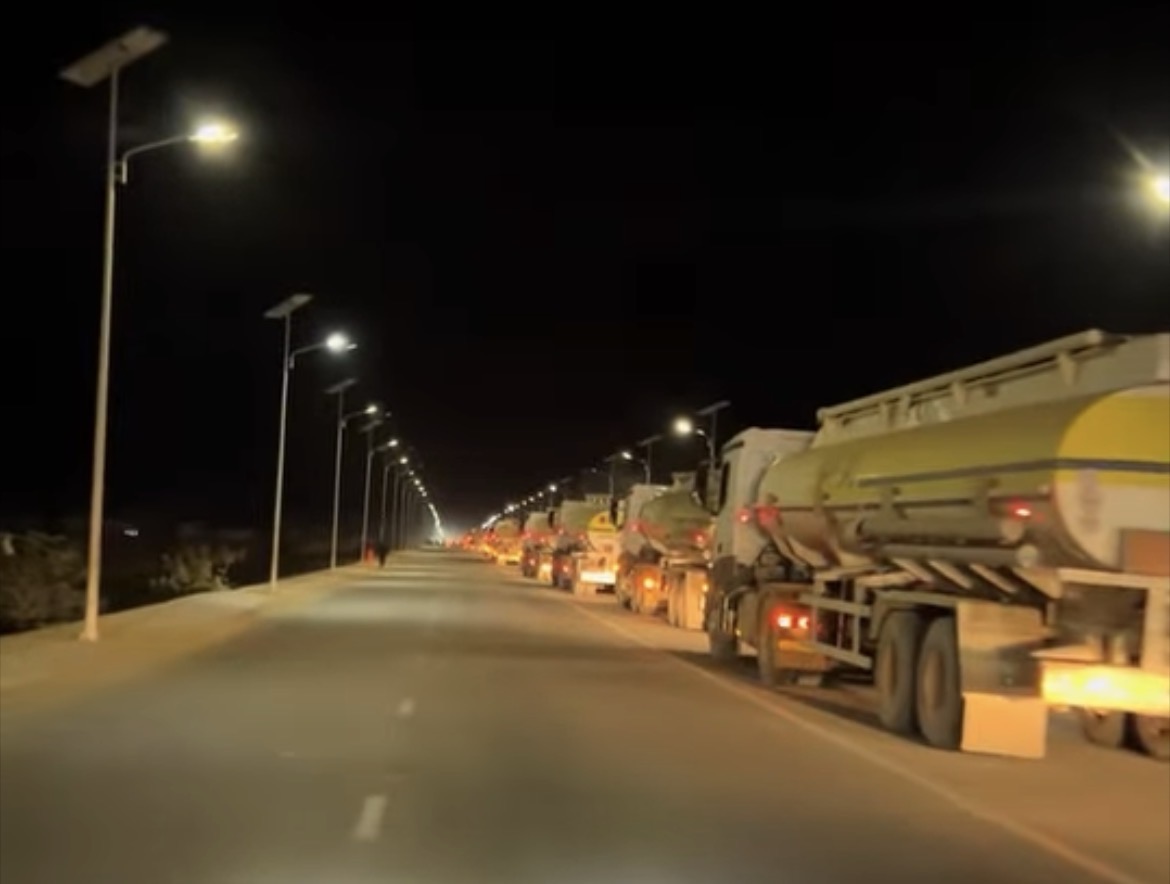
The paradox of Niger’s energy sector has reached a critical point: a nation producing millions of barrels of oil annually yet struggling to meet domestic fuel demand. This contradiction now forces the military regime of General Abdourahamane Tiani to confront a fundamental question: how can a country claiming energy sovereignty still rely on foreign imports to power its economy?
From oil fields to empty fuel pumps: the structural gaps in Niger’s energy supply chain
Despite boasting a daily crude oil production of 110,000 barrels with 90,000 earmarked for export and 20,000 processed domestically at the SORAZ refinery Niger’s citizens face crippling fuel shortages. The numbers reveal a stark imbalance: while national production has increased, the country’s ability to refine, distribute, and supply refined products has failed to keep pace with demand.
Official figures from the Ministry of Petroleum highlight the severity of the shortfall. Between 2024 and the first eight months of 2026, the deficit in premium gasoline surged from 47.25 million liters to 196.62 million liters. Diesel shortages followed a similar trajectory, reaching 52.60 million liters during the same period. These statistics underscore a structural dysfunction in Niger’s energy ecosystem, where production volume alone cannot guarantee availability.
Algerian agreements: cooperation or admission of failure?
Facing persistent shortages, Niamey turned to Algiers for support. In March 2026, the two countries signed a hydrocarbons cooperation memorandum, followed by three additional agreements between Niger’s SONIDEP and Algeria’s Sonatrach subsidiaries in June 2026. These accords, while framed as strategic partnerships, raise critical questions about Niger’s negotiating position and the long-term implications for its energy independence.
Citizens are right to demand clarity: What are the financial obligations under these agreements? What volumes of fuel are involved, and at what cost? Are there compensatory mechanisms or long-term commitments? Without transparent answers, the Nigerien public remains skeptical about whether these imports represent a solution or an admission of systemic failure.
The financial undercurrents: debts and opacity in Niger’s oil sector
In October 2026, the government established a technical committee to address cross-debts among key actors in the energy chain, including SONIDEP, SORAZ, NIGELEC, and China’s CNPC. This move hints at deeper financial troubles plaguing the sector, where debts have allegedly disrupted operations and contributed to supply instability. Yet, the opacity surrounding these liabilities along with allegations of irregularities only fuels public distrust.
For a sector that should generate significant revenue for the state, the accumulation of financial difficulties raises serious concerns. Transparency is no longer optional; it is a prerequisite for rebuilding confidence in a system that directly impacts the lives of Nigeriens.
The human cost of a mismanaged energy strategy
The consequences of fuel shortages extend far beyond economic indicators. For entrepreneurs relying on generators, the lack of fuel means halted production. For truckers, it translates into lost income. For families, it means hours wasted in queues at gas stations. The crisis has exposed a harsh truth: natural resource wealth holds little value if it fails to translate into tangible improvements in daily life.
The Tiani regime’s narrative of energy sovereignty is increasingly at odds with reality. While official discourse celebrates oil production and export agreements, the population grapples with the tangible effects of an unreliable fuel supply. The 1.65 million liters of Algerian fuel delivered in early November 2026 may offer temporary relief, but it does not address the root causes of the crisis.
A regime on trial: sovereignty as a measurable achievement
General Tiani’s government has positioned sovereignty as a cornerstone of its legitimacy. Yet, the energy sector’s collapse presents an uncomfortable test: sovereignty cannot be decreed it must be demonstrated through results. The regime now faces a dual challenge: explaining the persistent fuel deficits and implementing reforms to ensure stability in the future.
For Niger to transition from a paradox to a success story, its leaders must prioritize transparency, accountability, and efficiency in the oil sector. Until then, the questions will persist: What purpose does oil production serve if the nation remains dependent on imports? How can the regime claim energy independence while its citizens wait in vain for fuel?
The answers lie not in official statements, but in the reliability of the country’s energy supply and the tangible benefits it delivers to the people.
By Pierre Tchuente — Journalist